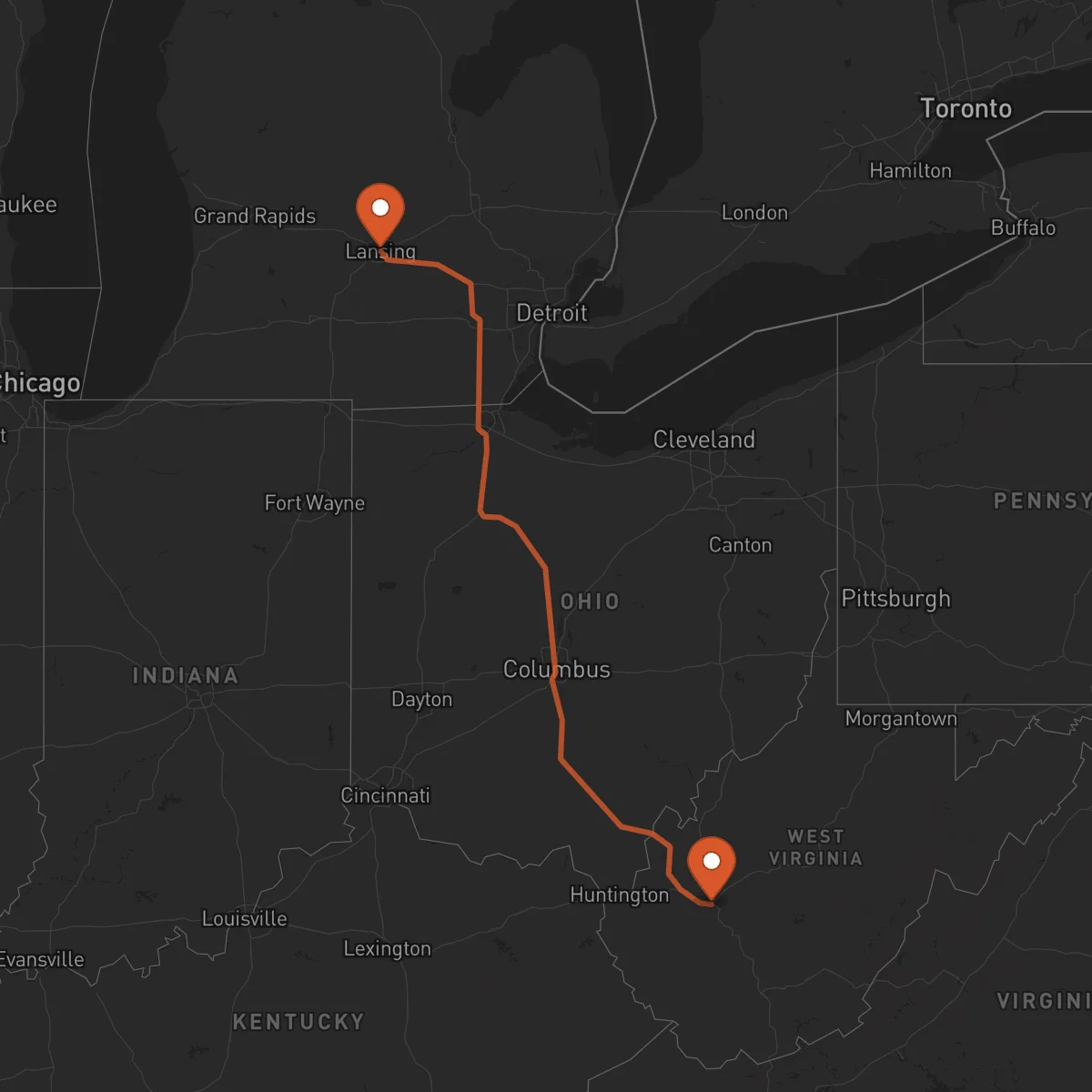
Charleston to Lansing
Lansing → CharlestonFTL freight transportation service between Charleston and Lansing. Reliable logistics solutions for your business.
Route Description
Everything you need to know about the corridor Charleston - Lansing
The Charleston to Lansing corridor represents a vital transportation link connecting the Appalachian region with the industrial heartland of Michigan. This 546-kilometer route traverses through West Virginia, Ohio, and Michigan, serving as a crucial artery for freight movement between these economically significant regions. The corridor facilitates the flow of goods between Charleston's emerging logistics hub and Lansing's manufacturing centers, supporting both regional and national supply chains.
The economic importance of this route cannot be overstated. Charleston, located in West Virginia's capital region, has been developing its logistics capabilities, while Lansing stands as a major manufacturing center, particularly known for its automotive industry. This corridor enables the efficient movement of raw materials from West Virginia's natural resources to Michigan's manufacturing facilities, and finished products back to distribution centers throughout the East Coast.
Key industries utilizing this corridor include automotive manufacturing, heavy equipment, industrial machinery, and consumer goods. The route particularly serves the automotive supply chain, connecting parts manufacturers and suppliers with assembly plants. Additionally, the corridor supports the movement of specialty chemicals and materials from West Virginia's industrial sector to Michigan's manufacturing facilities.
Control Terrestre optimizes operations on this corridor by leveraging our network of certified carriers and specialized equipment. Our dedicated services ensure reliable, full truckload transportation, maintaining the integrity of time-sensitive shipments between these industrial centers. We provide consistent capacity and real-time tracking capabilities, helping businesses maintain their supply chain efficiency across this strategic route.
Services for this Route
Available services for the corridor Charleston - Lansing
 Origin
Charleston
Charleston, West Virginia serves as a strategic logistics hub in the Appalachian region. Located at the confluence of the Elk and Kanawha Rivers, the city benefits from its position along major transportation routes, including Interstate 64 and Interstate 77. Charleston's logistics infrastructure includes the Yeager Airport, the Port of Kanawha (an inland port), and extensive rail connections through Norfolk Southern and CSX Transportation. The city's central location within West Virginia makes it an ideal distribution point for goods throughout the state and surrounding regions.
The economy of Charleston is diverse, with key sectors including energy, healthcare, education, and manufacturing. The region is particularly strong in chemical production, natural gas processing, and related industries. Charleston's industrial base includes companies specializing in specialty chemicals, polymers, and advanced materials. The city's logistics sector has been growing, with several distribution centers and warehouses establishing operations to serve the mid-Atlantic region.
 Destination
Lansing
Lansing, Michigan stands as a major logistics and manufacturing center in the Great Lakes region. Located in the heart of Michigan, the city benefits from its proximity to Detroit and its connection to major transportation networks, including Interstate 96 and Interstate 496. Lansing's Capital Region International Airport provides air cargo services, while the nearby Port of Muskegon offers Great Lakes shipping capabilities. The city's central location makes it an ideal distribution point for goods throughout Michigan and the Midwest.
The economy of Lansing is anchored by the automotive industry, with General Motors operating a major assembly plant in the city. The region has a strong manufacturing base, including automotive parts suppliers, heavy equipment manufacturers, and industrial machinery producers. Lansing's economic diversity also includes healthcare, education, and technology sectors. The city's manufacturing heritage and strategic location make it a crucial node in North American automotive and industrial supply chains.










