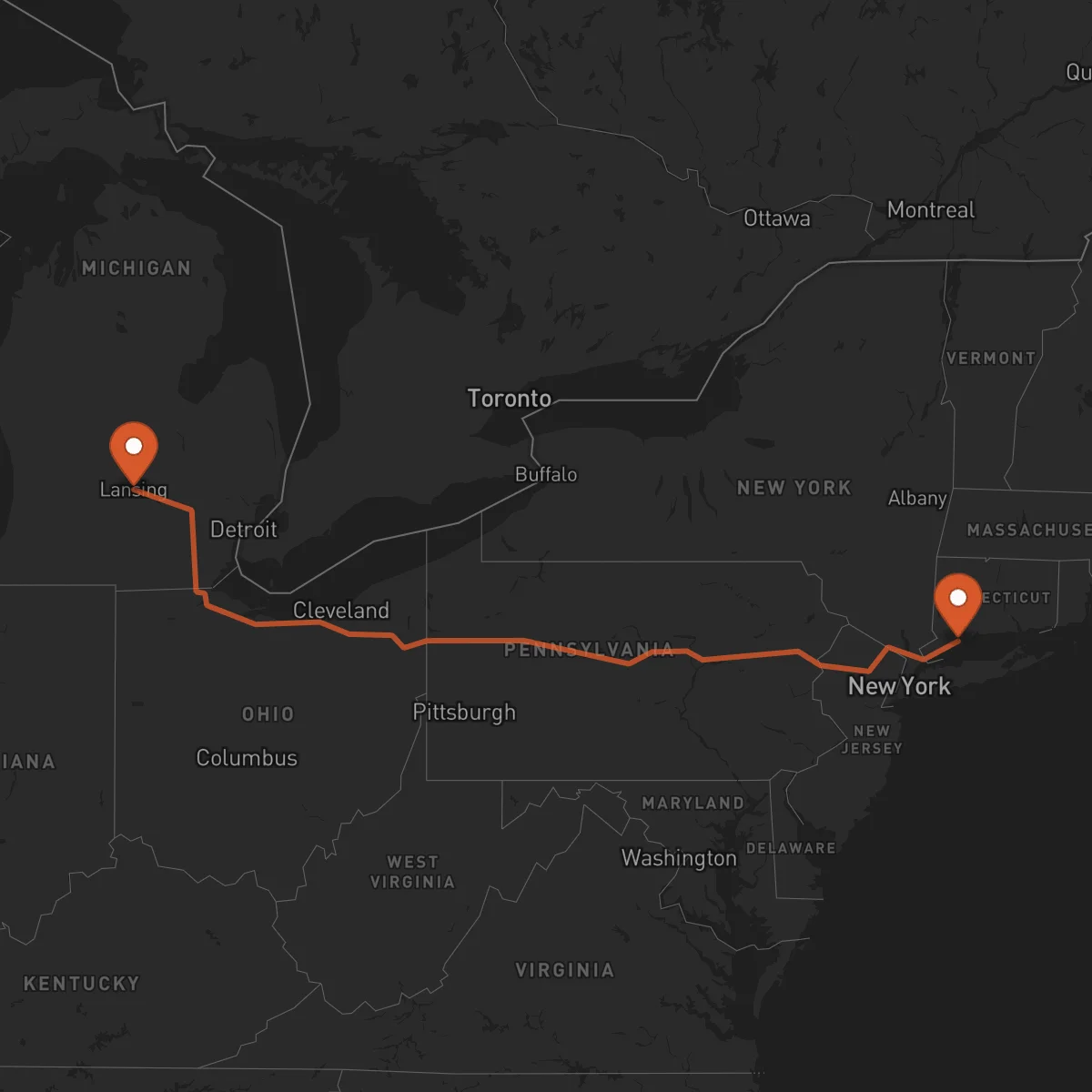
Lansing to Bridgeport
Bridgeport → LansingFTL freight transportation service between Lansing and Bridgeport. Reliable logistics solutions for your business.
Route Description
Everything you need to know about the corridor Lansing - Bridgeport
The Lansing to Bridgeport corridor represents a vital domestic freight route connecting the Great Lakes region with the Northeast Atlantic coast. This 954 km transportation link serves as a strategic artery for moving goods between Michigan's industrial heartland and Connecticut's coastal ports and urban centers. The route traverses key economic regions, passing through major metropolitan areas and connecting to important distribution networks along the way.
The corridor's significance is underscored by the diverse economic activities it connects. Lansing, as Michigan's capital, anchors a region with strong manufacturing, automotive, and technology sectors, while Bridgeport serves as a gateway to the New York metropolitan area with its extensive port facilities and industrial base. This route facilitates the movement of automotive parts, manufactured goods, agricultural products, and consumer merchandise between these complementary economic zones.
Transportation infrastructure along this corridor includes major interstate highways such as I-80, I-90, and I-84, providing reliable and efficient freight movement. These well-maintained highways support consistent transit times and enable Control Terrestre to offer dependable full truckload (FTL) services. Our strategic positioning and experienced carrier network ensure that shipments between Lansing and Bridgeport are handled with the utmost care and efficiency.
Control Terrestre specializes in optimizing this corridor through dedicated full truckload services, ensuring that your freight moves directly from origin to destination without unnecessary stops or transfers. Our C-TPAT certified carriers and commitment to on-time delivery make us the trusted partner for businesses requiring reliable transportation between these key Midwestern and Northeastern markets.
Services for this Route
Available services for the corridor Lansing - Bridgeport
 Origin
Lansing
Lansing, Michigan serves as a strategic logistics hub in the Great Lakes region, benefiting from its central location within the state and proximity to major manufacturing centers. The city's transportation infrastructure includes access to I-96, I-496, and connections to I-69, providing efficient links to Detroit, Chicago, and other major markets. Lansing's Capital Region International Airport and rail connections through Canadian National Railway further enhance its multimodal capabilities for freight movement.
The local economy is anchored by state government operations, Michigan State University, and a diverse manufacturing base. Key industries include automotive manufacturing, with several suppliers and assembly operations in the region, as well as technology, healthcare, and education sectors. The presence of numerous warehouses and distribution centers around Lansing creates consistent demand for full truckload freight services, particularly for automotive parts, electronics, and consumer goods moving to and from the area.
 Destination
Bridgeport
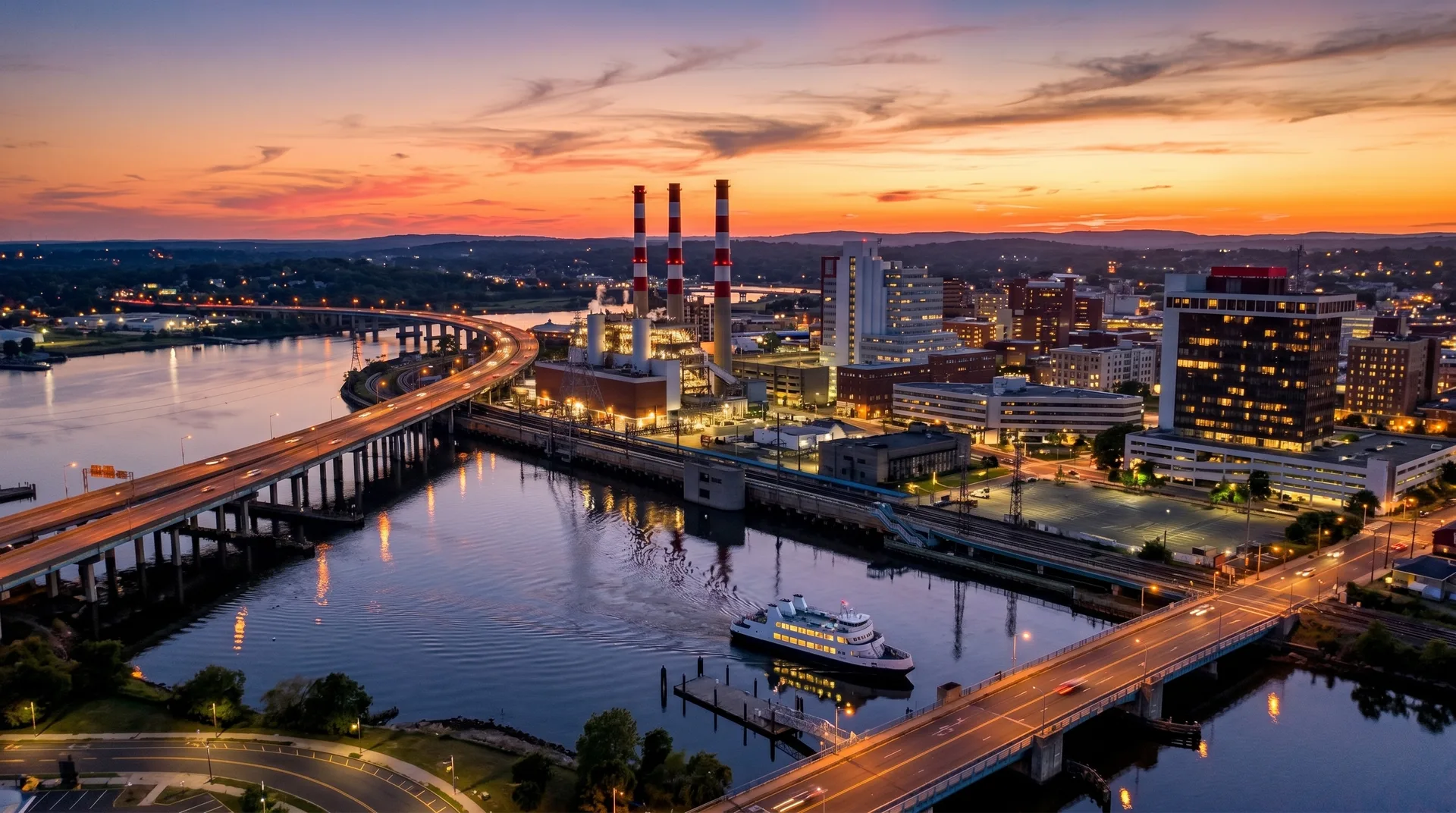
Bridgeport, Connecticut occupies a strategic position along the Northeast Corridor, offering excellent access to the New York metropolitan area and New England markets. The city's Port of Bridgeport provides maritime freight capabilities, while I-95, Route 8, and connections to I-84 ensure robust highway access for truck transportation. The proximity to major airports including Bradley International and JFK International further enhances Bridgeport's connectivity for time-sensitive shipments.
The local economy features a mix of manufacturing, healthcare, and service industries, with significant port-related activities supporting import-export operations. Bridgeport's industrial base includes aerospace components, machinery, and fabricated metal products. The region's dense population and proximity to major consumer markets create substantial demand for inbound freight, particularly for retail distribution, manufacturing inputs, and construction materials. The city's location makes it an ideal destination for full truckload shipments from Midwestern manufacturing centers.










