Lansing to Brampton
Brampton → LansingFTL freight transportation service between Lansing and Brampton. Reliable logistics solutions for your business.
Route Description
Everything you need to know about the corridor Lansing - Brampton
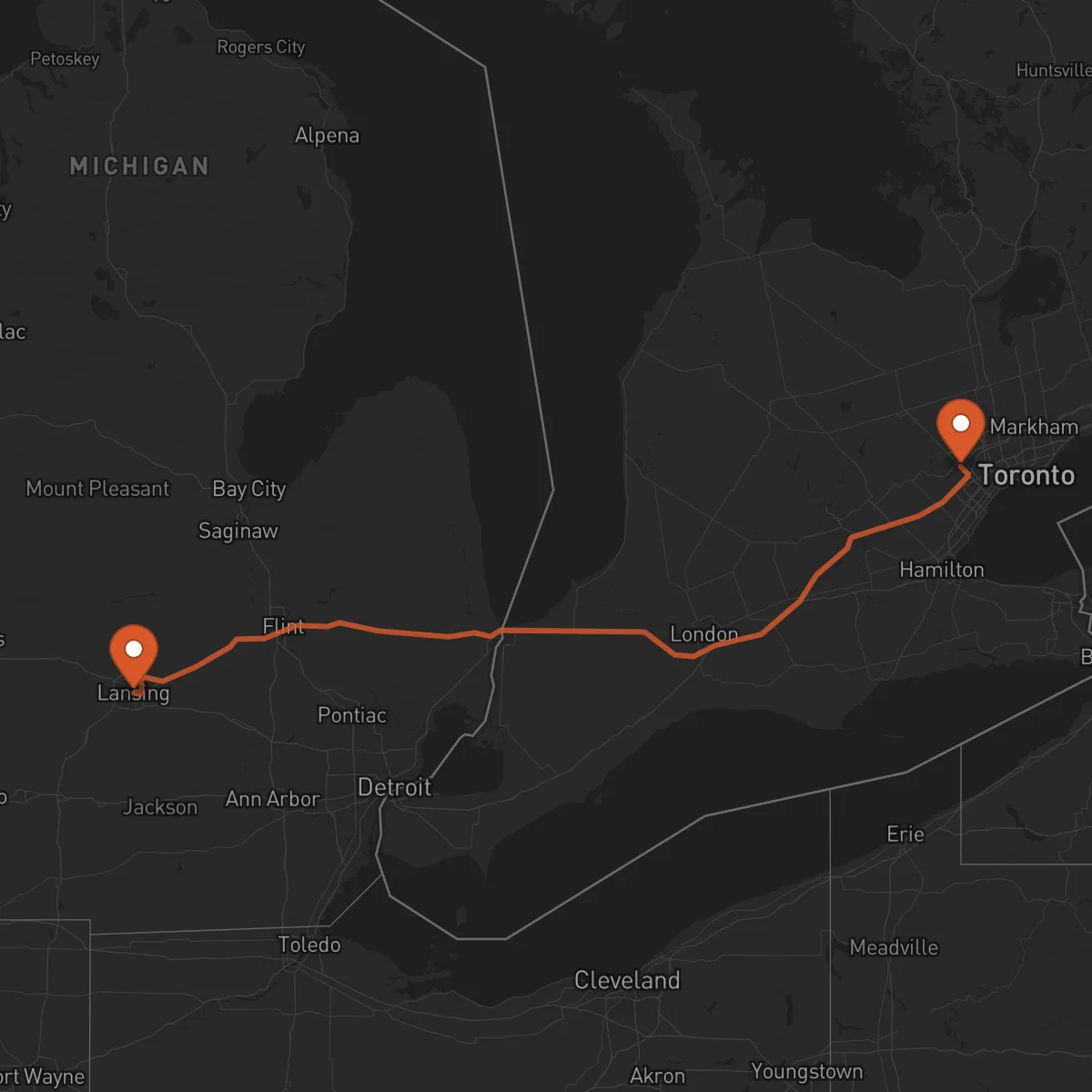
The Lansing to Brampton corridor represents a vital cross-border freight transportation link connecting the industrial heartland of Michigan with Canada's major logistics hub in Ontario. This 402-kilometer route traverses the Great Lakes region, facilitating the movement of goods between two major North American manufacturing and distribution centers. The corridor's strategic importance is underscored by its role in supporting the integrated supply chains that span the US-Canada border, enabling just-in-time delivery and efficient inventory management for businesses on both sides.
The economic context of this corridor is defined by its connection between Lansing's automotive and manufacturing base and Brampton's diverse industrial landscape. Lansing, home to major automotive assembly plants and suppliers, generates significant freight volume requiring cross-border transportation. Brampton, part of the Greater Toronto Area, serves as a major distribution center with extensive warehousing, advanced manufacturing, and technology sectors. The corridor supports industries including automotive parts, industrial equipment, consumer goods, and raw materials essential to both regional economies.
Transportation infrastructure along this route includes major highways such as I-69, I-94, and Highway 401, providing efficient north-south connectivity. The corridor primarily utilizes the Detroit-Windsor crossing or the Blue Water Bridge at Port Huron, both equipped with advanced customs processing capabilities. Control Terrestre facilitates seamless operations on this corridor through our expertise in cross-border documentation, C-TPAT-certified carrier network, and dedicated customer service ensuring compliance with all regulatory requirements while maintaining transit efficiency.
Services for this Route
Available services for the corridor Lansing - Brampton
 Origin
Lansing
Lansing, Michigan serves as a strategic logistics hub in the Great Lakes region, offering excellent connectivity to major manufacturing centers and transportation networks. The city's location provides direct access to I-96, I-69, and I-496, creating efficient connections to Detroit, Chicago, and other key markets. Lansing's economy is anchored by automotive manufacturing, with General Motors operating major facilities in the area, along with a robust network of automotive suppliers and support industries. The region also features advanced manufacturing, healthcare technology, and educational institutions that contribute to diverse freight generation. Lansing's transportation infrastructure includes Capital Region International Airport for air cargo, extensive rail connections through Class I railroads, and multiple intermodal facilities supporting various freight modes.
 Destination
Brampton, Ontario stands as one of Canada's most strategically positioned logistics and industrial centers, located in the heart of the Greater Toronto Area. The city's proximity to Toronto Pearson International Airport, Canada's busiest cargo airport, combined with its extensive highway network including Highway 401 and Highway 407, creates exceptional distribution capabilities. Brampton's industrial base encompasses advanced manufacturing, pharmaceuticals, food processing, automotive parts, and technology sectors, generating substantial freight volume. The city hosts numerous warehousing and distribution centers, serving both Canadian and cross-border markets. Brampton's infrastructure includes multiple rail terminals, extensive warehousing facilities, and advanced logistics parks designed to support just-in-time manufacturing and e-commerce fulfillment operations.










