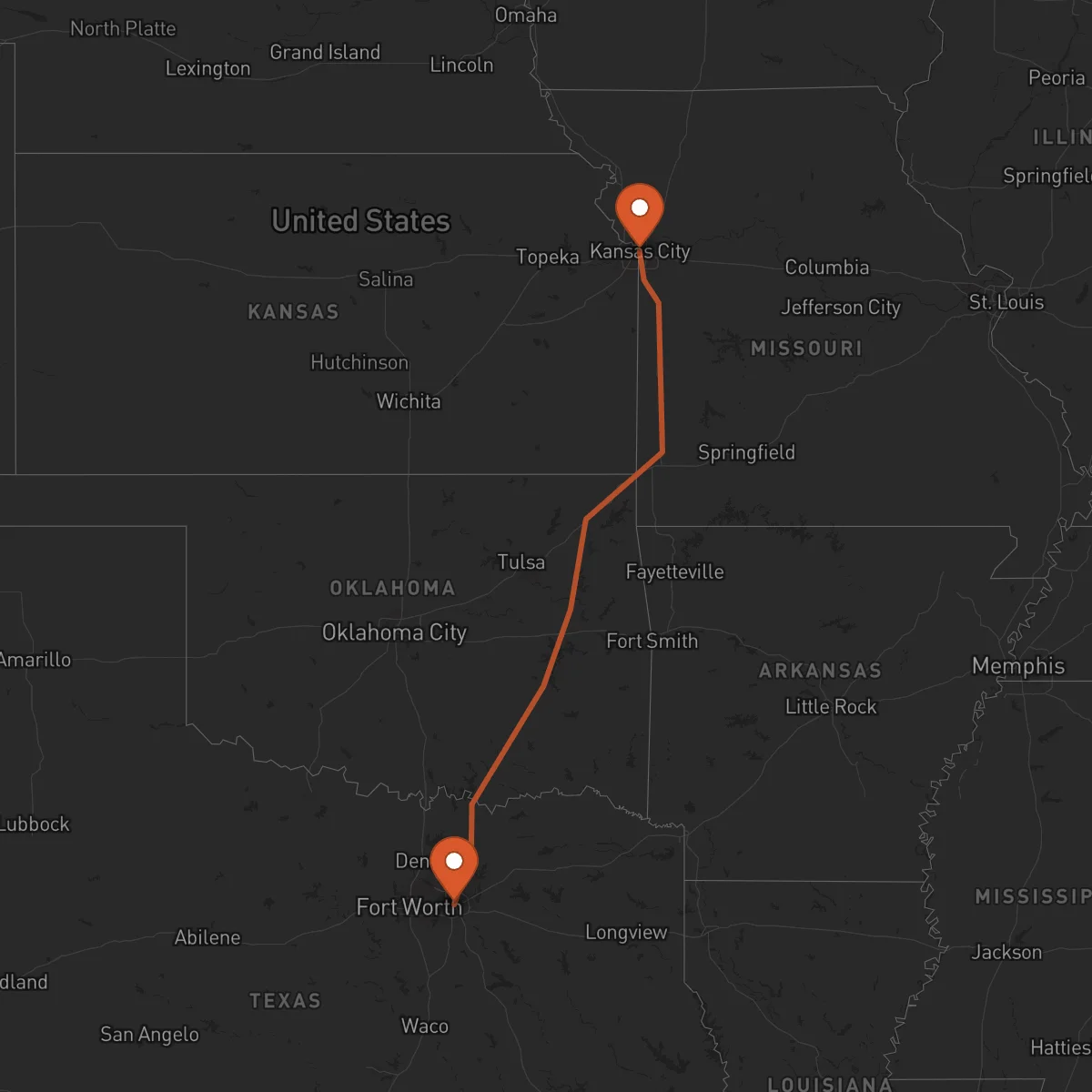
Kansas City to Dallas
Dallas → Kansas CityFTL freight transportation service between Kansas City and Dallas. Reliable logistics solutions for your business.
Route Description
Everything you need to know about the corridor Kansas City - Dallas
The Kansas City-Dallas corridor represents a vital logistics connection between the Midwest and the Southwest of the United States. This 731-kilometer route links two major economic centers, facilitating the flow of goods between the industrial heartland and the growing Texas market. The corridor connects Missouri's manufacturing base with Texas's diverse industrial sectors, creating a continuous supply chain that supports the economic integration of both regions.
The region along this route encompasses a mix of manufacturing, agricultural, and energy-related industries. Kansas City serves as a major distribution hub for the central United States, while Dallas functions as a key commercial and industrial center for the Southwest. This corridor experiences significant freight traffic moving automotive parts, agricultural products, industrial equipment, and consumer goods. The route passes through key states including Missouri, Oklahoma, and Texas, crossing diverse economic zones that contribute to the overall freight volume.
Control Terrestre provides specialized FTL transportation services along this corridor, ensuring reliable and efficient freight movement. Our experienced carriers navigate the primary highways connecting these cities, including I-35, which serves as the main north-south artery. We offer dedicated truckload services that maintain the integrity of your cargo throughout the journey, with real-time tracking and professional handling. Our strategic partnerships with certified carriers ensure that your freight receives priority attention and arrives at its destination in optimal condition, supporting your supply chain requirements between these two important markets.
Services for this Route
Available services for the corridor Kansas City - Dallas
 Origin
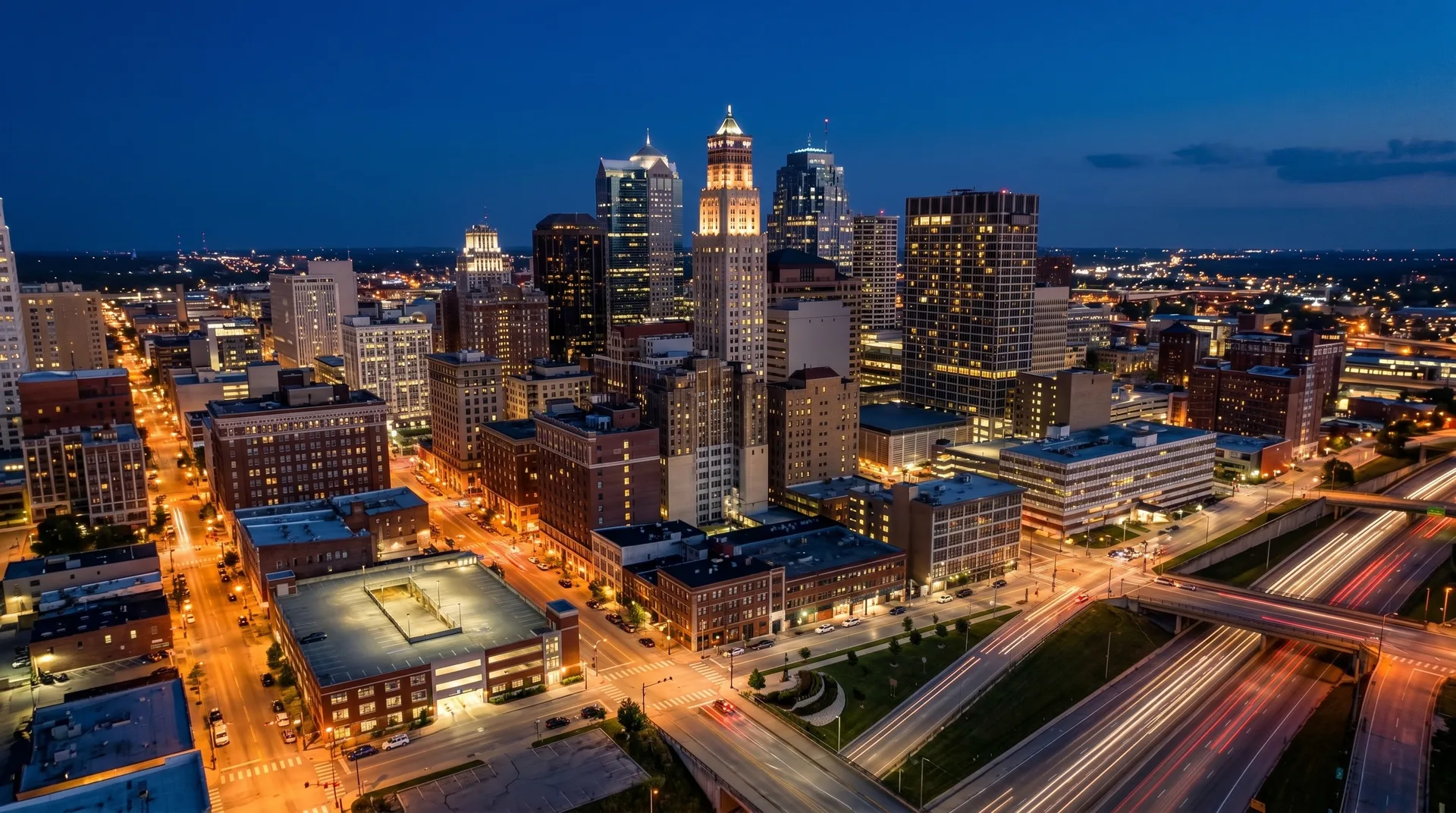
Kansas City
Kansas City, Missouri serves as a strategic logistics hub in the central United States, positioned at the confluence of major transportation routes. The city benefits from its location at the intersection of I-70 and I-35, providing direct connections to both coasts and the southern United States. Kansas City International Airport and the Kansas City Port Authority enhance the multimodal transportation capabilities of the region. The city's extensive rail network, operated by major Class I railroads, complements the highway system and provides additional freight options.
The economic base of Kansas City includes manufacturing, particularly in automotive and food processing sectors, as well as a strong presence in the healthcare and technology industries. The city is home to several Fortune 500 companies and maintains a diverse industrial portfolio. Kansas City's logistics infrastructure includes numerous warehousing and distribution centers, making it an ideal origin point for freight moving to various destinations across the country.
 Destination
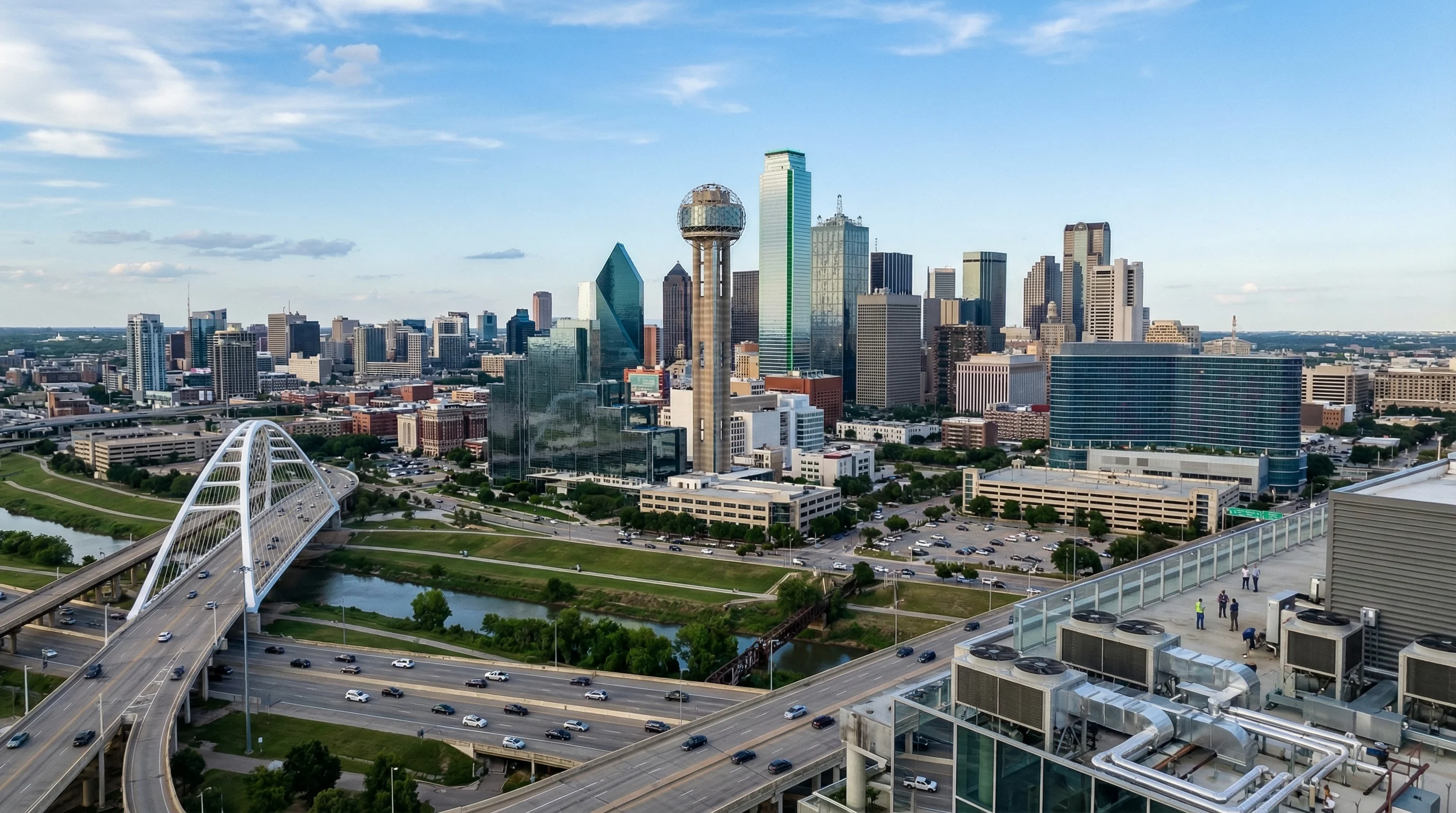
Dallas
Dallas, Texas stands as a major commercial and industrial center in the Southwest, strategically positioned to serve both domestic and international markets. The Dallas-Fort Worth metroplex benefits from its location at the intersection of major interstate highways, including I-20, I-30, and I-35, creating a comprehensive road network for freight distribution. Dallas/Fort Worth International Airport, one of the busiest in the world, provides extensive air cargo capabilities, while the Port of Houston's proximity offers ocean freight connections.
The Dallas economy is characterized by its diversity, with strong sectors in technology, telecommunications, financial services, and manufacturing. The region has become a significant hub for the aerospace and defense industries, as well as a growing center for logistics and distribution operations. Dallas's business-friendly environment and central location within Texas make it an attractive destination for companies seeking efficient distribution to the southern United States and Mexico. The city's extensive warehousing and distribution infrastructure supports the high volume of freight traffic moving through the region.










