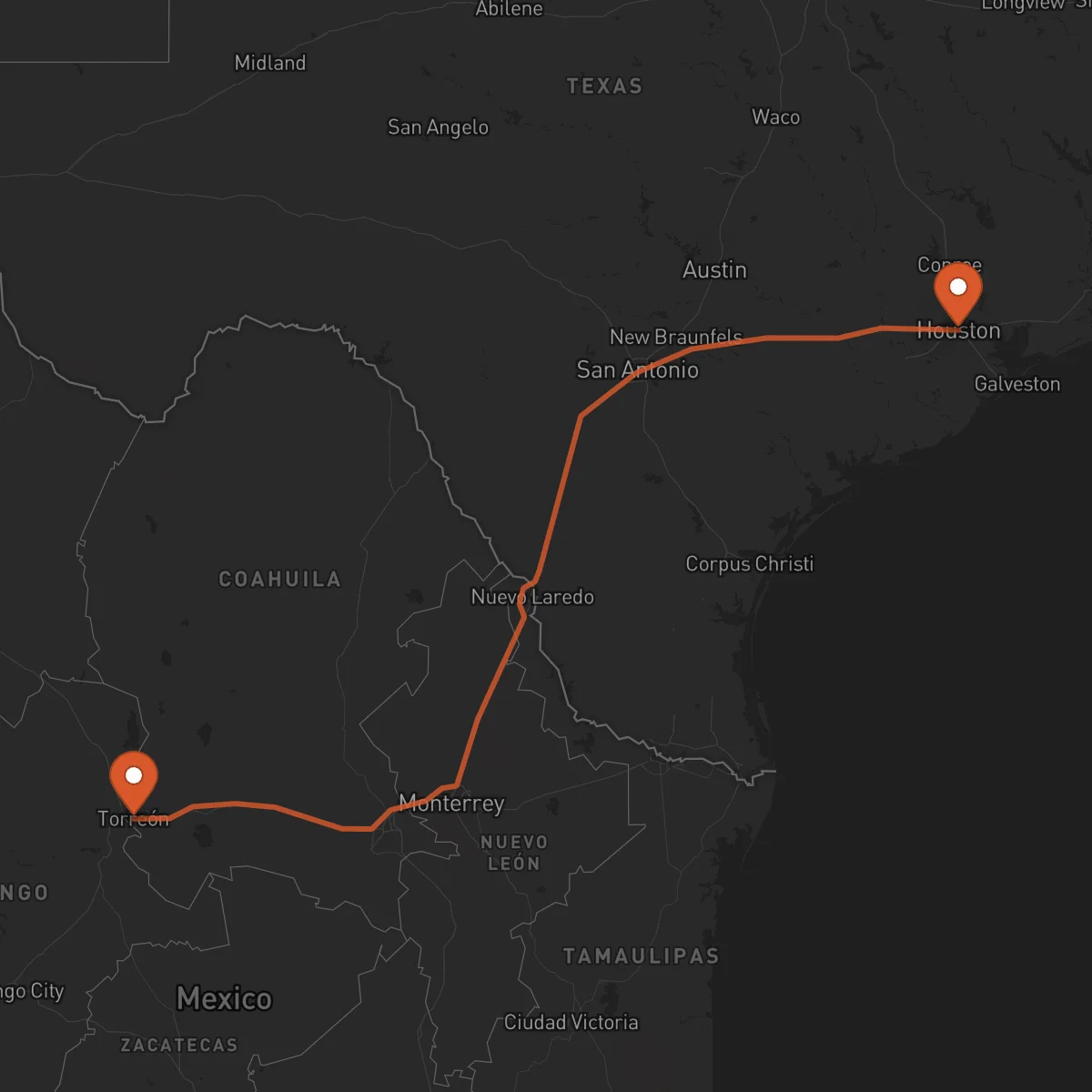
Houston to Torreón
Torreón → HoustonFTL freight transportation service between Houston and Torreón. Reliable logistics solutions for your business.
Route Description
Everything you need to know about the corridor Houston - Torreón
The Houston-Torreón corridor represents a vital logistics connection between the United States and Mexico, spanning approximately 920 kilometers. This cross-border route links one of Texas' most important industrial hubs with a key manufacturing center in northern Mexico. The corridor facilitates the movement of goods between two dynamic economic regions, enabling efficient supply chain operations for companies operating on both sides of the border.
The economic significance of this corridor is substantial, connecting Houston's energy sector, petrochemical industry, and manufacturing base with Torreón's industrial parks and automotive production facilities. Major companies in aerospace, automotive, and electronics industries rely on this route for their just-in-time inventory management and distribution needs. The corridor supports a wide range of cargo types, from raw materials and components to finished products and specialized equipment.
Transportation along this route primarily utilizes the I-45 and US-180 highways in the United States, transitioning to Mexican Federal Highways 45 and 40. The Laredo-Nuevo Laredo border crossing serves as the main point of entry, offering efficient customs processing for qualified freight forwarders. Control Terrestre's expertise in cross-border operations ensures smooth customs clearance, proper documentation handling, and compliance with all regulatory requirements, minimizing delays and optimizing transit times for our clients' shipments.
Services for this Route
Available services for the corridor Houston - Torreón
 Origin
Houston
Houston stands as a strategic logistics powerhouse in the southern United States, offering unparalleled connectivity through its extensive transportation infrastructure. The city boasts the Port of Houston, one of the busiest ports in the nation, complemented by George Bush Intercontinental Airport and William P. Hobby Airport for air cargo operations. Houston's location provides direct access to major interstate highways, including I-10, I-45, and I-69, creating a comprehensive multimodal transportation network.
The Houston metropolitan area is home to diverse industries, with particular strength in energy (oil and gas), petrochemicals, healthcare, and aerospace. The Texas Medical Center, NASA's Johnson Space Center, and numerous Fortune 500 company headquarters contribute to the city's economic vitality. This industrial diversity generates substantial freight volume, making Houston an ideal origin point for cross-border shipments to Mexico and beyond.
 Destination
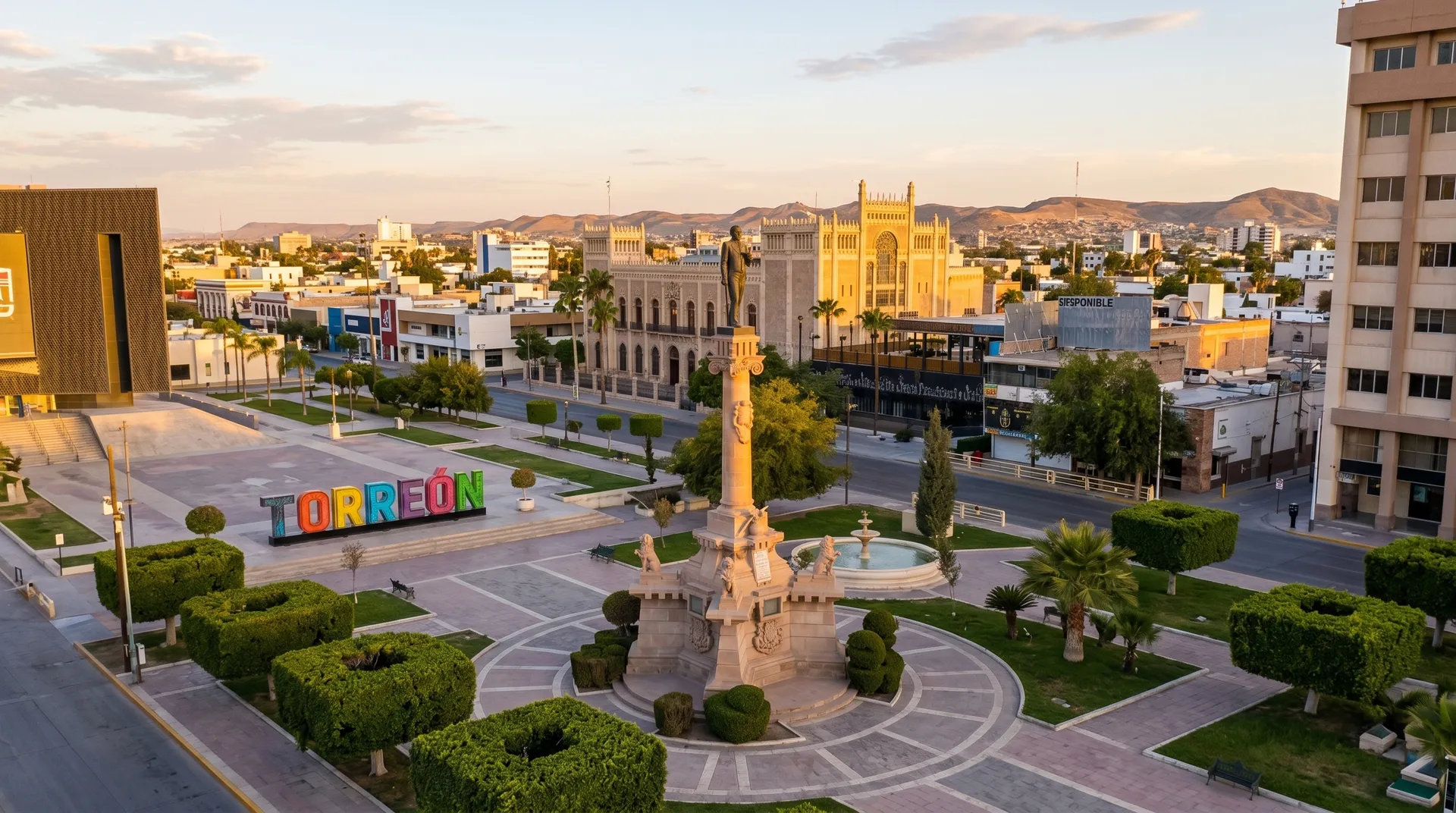
Torreón occupies a strategic position in Mexico's La Laguna region, serving as an important industrial and commercial center in Coahuila state. The city benefits from its location within the Comarca Lagunera, a significant urban and industrial agglomeration that includes neighboring Gómez Palacio in Durango. Torreón's transportation infrastructure includes access to Mexican Federal Highway 40 and proximity to major rail lines, facilitating both domestic and international freight movements.
The region's economy is characterized by strong manufacturing and industrial sectors, with particular emphasis on automotive production, aerospace components, and food processing. Torreón hosts several industrial parks that attract foreign investment and support export-oriented manufacturing. The city's industrial base creates consistent demand for reliable freight transportation services, particularly for time-sensitive components and finished goods moving between Mexico and the United States.










