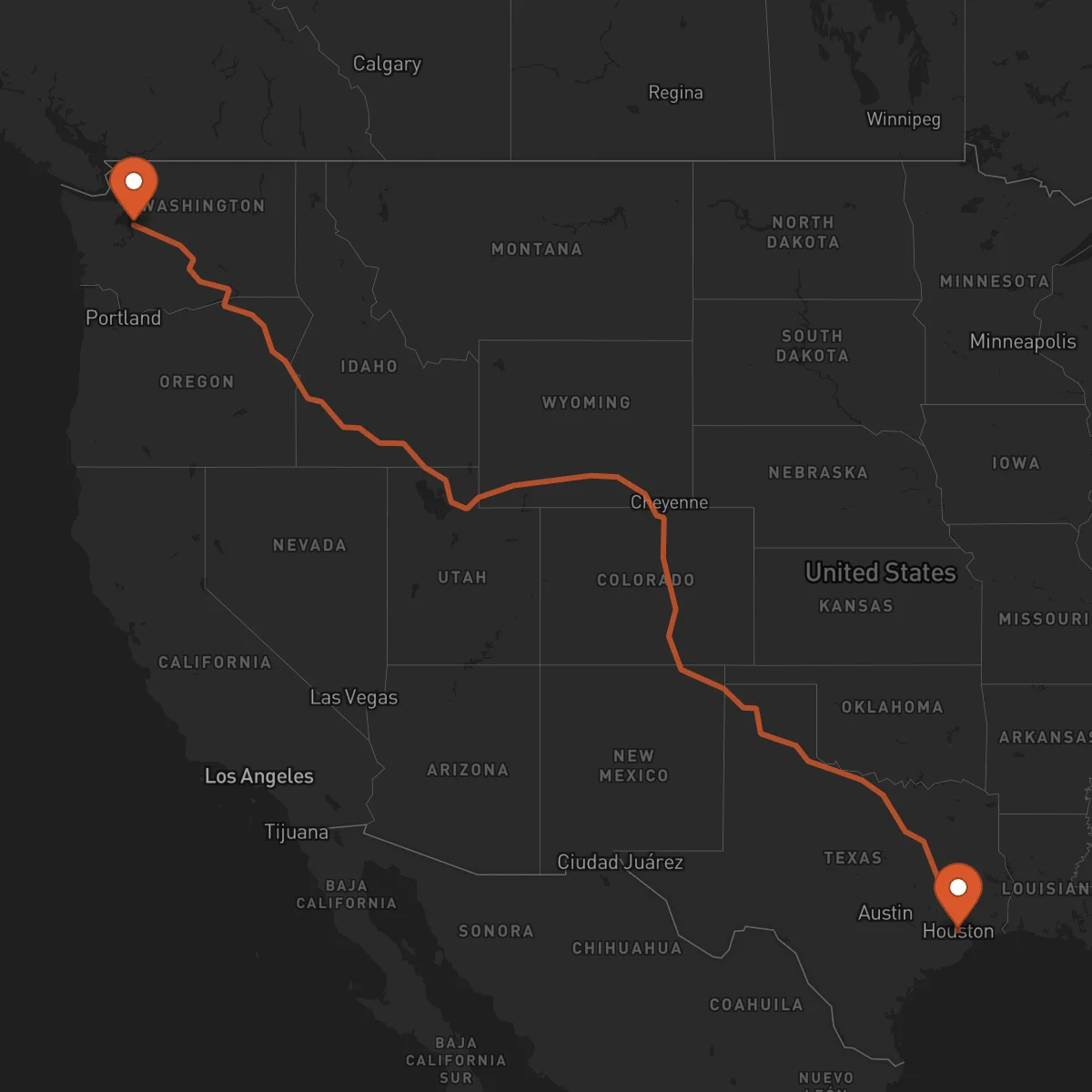
Houston to Seattle
Seattle → HoustonFTL freight transportation service between Houston and Seattle. Reliable logistics solutions for your business.
Route Description
Everything you need to know about the corridor Houston - Seattle
The Houston to Seattle corridor represents one of the most important freight transportation routes in the United States, connecting the energy and industrial hub of Texas with the technology and maritime center of the Pacific Northwest. This 3,041 km route traverses multiple states and crosses diverse geographic and economic regions, making it a vital artery for national commerce.
The corridor's strategic importance stems from the complementary economic profiles of both regions. Houston serves as the energy capital of North America, while Seattle stands as a gateway to Asian markets and a center for technology and aerospace industries. This creates a dynamic flow of goods in both directions, with energy products, industrial equipment, and consumer goods moving north, while technology components, seafood, and finished products travel south.
Key industries utilizing this corridor include oil and gas, technology, aerospace, automotive, agriculture, and retail. The route primarily follows major interstate highways including I-10 West, I-25 North, and I-90 West, providing reliable and efficient transportation infrastructure. Control Terrestre optimizes operations on this corridor through our network of certified carriers, offering dedicated full truckload services that ensure your cargo moves directly from origin to destination without unnecessary stops or handling.
Services for this Route
Available services for the corridor Houston - Seattle
 Origin
Houston
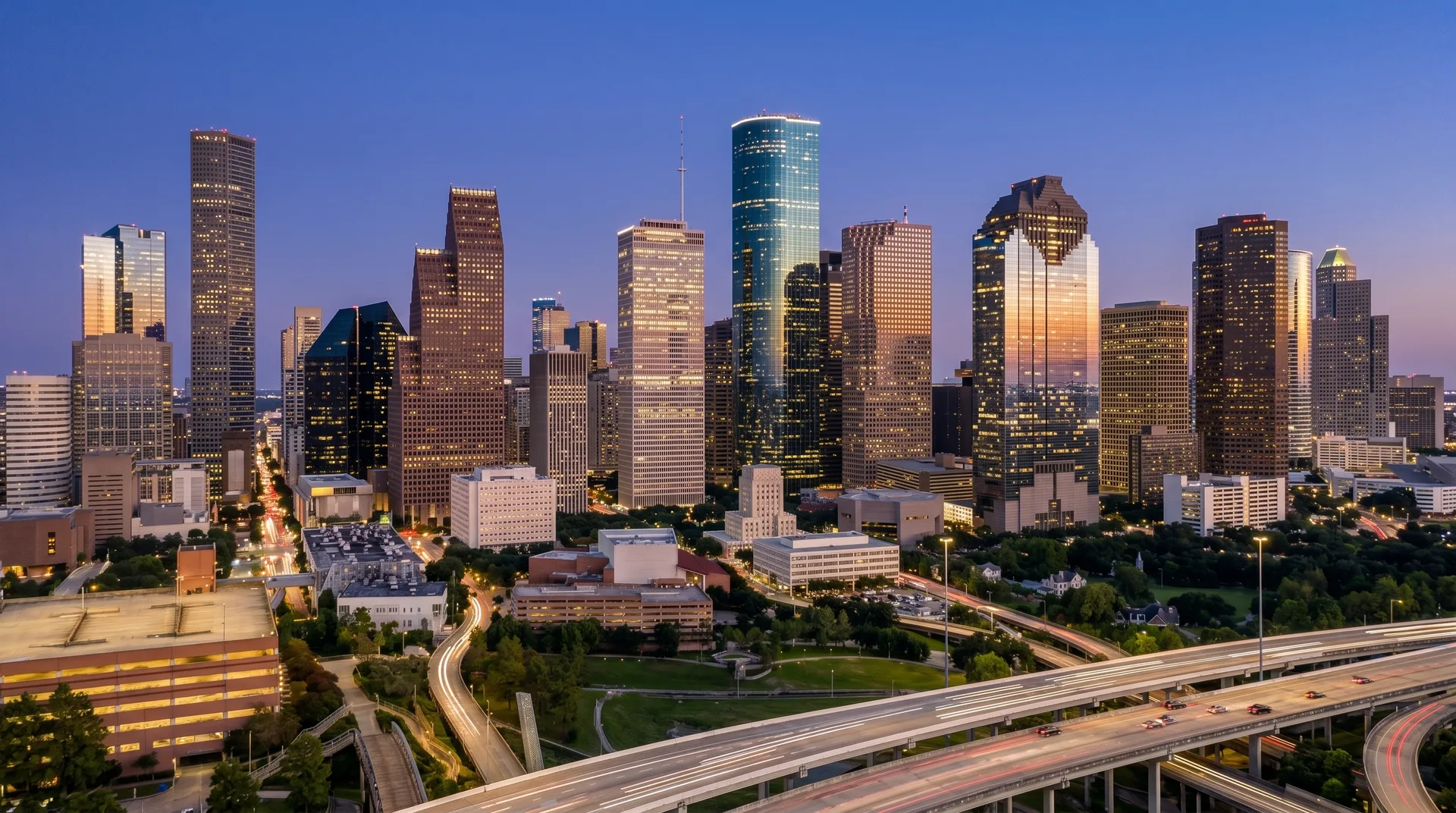
Houston stands as a critical logistics hub in the southern United States, offering strategic access to major ports, rail networks, and interstate highways. The city's location near the Gulf of Mexico provides direct access to international shipping routes, while its extensive highway system connects to major markets across the country. Houston's Port, one of the busiest in the nation, handles millions of tons of cargo annually, complemented by the city's robust rail infrastructure and George Bush Intercontinental Airport.
The Houston metropolitan area is home to the energy industry's headquarters, with numerous oil and gas companies, refineries, and petrochemical plants driving the local economy. Beyond energy, Houston boasts significant healthcare, aerospace, manufacturing, and technology sectors. The city's diverse industrial base creates substantial freight movement, with Houston serving as a major origin point for specialized cargo, hazardous materials, and oversized equipment that requires expert handling and transportation.
 Destination
Seattle
Seattle's strategic location on the Pacific Northwest coast makes it a vital gateway for trade with Asia and a key logistics hub for the western United States. The Port of Seattle, in conjunction with the Port of Tacoma, forms the fourth-largest container gateway in North America, handling billions of dollars in international trade annually. The city's extensive transportation infrastructure includes major interstate highways, rail connections, and Seattle-Tacoma International Airport, creating multiple options for freight movement.
The Seattle metropolitan area is renowned for its technology sector, anchored by major companies in software, cloud computing, and e-commerce. Additionally, Seattle serves as a center for aerospace manufacturing, with Boeing's presence driving significant industrial activity. The region's economy also includes maritime industries, healthcare, and advanced manufacturing. Seattle's position as both a technology hub and a maritime gateway creates unique freight demands, requiring specialized transportation solutions for everything from high-tech equipment to oversized aerospace components.










