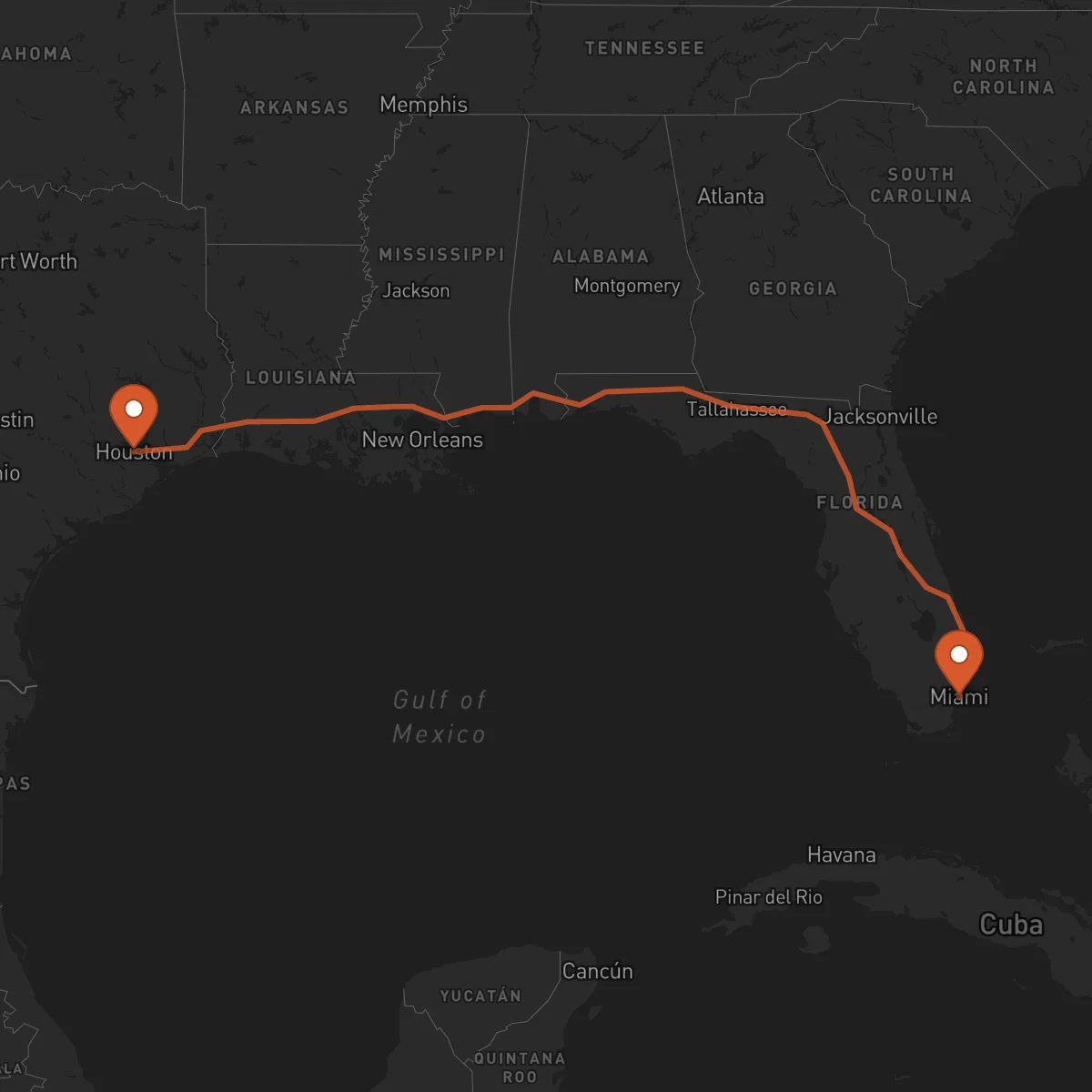
Houston to Miami
Miami → HoustonFTL freight transportation service between Houston and Miami. Reliable logistics solutions for your business.
Route Description
Everything you need to know about the corridor Houston - Miami
The Houston-Miami corridor represents a vital logistics route connecting the energy and industrial powerhouse of Texas with the international trade hub of Florida. This 1,557 km domestic corridor traverses the heart of the southeastern United States, linking two major metropolitan areas with significant economic impact. The route facilitates the movement of diverse cargo types between the Gulf Coast and Atlantic Coast, serving as a crucial artery for both domestic distribution and international trade flows through the Port of Miami and Houston's extensive port facilities.
The economic significance of this corridor is underscored by the complementary industrial strengths of both regions. Houston's energy sector, petrochemical industry, and manufacturing base create substantial outbound freight volumes, while Miami's role as the gateway to Latin America and its thriving tourism, agriculture, and technology sectors generate diverse import and export needs. The corridor supports industries ranging from automotive and electronics to perishable goods and construction materials, making it a dynamic freight transportation route.
Control Terrestre leverages this strategic corridor through our network of certified transportation providers, offering dedicated FTL services that ensure efficient, reliable cargo movement. Our expertise in managing full truckload shipments along this route includes specialized handling for oversized cargo, temperature-controlled freight, and time-sensitive deliveries. We optimize routing through key transportation infrastructure including I-10 East and I-75 South, providing our clients with seamless door-to-door service that maintains cargo integrity throughout the journey.
Services for this Route
Available services for the corridor Houston - Miami
 Origin
Houston
Houston stands as a critical logistics hub in the southern United States, strategically positioned near the Gulf of Mexico with access to major port facilities including the Port of Houston, one of the busiest ports in the nation. The city's extensive transportation infrastructure includes multiple interstate highways (I-10, I-45, I-69), two major airports, and a comprehensive rail network. Houston's economy is dominated by the energy sector, with numerous refineries, petrochemical plants, and oil and gas companies creating substantial freight generation. The city also hosts significant manufacturing, healthcare, and technology industries, contributing to diverse cargo flows. Houston's central location in Texas and proximity to Mexico make it an ideal origin point for freight distribution throughout the southeastern United States and beyond.
 Destination
Miami
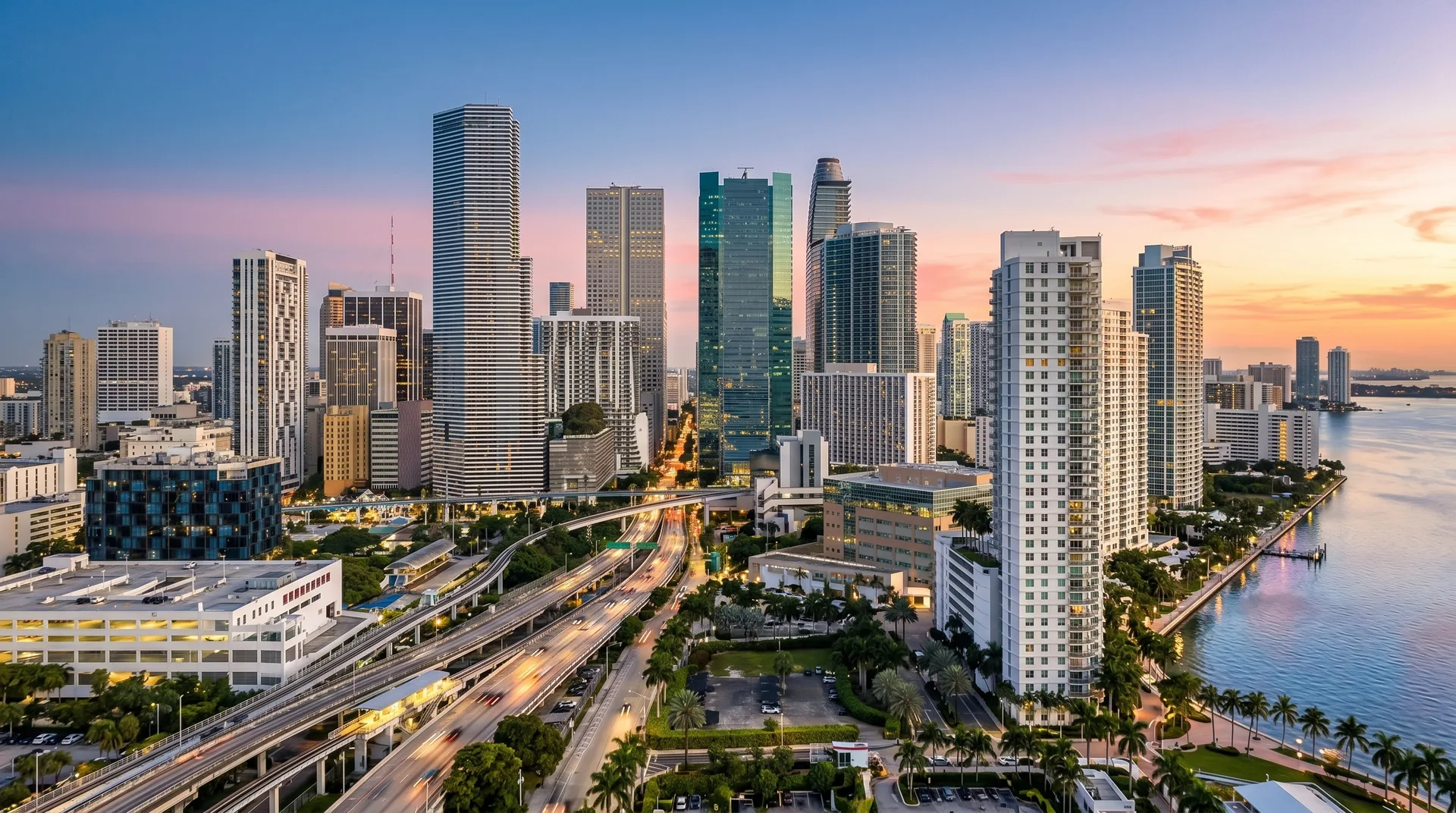
Miami serves as a strategic gateway to Latin America and the Caribbean, with its location at the southeastern tip of Florida providing unique access to international markets. The city's logistics infrastructure includes the Port of Miami, Miami International Airport (one of the top air cargo hubs in the US), and major highway connections including I-95 and the Florida Turnpike. Miami's economy thrives on international trade, tourism, agriculture (particularly fresh produce imports), and financial services. The region's role as a cultural and commercial bridge between North and South America generates substantial freight volumes across multiple sectors. Miami's warehousing and distribution facilities are equipped to handle specialized cargo, including perishables and high-value goods, making it an ideal destination for diverse freight types moving through the Houston-Miami corridor.










