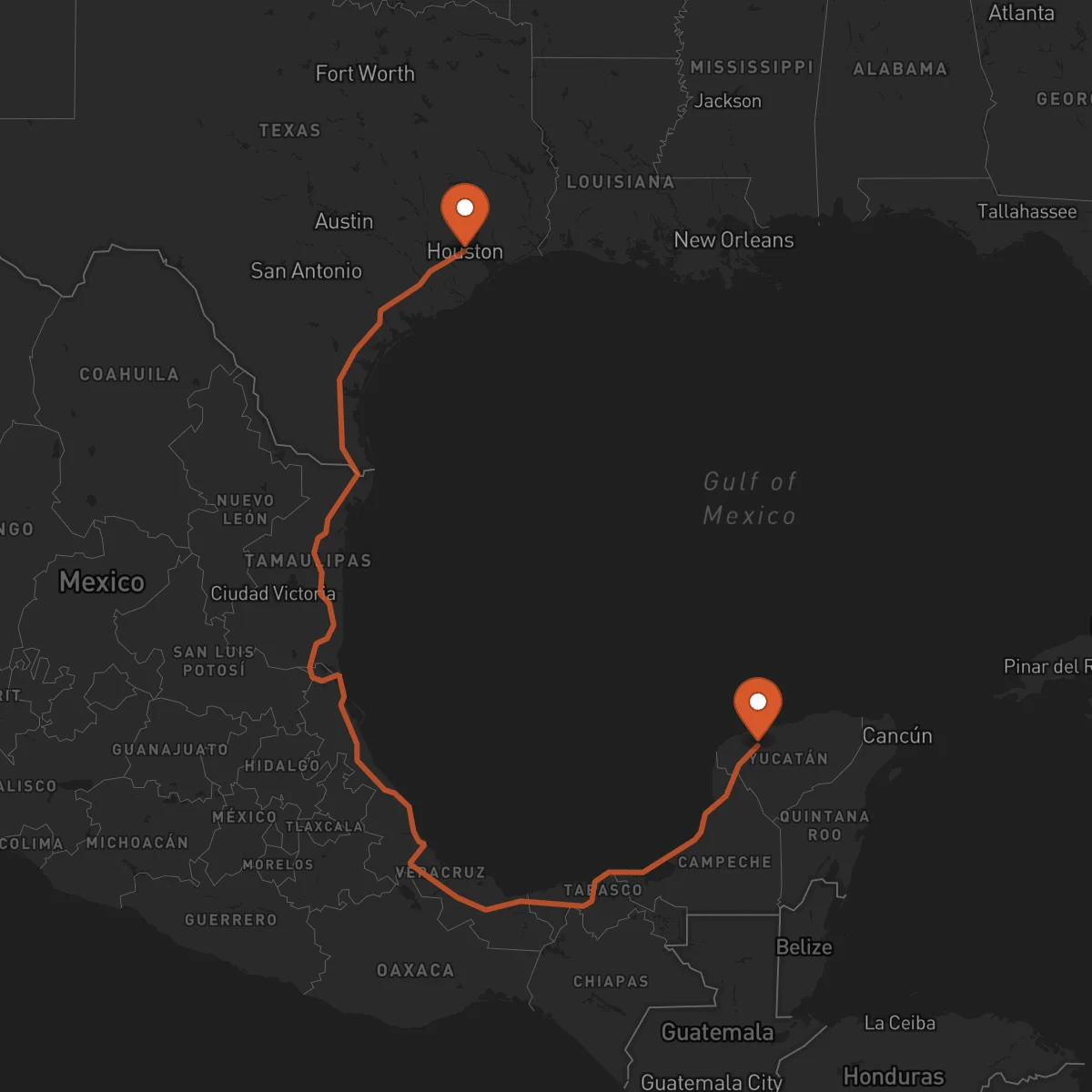
Houston to Mérida
Mérida → HoustonFTL freight transportation service between Houston and Mérida. Reliable logistics solutions for your business.
Route Description
Everything you need to know about the corridor Houston - Mérida
The Houston-Mérida logistics corridor is a strategic cross-border route connecting one of the most important industrial hubs in the United States with a key economic center in southeastern Mexico. This 1,137 km route facilitates the movement of goods between two dynamic markets, enabling efficient supply chain operations for companies operating in both countries. The corridor traverses diverse landscapes and crosses multiple states, requiring expert knowledge of cross-border regulations and procedures.
The economic relationship between Houston and Mérida is strengthened by their complementary industrial profiles. Houston, with its robust energy, petrochemical, and manufacturing sectors, serves as a gateway for goods entering and exiting the Gulf Coast region. Mérida, as the capital of Yucatán, is a growing center for tourism, agriculture, and light manufacturing, with increasing demand for imported goods and equipment. This corridor supports the flow of raw materials, finished products, and specialized equipment between these markets.
Key industries utilizing this corridor include energy equipment and supplies, automotive parts, agricultural products, construction materials, and consumer goods. The route primarily follows major highways including I-10 West and Mexican Federal Highway 180, connecting through strategic border crossings such as Laredo/Nuevo Laredo or Brownsville/Matamoros. Control Terrestre's expertise in cross-border operations ensures seamless transit through customs procedures, compliance with both USMCA and Mexican regulations, and reliable delivery to final destinations in the Yucatán Peninsula.
Services for this Route
Available services for the corridor Houston - Mérida
 Origin
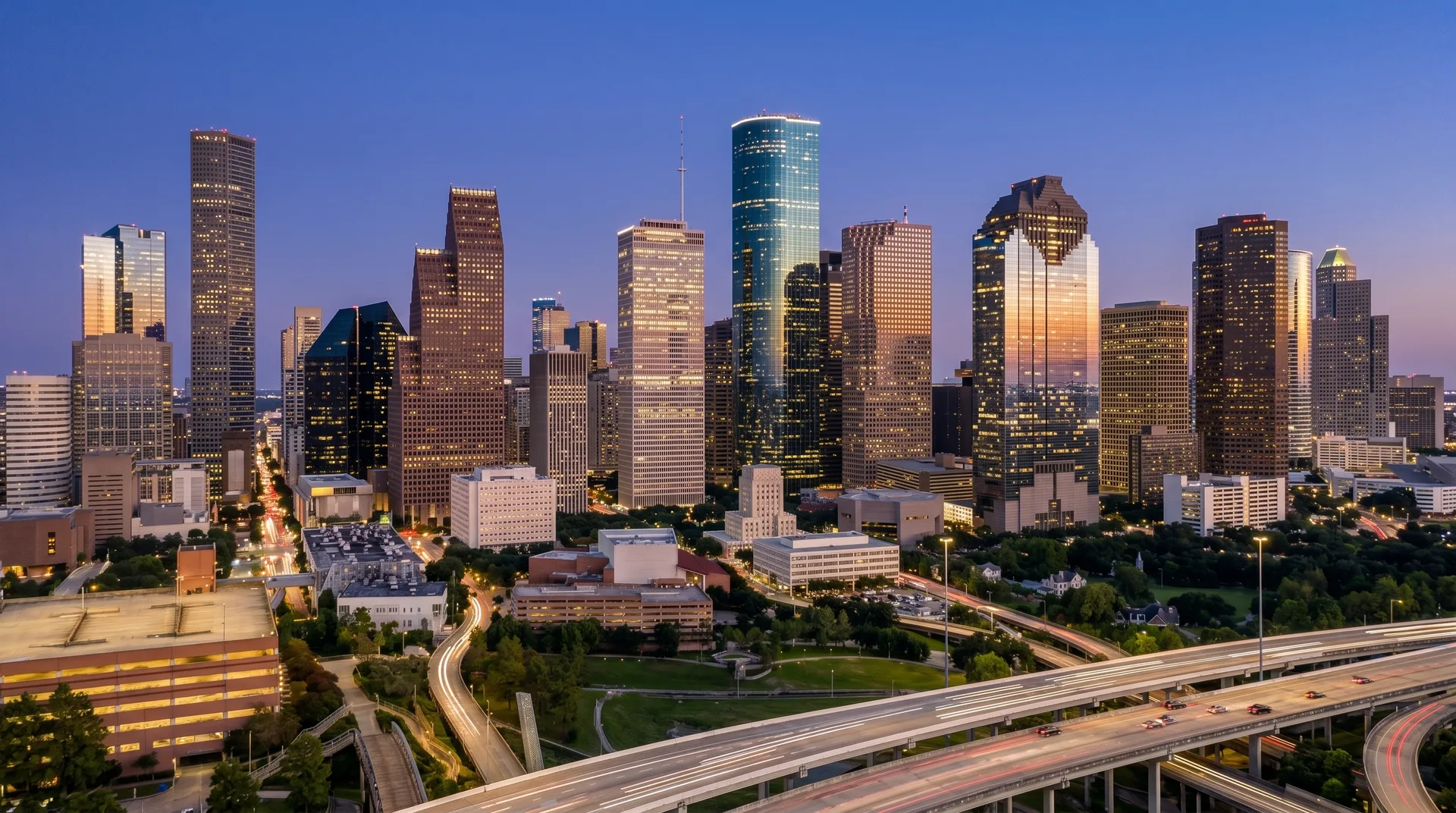
Houston
Houston, Texas, stands as one of the most important logistics hubs in the United States, strategically located near the Gulf of Mexico and major port facilities. The city's economy is anchored by the energy sector, with numerous oil and gas companies headquartered in the area, alongside a strong presence of petrochemical, aerospace, and healthcare industries. Houston's transportation infrastructure includes the Port of Houston (one of the busiest ports in the US), George Bush Intercontinental Airport, William P. Hobby Airport, and an extensive network of highways including I-10, I-45, and I-69. The city's central location in the Gulf Coast region makes it an ideal starting point for cross-border freight movements to Mexico and beyond.
 Destination
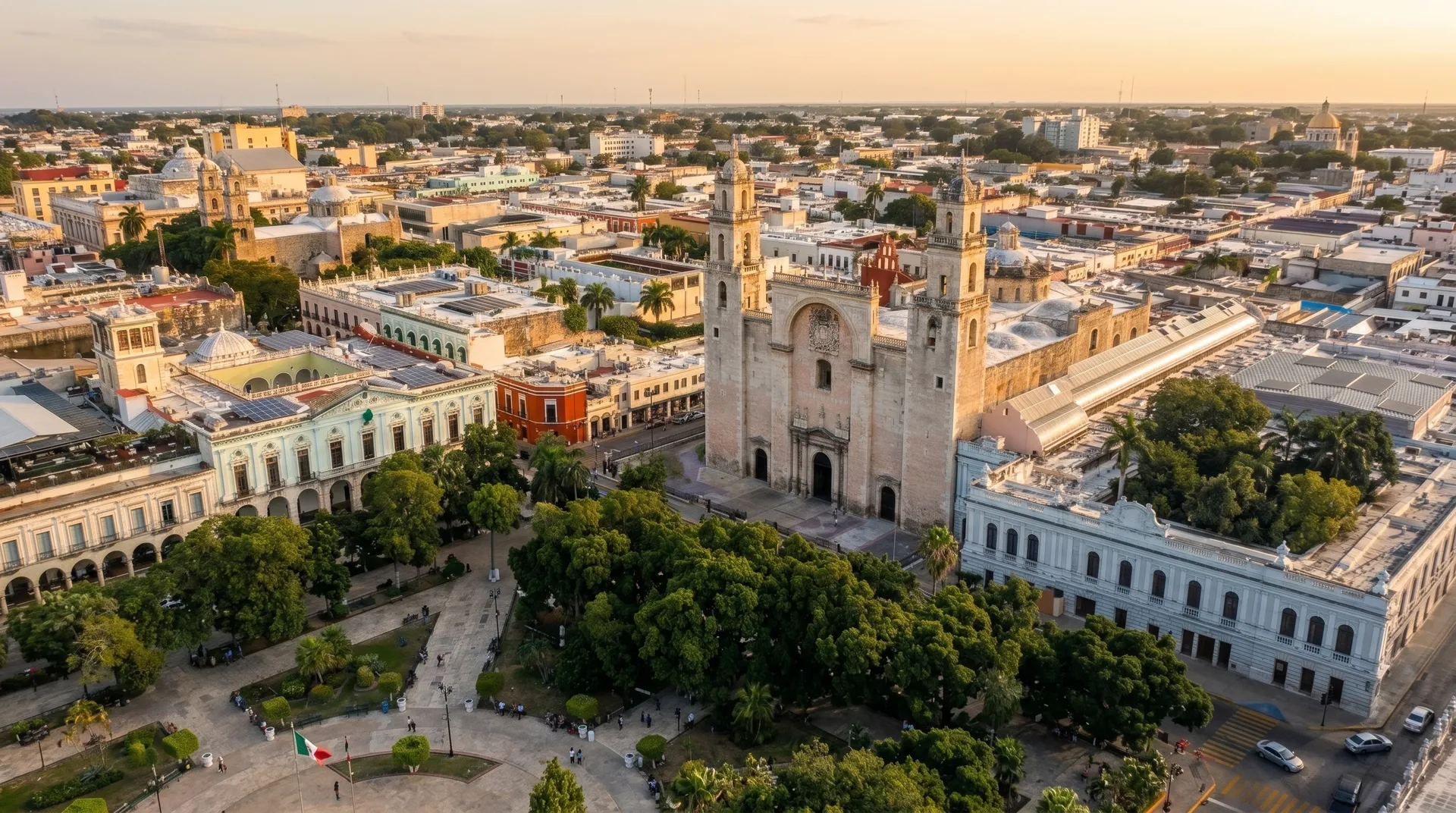
Mérida, Yucatán, is the vibrant capital of the Yucatán state and a key economic center in southeastern Mexico. Known for its rich Mayan heritage and growing tourism industry, Mérida has also developed strong agricultural, manufacturing, and service sectors. The city's strategic location provides access to the entire Yucatán Peninsula, including important ports like Progreso and growing industrial zones in nearby municipalities. Mérida's transportation infrastructure includes Manuel Crescencio Rejón International Airport, a developing highway network connecting to major Mexican cities, and proximity to the Progreso port for maritime freight. The region's economy benefits from both local production and imported goods, making efficient logistics corridors essential for business operations.










