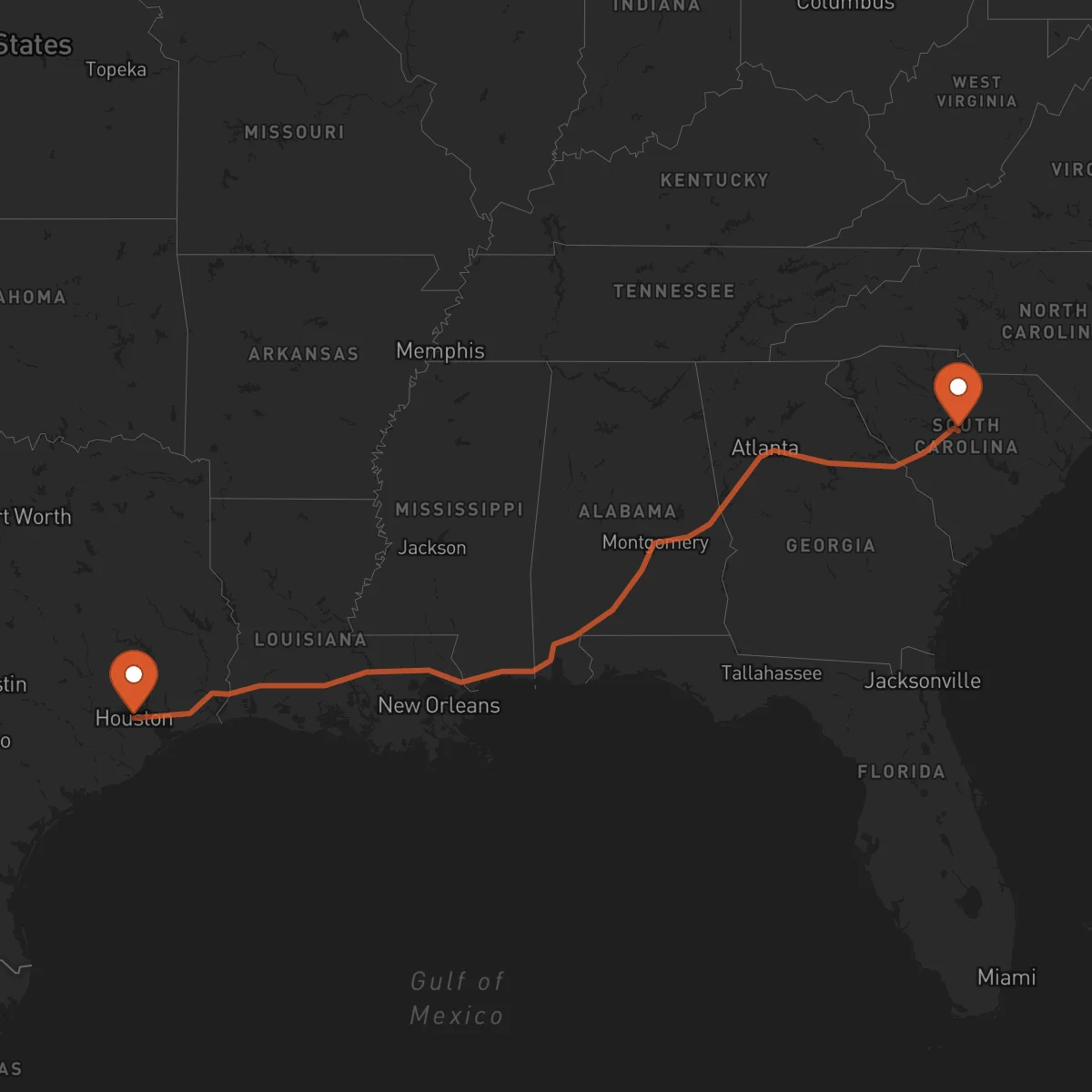
Houston to Columbia
Columbia → HoustonFTL freight transportation service between Houston and Columbia. Reliable logistics solutions for your business.
Route Description
Everything you need to know about the corridor Houston - Columbia
The Houston to Columbia corridor represents a vital logistics route connecting the energy capital of the United States with South Carolina's capital and economic center. This 1432 km domestic corridor traverses diverse landscapes and economic regions, facilitating the movement of goods between two dynamic markets. The route primarily follows major interstate highways including I-10 East and I-20 East, providing reliable and efficient transportation infrastructure for freight operations.
The economic significance of this corridor extends beyond simple point-to-point transportation. Houston serves as a global energy hub and major port city, while Columbia functions as a growing distribution center for the Southeast. This creates substantial freight volume between industrial centers, manufacturing facilities, and distribution networks. The corridor supports numerous industries including energy equipment, automotive parts, industrial machinery, consumer goods, and agricultural products moving in both directions.
Control Terrestre optimizes operations on this corridor through our specialized full truckload services. Our strategic alliance with certified carriers ensures consistent capacity and reliable service across the entire route. We understand the unique requirements of shippers operating between these markets and provide dedicated transportation solutions that maintain cargo integrity while meeting delivery schedules. Our expertise in managing cross-state freight movements makes us the ideal partner for companies requiring dependable Houston to Columbia transportation services.
Services for this Route
Available services for the corridor Houston - Columbia
 Origin
Houston
Houston stands as one of America's most important logistics hubs, combining its strategic Gulf Coast location with extensive transportation infrastructure. The city serves as a gateway for international trade through the Port of Houston, while its central position in Texas provides access to major freight corridors throughout the Southwest. Houston's economy is anchored by the energy sector, with numerous refineries, petrochemical plants, and energy service companies requiring reliable freight transportation.
The city offers exceptional transportation infrastructure including George Bush Intercontinental Airport, William P. Hobby Airport, and extensive rail networks operated by major carriers. Houston's highway system features multiple interstate connections including I-10, I-45, and I-69, providing efficient access to national freight routes. The metropolitan area hosts numerous warehousing and distribution centers, supporting industries ranging from energy and manufacturing to healthcare and technology.
 Destination
Columbia
Columbia serves as South Carolina's capital and a growing logistics center in the Southeast United States. Located at the confluence of major transportation routes, the city provides strategic access to regional markets including Atlanta, Charlotte, and Charleston. Columbia's central position in South Carolina makes it an ideal distribution point for goods moving throughout the Southeast and Mid-Atlantic regions.
The city benefits from excellent transportation infrastructure including Columbia Metropolitan Airport and proximity to major ports via highway connections. Interstate 20 and Interstate 26 provide direct access to regional freight networks, while the city's developing logistics parks accommodate modern warehousing and distribution operations. Columbia's economy includes manufacturing, healthcare, education, and government sectors, all requiring dependable freight transportation services to maintain their supply chains.










