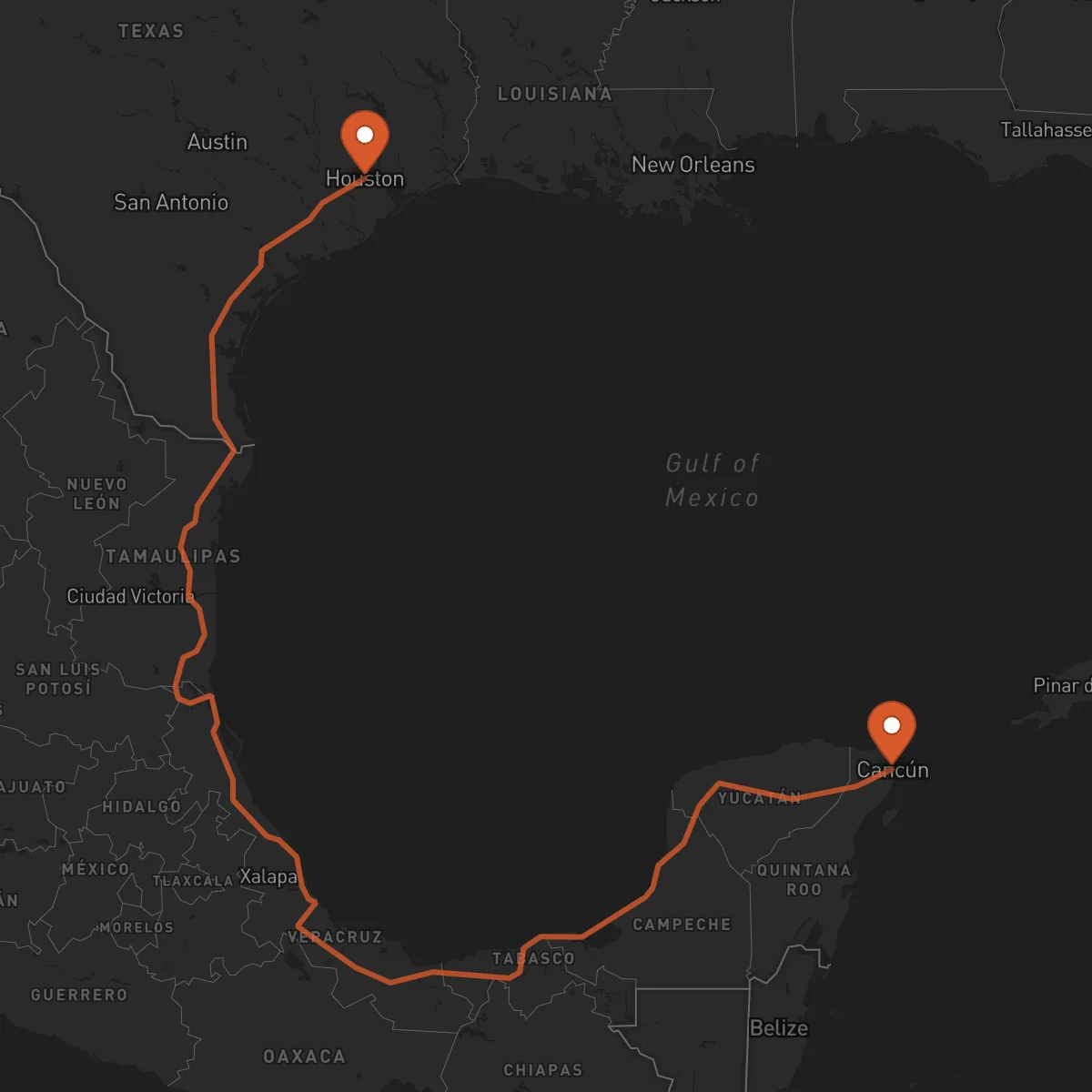
Houston to Cancún
Cancún → HoustonFTL freight transportation service between Houston and Cancún. Reliable logistics solutions for your business.
Route Description
Everything you need to know about the corridor Houston - Cancún
The Houston-Cancún logistics corridor represents a vital trade connection between the United States and Mexico, spanning approximately 1,282 kilometers across the Gulf Coast region. This route links one of America's most important energy and industrial hubs with one of Mexico's premier tourist destinations and growing industrial centers. The corridor facilitates the movement of diverse cargo types, from petroleum products and industrial equipment to consumer goods and construction materials, supporting both the energy sector and the booming tourism industry in the Mexican Caribbean.
The transportation infrastructure along this route includes major highways such as US-77 South and Mexican Federal Highway 180, connecting through key points like Brownsville-Matamoros for border crossing. This corridor benefits from Houston's extensive port facilities, rail connections, and proximity to the US-Mexico border, while Cancún offers modern logistics capabilities through its international airport and maritime port. The route traverses diverse terrain from coastal plains to tropical regions, requiring specialized knowledge of cross-border regulations and customs procedures.
Control Terrestre facilitates seamless operations on this corridor through our network of certified carriers and expertise in cross-border logistics. We handle all customs documentation, ensure compliance with both US and Mexican transportation regulations, and provide real-time tracking throughout the journey. Our dedicated team manages the complexities of cross-border freight, including proper documentation for different cargo types and coordination with customs brokers at both ends of the route.
Services for this Route
Available services for the corridor Houston - Cancún
 Origin
Houston
Houston stands as a strategic logistics powerhouse in the southern United States, serving as a critical gateway for international trade. The city boasts one of the busiest ports in the nation, the Port of Houston, which handles millions of tons of cargo annually and provides extensive intermodal connections. Houston's economy is anchored by the energy sector, with numerous oil and gas companies headquartered here, alongside a strong presence of manufacturing, healthcare, and technology industries. The city's location near the Gulf of Mexico and its proximity to the US-Mexico border make it an ideal origin point for cross-border freight movements.
 Destination
Cancún
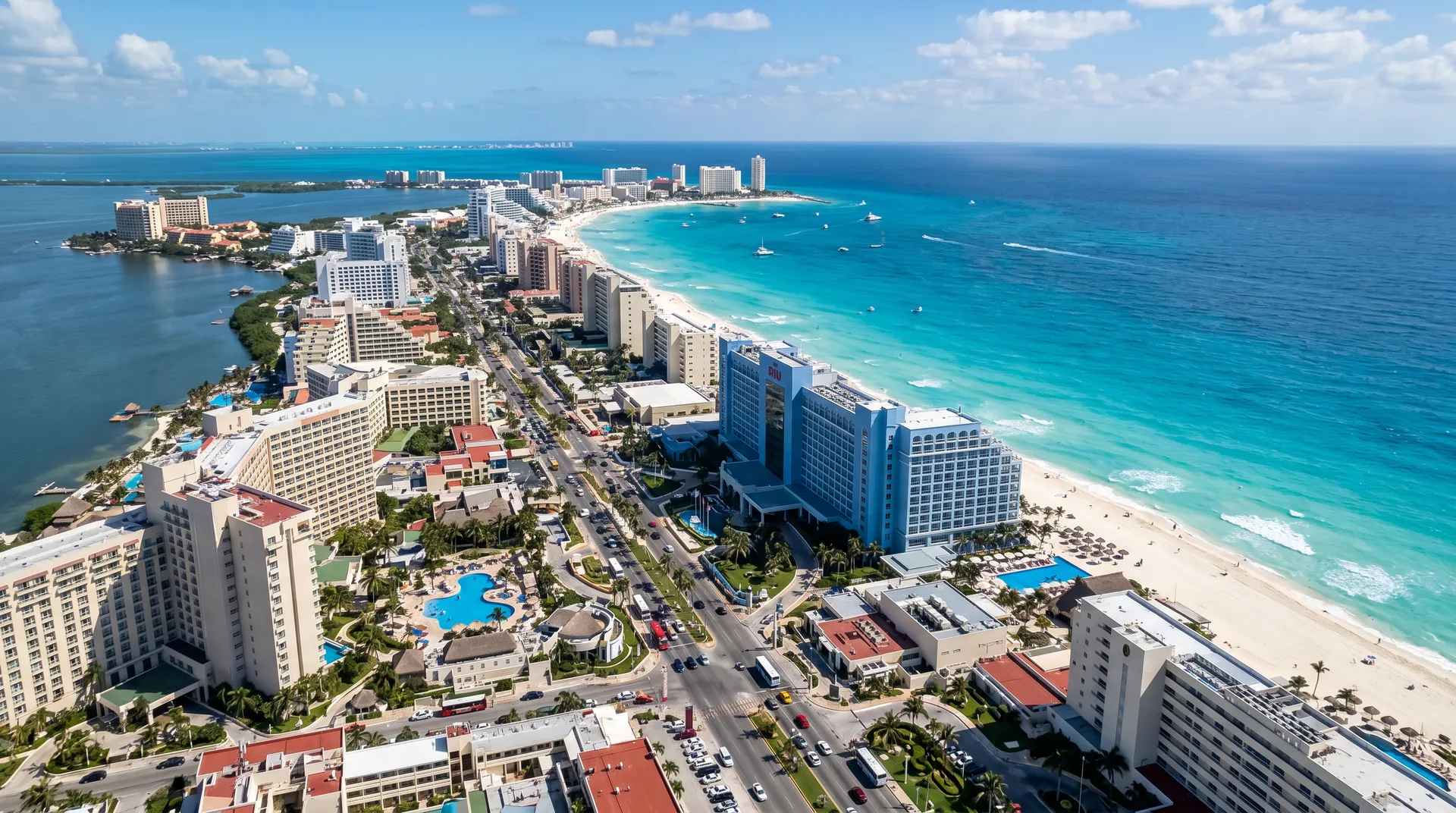
Cancún has evolved from a tourism-centric city to a growing logistics and industrial hub in the Mexican Caribbean. The destination benefits from the Cancun International Airport, one of Mexico's busiest, which handles significant cargo volume alongside passenger traffic. The city's strategic location in Quintana Roo provides access to the Riviera Maya region and serves as a gateway to Central America. Cancún's economy, while still heavily tourism-based, has diversified to include manufacturing, particularly in the aerospace and medical device sectors, creating new opportunities for freight transportation and logistics services.










