Hamilton to Reynosa
Reynosa → HamiltonFTL freight transportation service between Hamilton and Reynosa. Reliable logistics solutions for your business.
Route Description
Everything you need to know about the corridor Hamilton - Reynosa
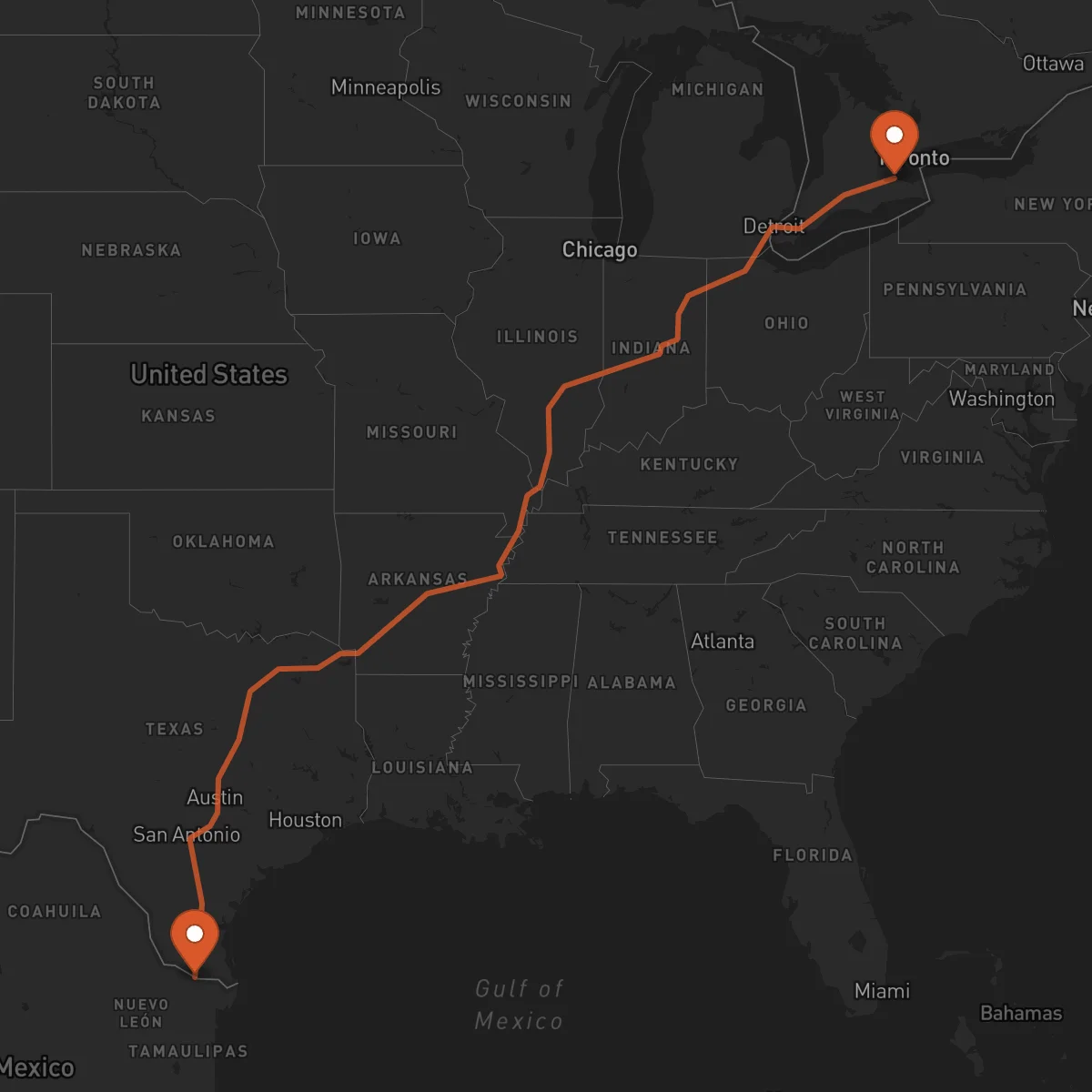
The Hamilton to Reynosa logistics corridor represents a vital cross-border connection between Canada and Mexico, spanning approximately 2,533 kilometers through key industrial regions of North America. This corridor links Hamilton's strategic position in Ontario's manufacturing heartland with Reynosa's prominence as a major industrial hub in northeastern Mexico's border region.
The corridor traverses the United States, crossing through major economic centers including Detroit, Chicago, and Dallas, before reaching the Mexico-U.S. border at either Laredo or McAllen. This route facilitates the movement of diverse cargo types, from automotive parts and industrial equipment to consumer goods and raw materials, supporting the integrated manufacturing processes that characterize North American trade.
Control Terrestre specializes in managing cross-border operations along this corridor, leveraging our expertise in customs procedures and regulatory compliance. Our network of certified carriers ensures seamless transit through the border, with strategic partnerships that facilitate efficient cargo handling at key points. We understand the complexities of cross-border documentation and maintain relationships with customs brokers to expedite clearance processes.
This corridor serves industries including automotive manufacturing, electronics, aerospace, and general manufacturing, with companies leveraging the integrated supply chains between Canada, the United States, and Mexico. Control Terrestre provides dedicated full truckload services along this route, offering temperature-controlled options for sensitive cargo and specialized handling for oversized or hazardous materials shipments.
Services for this Route
Available services for the corridor Hamilton - Reynosa
 Origin
Hamilton, Ontario, is strategically positioned in Canada's manufacturing heartland, serving as a critical logistics hub for the Great Lakes region. The city's location provides direct access to major transportation networks, including the Queen Elizabeth Way (QEW) and Highway 403, connecting to Toronto, the U.S. border, and international shipping routes via the Port of Hamilton on Lake Ontario.
The region's economy is anchored by advanced manufacturing, steel production, automotive parts, and food processing industries. Hamilton's industrial base includes major employers in the steel sector, along with growing aerospace, technology, and research and development operations. The city's proximity to Toronto and the U.S. border makes it an ideal origin point for cross-border freight movements.
Transportation infrastructure in Hamilton includes extensive warehousing and distribution facilities, intermodal yards connecting rail and truck services, and proximity to John C. Munro Hamilton International Airport for air cargo operations. The city's industrial parks and business parks offer modern facilities for logistics operations, supporting efficient freight consolidation and distribution.
 Destination
Reynosa
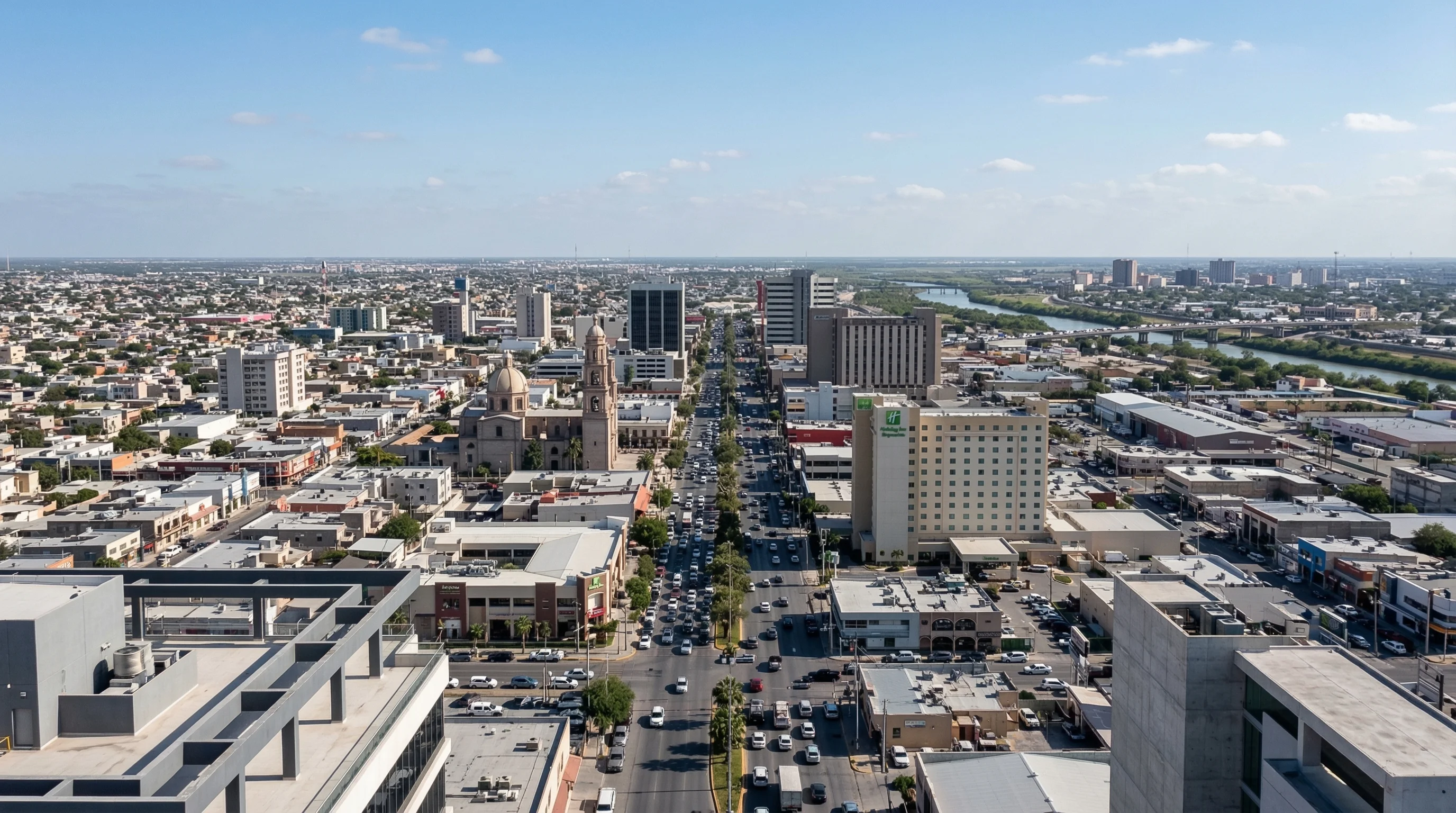
Reynosa, Tamaulipas, stands as a key industrial and logistics center in northeastern Mexico, strategically located along the U.S.-Mexico border directly across from McAllen, Texas. This positioning makes Reynosa a vital gateway for trade between Mexico and the United States, with the Reynosa-Hidalgo International Bridge serving as a primary crossing point for commercial traffic.
The city's economy is dominated by maquiladora manufacturing, with strong presence in automotive, electronics, medical devices, and aerospace industries. Reynosa hosts numerous foreign-owned manufacturing plants that serve both the North American market and global supply chains. The region benefits from Mexico's proximity to major U.S. markets and its integration into the United States-Mexico-Canada Agreement (USMCA).
Transportation infrastructure in Reynosa includes modern industrial parks with integrated logistics services, direct highway connections to major Mexican cities, and efficient border crossing facilities. The city's logistics ecosystem includes warehousing, customs brokerage services, and specialized freight handling capabilities. Reynosa's industrial development has created a robust network of support services for cross-border operations, making it an ideal destination for freight from Canada and the northern United States.










