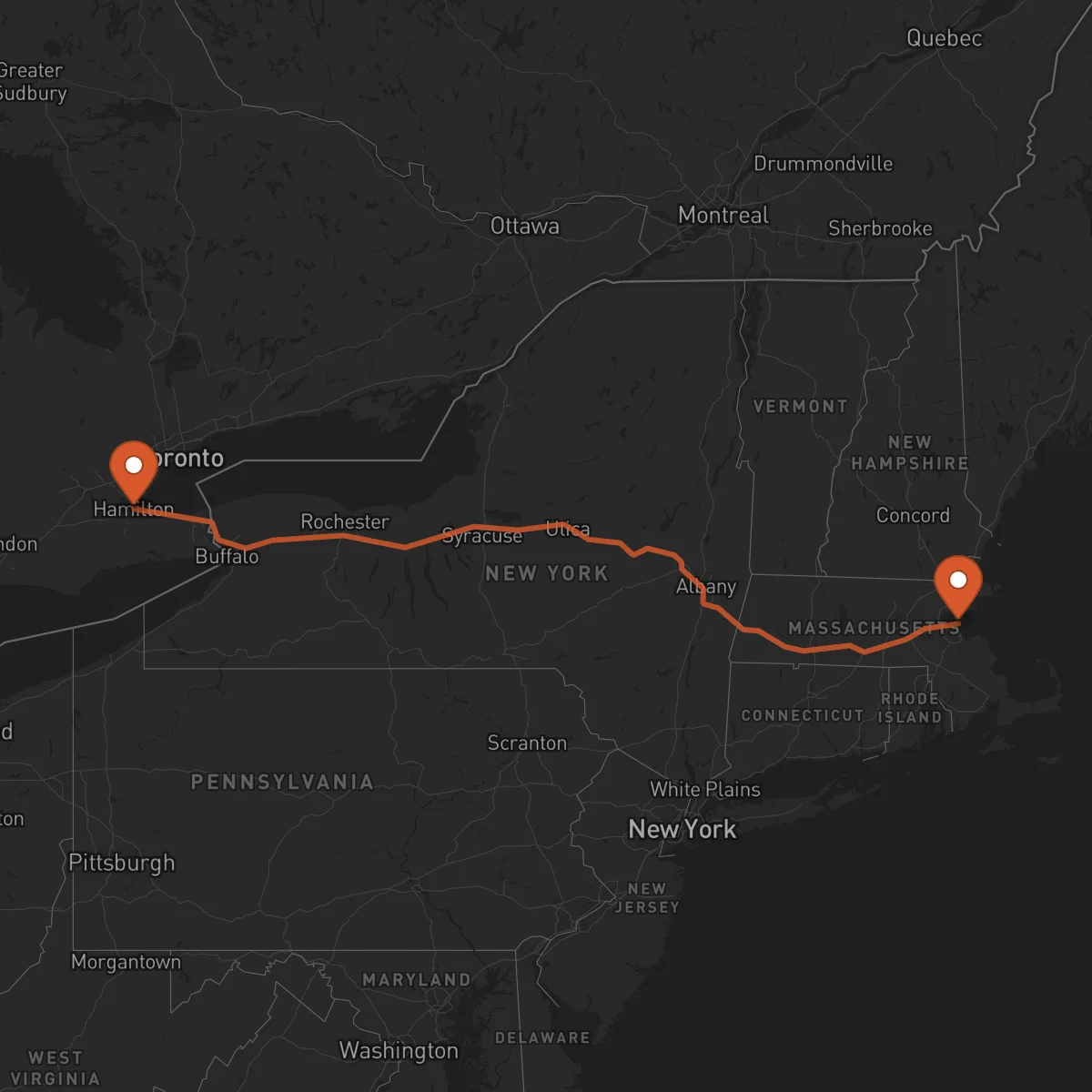
Hamilton to Boston
Boston → HamiltonFTL freight transportation service between Hamilton and Boston. Reliable logistics solutions for your business.
Route Description
Everything you need to know about the corridor Hamilton - Boston
The logistics corridor between Hamilton, Ontario, and Boston, Massachusetts, represents a vital cross-border connection linking Canada's industrial heartland with one of the United States' most dynamic economic centers. This 726-kilometer route traverses the Great Lakes region and New England, facilitating the movement of goods between two major North American markets with distinct but complementary economic profiles.
The corridor connects Hamilton's manufacturing and steel production base with Boston's technology, education, and healthcare sectors. This trade relationship benefits from the strong economic ties between Ontario and Massachusetts, where advanced manufacturing in Hamilton supplies components and materials to Boston's innovative industries. The route serves as a critical supply chain link for automotive parts, industrial equipment, and specialized materials moving between these economic powerhouses.
Transportation along this corridor primarily utilizes Highway 401 through Ontario and Interstate 90 (Massachusetts Turnpike) in the United States, providing efficient access to major distribution centers and industrial zones. The journey includes passage through key border crossings such as the Peace Bridge or Blue Water Bridge, where Control Terrestre's expertise in cross-border documentation and customs compliance ensures smooth transit. Our team manages all necessary permits, customs declarations, and regulatory requirements to minimize delays and maintain supply chain reliability.
Control Terrestre facilitates seamless operations on this corridor through our comprehensive FTL services, offering dedicated equipment options including dry vans for general cargo and refrigerated units for temperature-sensitive shipments. Our strategic partnerships with certified carriers ensure compliance with C-TPAT and FAST programs, while our 24/7 tracking capabilities provide real-time visibility throughout the journey from Hamilton's industrial parks to Boston's port facilities and distribution centers.
Services for this Route
Available services for the corridor Hamilton - Boston
 Origin
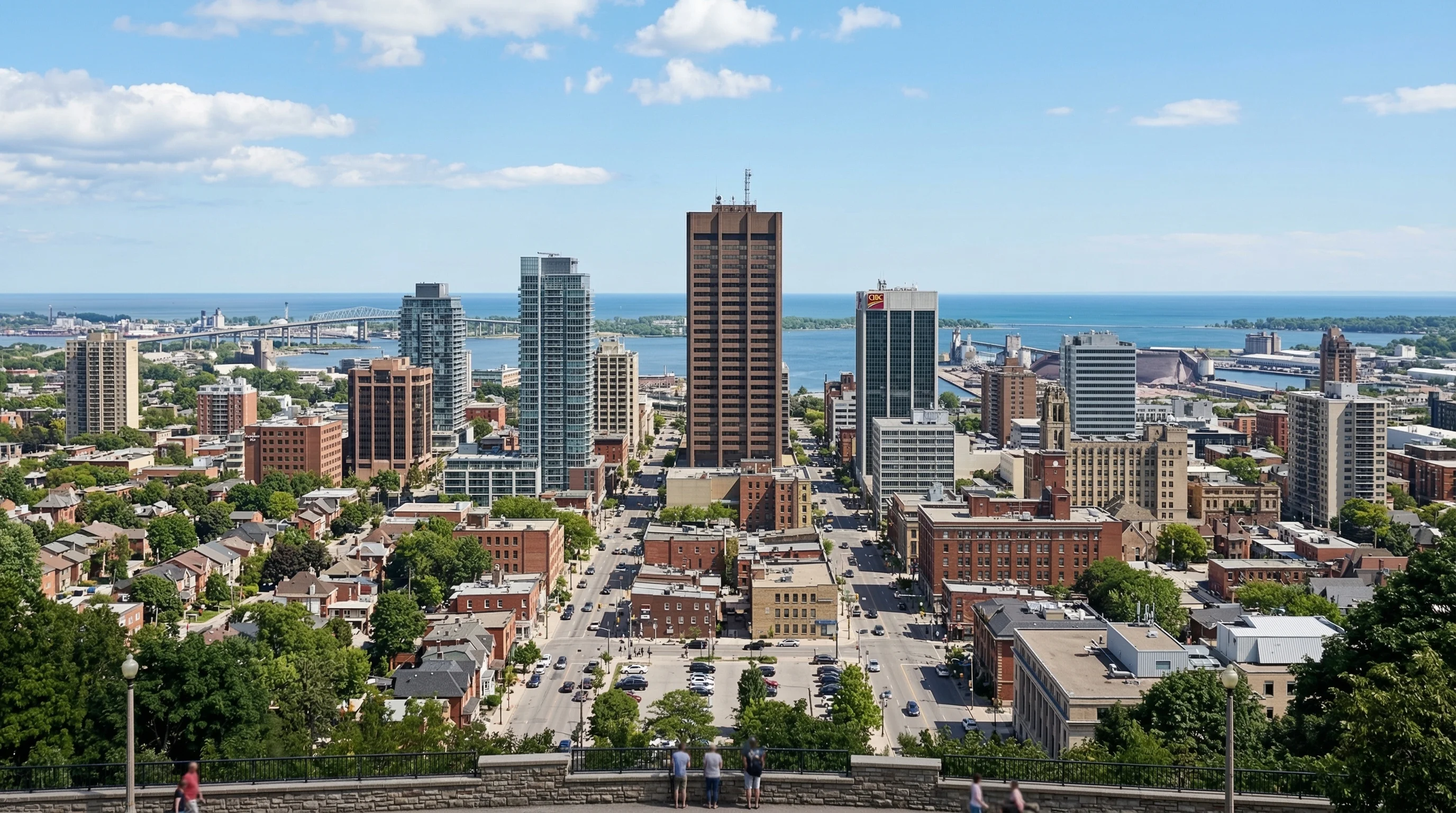
Hamilton, located on the western tip of Lake Ontario, serves as a strategic logistics hub with its proximity to major Canadian markets and international shipping routes. The city's industrial heritage, particularly in steel manufacturing, has evolved into a diverse economic base that includes advanced manufacturing, healthcare, and education sectors. Hamilton's strategic location provides direct access to Highway 401, Canada's busiest highway, connecting it to Toronto, Montreal, and US border crossings within hours.
The city boasts extensive transportation infrastructure including the Hamilton Port Authority, one of Canada's largest ports, and John C. Munro Hamilton International Airport, which supports both passenger and cargo operations. The industrial sectors in Hamilton produce a wide range of goods including automotive components, heavy machinery, and specialized industrial products that require reliable transportation to US markets. The city's manufacturing facilities and warehouses are strategically positioned near major transportation corridors, making it an ideal origin point for cross-border freight movements to destinations like Boston.
 Destination
Boston
Boston, Massachusetts, stands as a major economic and logistics center on the US East Coast, renowned for its concentration of higher education institutions, healthcare facilities, and technology companies. The city's strategic location provides access to the Port of Boston, one of the oldest and most active ports in the United States, facilitating international trade and cargo movement. Boston's position in New England makes it a gateway to the northeastern US market, serving a population of over 8 million people within a few hours' drive.
The metropolitan area features sophisticated transportation infrastructure including Logan International Airport, extensive highway networks (I-90, I-93, I-95), and rail connections that support efficient freight distribution. Boston's economy is driven by biotechnology, medical research, finance, and education, creating demand for specialized logistics services to transport sensitive equipment, research materials, and high-value goods. The city's numerous universities and research institutions require reliable supply chains for laboratory supplies, equipment, and materials, while its healthcare sector depends on timely delivery of medical supplies and pharmaceuticals.










