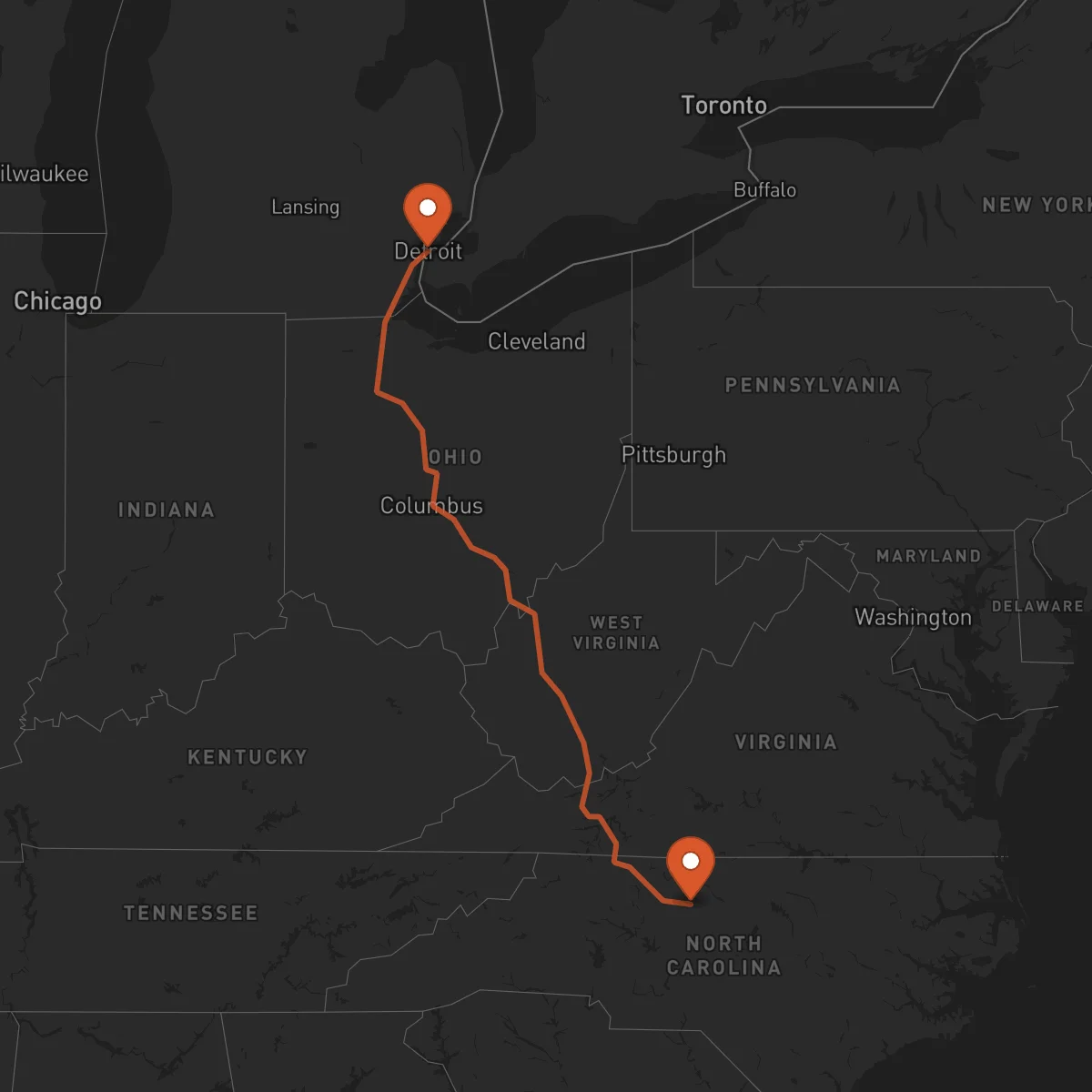
Greensboro to Detroit
Detroit → GreensboroFTL freight transportation service between Greensboro and Detroit. Reliable logistics solutions for your business.
Route Description
Everything you need to know about the corridor Greensboro - Detroit
The Greensboro to Detroit corridor represents a vital logistics artery connecting the Piedmont region of North Carolina with the industrial heartland of Michigan. This 750-kilometer domestic route traverses the eastern United States, linking two significant economic centers through a network of major interstate highways including I-85, I-64, and I-75. The corridor serves as a critical pathway for freight moving between the manufacturing and distribution hubs of the Southeast and the automotive and industrial centers of the Midwest.
The strategic importance of this route stems from the complementary economic profiles of both regions. Greensboro anchors a growing logistics and manufacturing ecosystem in North Carolina, while Detroit remains synonymous with automotive innovation and advanced manufacturing. This corridor facilitates the seamless movement of goods between these complementary markets, supporting supply chains that span from automotive components to consumer goods and industrial equipment.
Control Terrestre optimizes transportation operations along this corridor through our specialized full truckload services. Our network of certified carriers ensures reliable, efficient freight movement with options for dedicated services, expedited shipping, and specialized equipment when needed. We understand the unique demands of this route and provide solutions that maintain cargo integrity while meeting tight delivery schedules. Our expertise in cross-border documentation, though not required for this domestic route, translates to superior logistics management for all shipments between Greensboro and Detroit.
Services for this Route
Available services for the corridor Greensboro - Detroit
 Origin
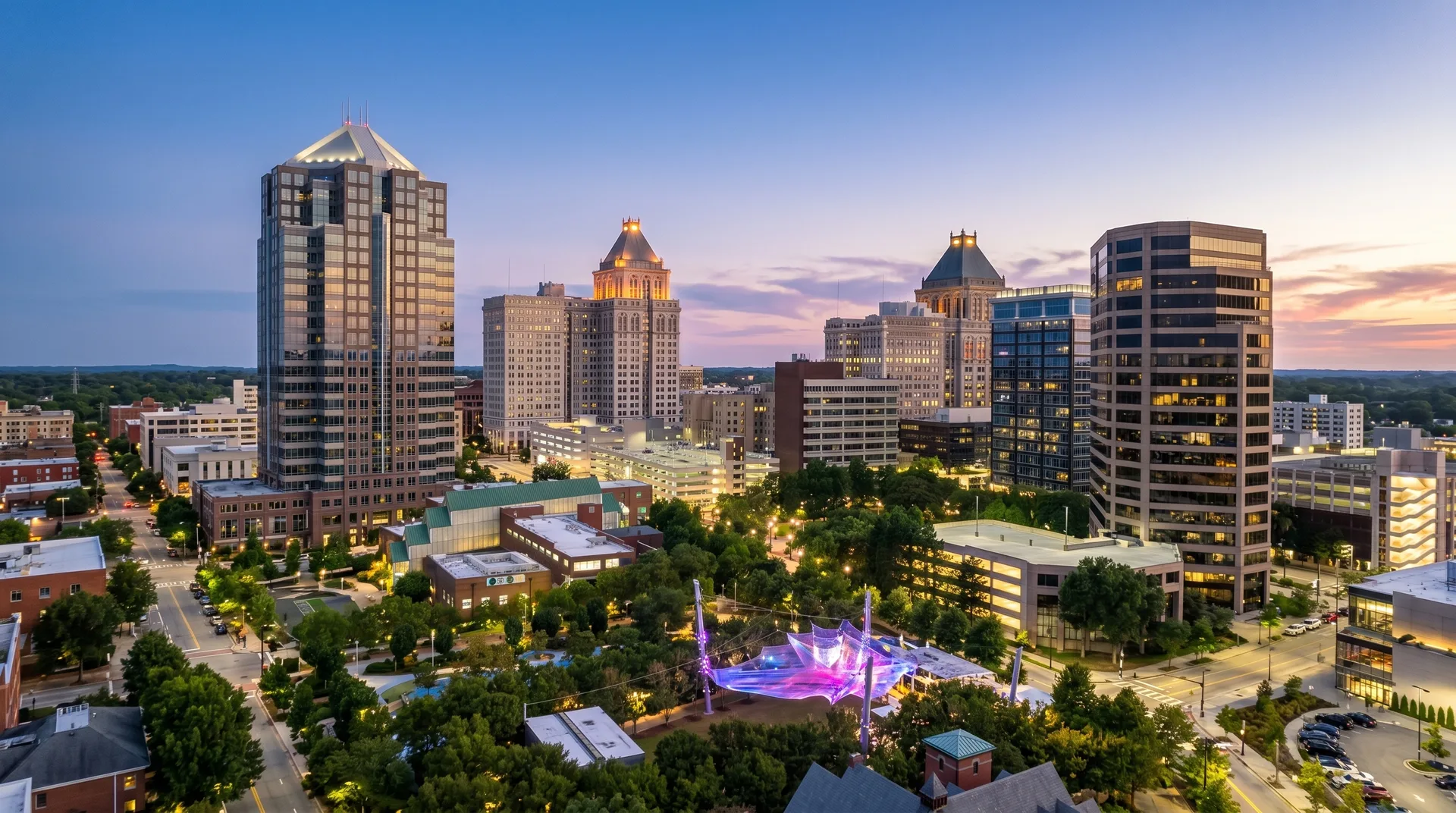
Greensboro
Greensboro, North Carolina serves as a strategic logistics hub in the Southeast, positioned at the intersection of major transportation networks. The city benefits from its location within the Piedmont Triad region, offering excellent connectivity through interstates I-40, I-85, and I-73. Greensboro's elevation and central location in North Carolina make it an ideal distribution point for goods moving throughout the eastern United States. The city hosts several major distribution centers and logistics parks, leveraging its proximity to the Port of Virginia and other East Coast ports.
The economic landscape of Greensboro centers on advanced manufacturing, logistics, and healthcare. The region has developed significant expertise in textiles, biotechnology, and aerospace components. Major employers include Honda Aircraft Company, Volvo Trucks, and numerous logistics providers who have established operations to serve the growing Southeast market. The presence of major universities and research institutions further strengthens Greensboro's position as a center for innovation and advanced manufacturing.
 Destination
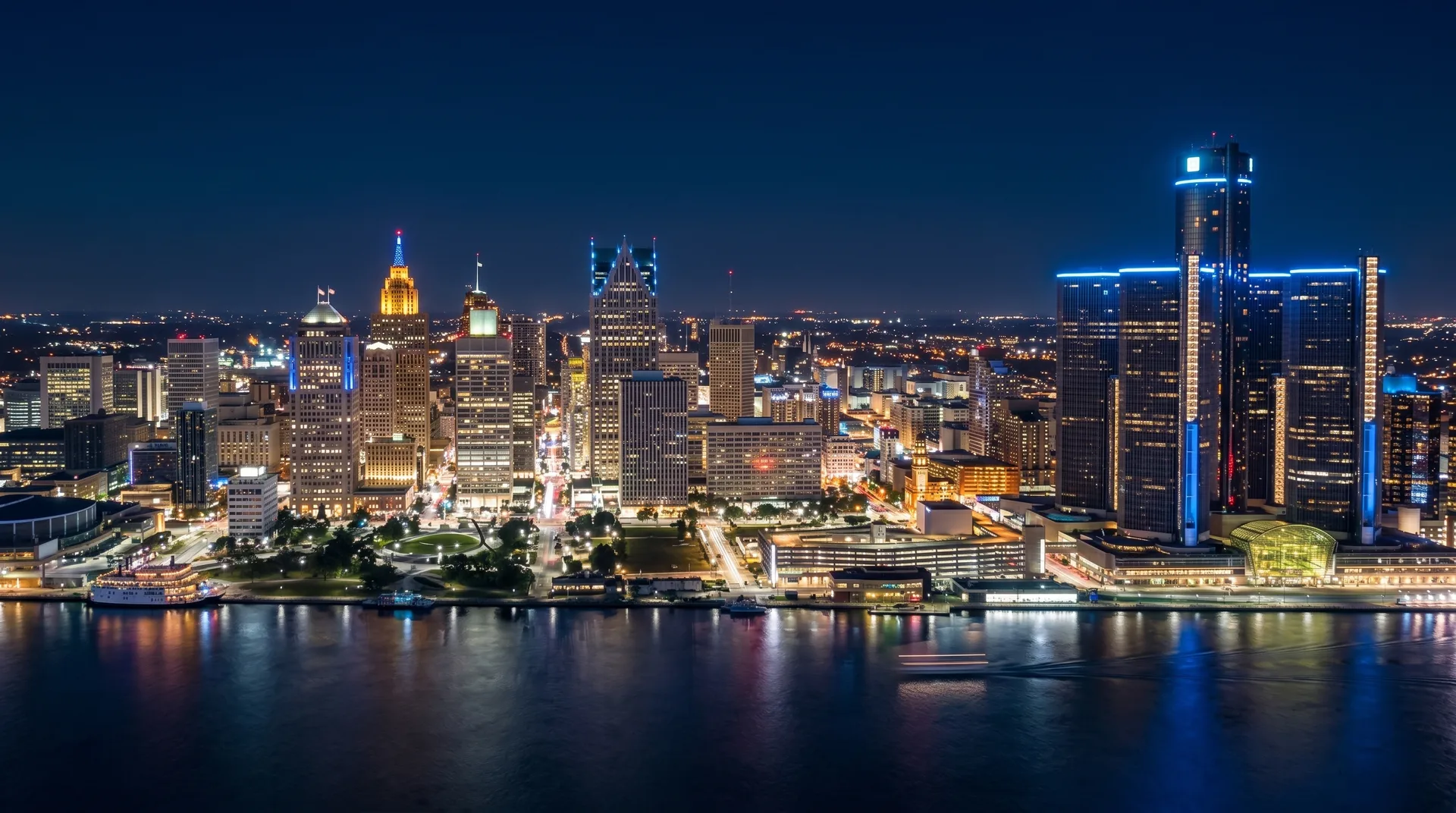
Detroit
Detroit, Michigan stands as a premier logistics and manufacturing destination in the Midwest, with a rich industrial heritage and modern infrastructure. The city's strategic location along the Detroit River provides access to both inland markets and international shipping via the Great Lakes. Detroit benefits from an extensive transportation network including I-75, I-94, and I-96, connecting it to major Midwestern cities and Canadian markets via the Ambassador Bridge and Detroit-Windsor Tunnel. The region's logistics infrastructure includes multiple intermodal facilities and the Port of Detroit.
The Detroit metropolitan area remains a global center for automotive manufacturing and advanced engineering. Home to the headquarters of the Big Three automakers and numerous suppliers, the region drives innovation in mobility, autonomous vehicles, and advanced manufacturing. Beyond automotive, Detroit has diversified into healthcare, information technology, and professional services. The city's skilled workforce and concentration of engineering talent continue to attract investment in next-generation manufacturing and technology sectors.










