Greensboro to Boston
Boston → GreensboroFTL freight transportation service between Greensboro and Boston. Reliable logistics solutions for your business.
Route Description
Everything you need to know about the corridor Greensboro - Boston
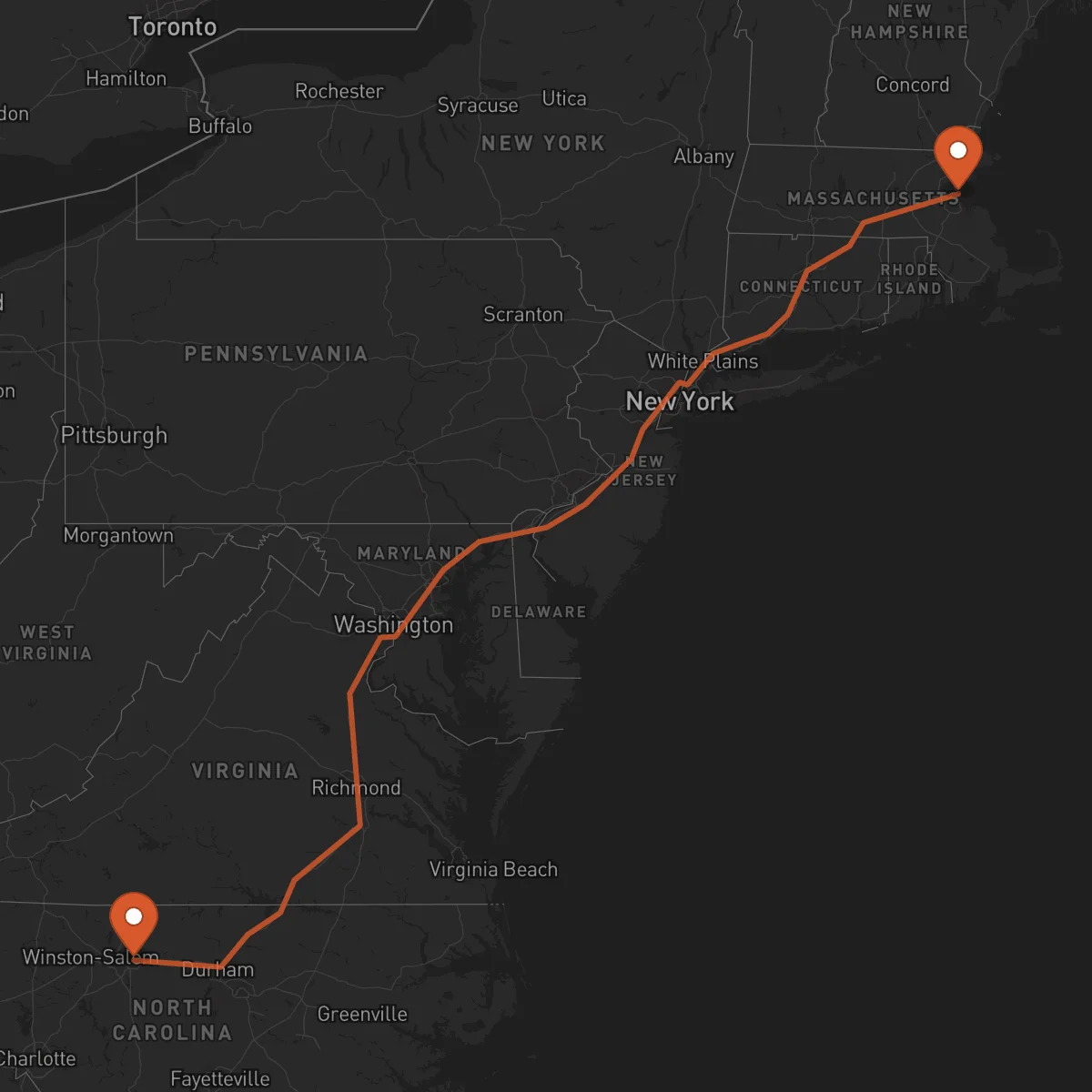
The Greensboro to Boston corridor represents a vital logistics connection between the Piedmont region of North Carolina and the Northeast's major economic hub. This 1026 km route traverses the heart of the eastern United States, connecting the industrial South with New England's sophisticated manufacturing and technology centers. The corridor serves as a critical link in the supply chain for numerous industries, facilitating the movement of goods between the manufacturing powerhouses of the Southeast and the high-value markets of the Northeast.
The transportation infrastructure along this route is robust, primarily utilizing I-85 North to I-95 North, providing reliable and efficient transit between these key markets. This corridor is particularly significant for companies operating in the automotive, textile, advanced manufacturing, and technology sectors, as it connects production facilities with major distribution centers and end markets. The route passes through major logistics hubs including Richmond, Washington D.C., and New York, offering multiple opportunities for transloading and distribution.
Control Terrestre optimizes operations on this corridor through our specialized FTL services, ensuring dedicated capacity and direct delivery from origin to destination. Our strategic partnerships with certified carriers along this route guarantee consistent service quality, while our advanced tracking systems provide real-time visibility throughout the journey. We understand the time-sensitive nature of shipments between these markets and have developed specific protocols to maintain the integrity and efficiency of every load we transport.
Services for this Route
Available services for the corridor Greensboro - Boston
 Origin
Greensboro
Greensboro, located in the Piedmont Triad region of North Carolina, serves as a strategic logistics hub with excellent connectivity to major transportation networks. The city benefits from its central location in the Southeast, with proximity to major ports like Wilmington and Charleston, as well as easy access to I-40, I-85, and I-73. Greensboro's transportation infrastructure includes the Piedmont Triad International Airport and extensive rail connections through Norfolk Southern and CSX, making it an ideal origin point for freight distribution across the eastern United States.
The region's economy is diverse, with strong presence in advanced manufacturing, textiles, biotechnology, and logistics services. Major employers include Honda Aircraft Company, ITG Brands, and VF Corporation, creating consistent demand for freight transportation. The presence of numerous warehouses and distribution centers in the Greensboro area, combined with its skilled workforce and business-friendly environment, makes it an optimal starting point for shipments heading to major Northeast markets.
 Destination
Boston
Boston, as the largest city in New England, stands as a premier destination for freight transportation, offering unparalleled access to one of the most economically vibrant regions in the United States. The city's strategic location on the Atlantic coast provides direct access to international shipping lanes, while its comprehensive transportation network includes Logan International Airport, the Port of Boston, and extensive highway connections via I-90 and I-93. Boston's position as a major educational and technological center creates unique logistics demands for specialized and high-value cargo.
The Boston metropolitan area is home to a diverse economy dominated by education, healthcare, finance, and technology sectors. Major institutions like MIT, Harvard, and numerous biotech companies generate consistent demand for specialized freight services. The region's strict regulatory environment and urban density require experienced logistics partners who understand local requirements and can navigate complex delivery scenarios. Boston's role as a distribution point for New England ensures that freight arriving in the city continues to serve a broader regional market, making it a critical endpoint in the supply chain.










