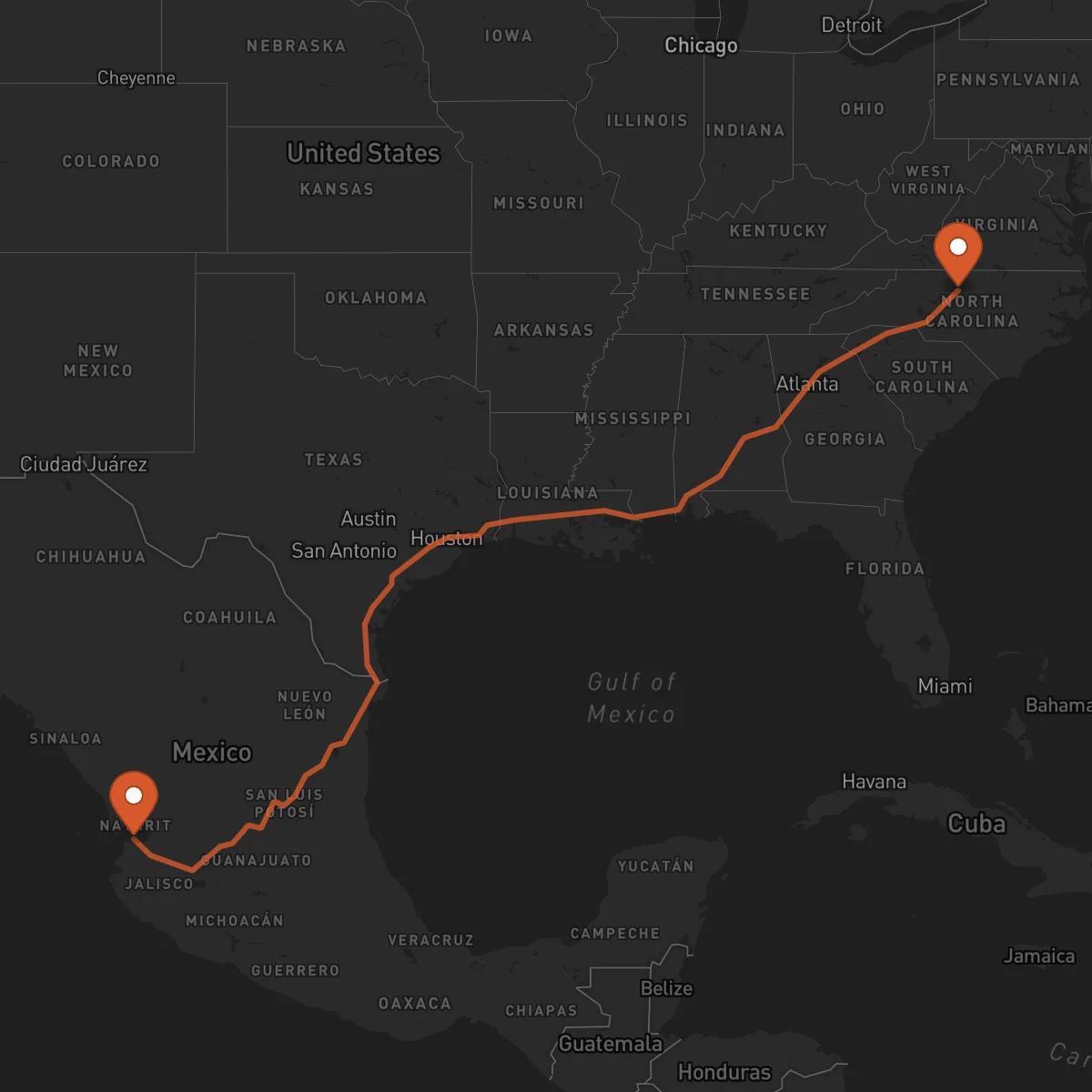
Greensboro to Tepic
Tepic → GreensboroFTL freight transportation service between Greensboro and Tepic. Reliable logistics solutions for your business.
Route Description
Everything you need to know about the corridor Greensboro - Tepic
The Greensboro to Tepic corridor represents a vital cross-border logistics connection between the United States and Mexico, spanning approximately 2,920 kilometers. This strategic route links North Carolina's industrial Piedmont region with the Pacific coastal state of Nayarit, facilitating the movement of goods between two dynamic economic zones. The corridor traverses major transportation hubs including Dallas-Fort Worth and Monterrey, connecting through key border crossings that enable efficient freight movement between the two nations.
The economic significance of this corridor is underscored by the complementary industrial activities in both regions. Greensboro serves as a major distribution center for textiles, advanced manufacturing, and logistics operations, while Tepic has emerged as an important hub for electronics, agriculture, and light manufacturing. The route supports diverse industries including automotive parts, consumer goods, agricultural products, and industrial equipment, making it a critical artery for North American supply chains.
Transportation infrastructure along this corridor includes major interstate highways such as I-40, I-35, and Mexico's Federal Highway 15, providing reliable and efficient transit options. Control Terrestre leverages this robust infrastructure to offer seamless cross-border transportation services, managing all aspects of the journey from origin to destination. Our expertise in navigating customs procedures, documentation requirements, and regulatory compliance ensures smooth operations across international boundaries, minimizing delays and optimizing transit times for our clients' freight shipments.
Services for this Route
Available services for the corridor Greensboro - Tepic
 Origin
Greensboro
Greensboro, located in the heart of North Carolina's Piedmont Triad region, serves as a strategic logistics hub with excellent transportation connectivity. The city benefits from proximity to major interstate highways including I-40, I-85, and I-73, providing direct access to regional and national freight networks. Greensboro's Piedmont Triad International Airport offers air cargo capabilities, while the nearby Port of Wilmington provides ocean freight connections. The region's robust infrastructure supports efficient distribution operations for companies serving both domestic and international markets.
The economic landscape of Greensboro is characterized by advanced manufacturing, aerospace, biotechnology, and logistics sectors. Major employers include Honda Aircraft Company, Volvo Trucks, and numerous logistics providers that have established significant operations in the area. The city's central location within the Eastern United States, combined with its skilled workforce and business-friendly environment, makes it an ideal origin point for freight shipments requiring reliable transportation to Mexico and other international destinations.
 Destination
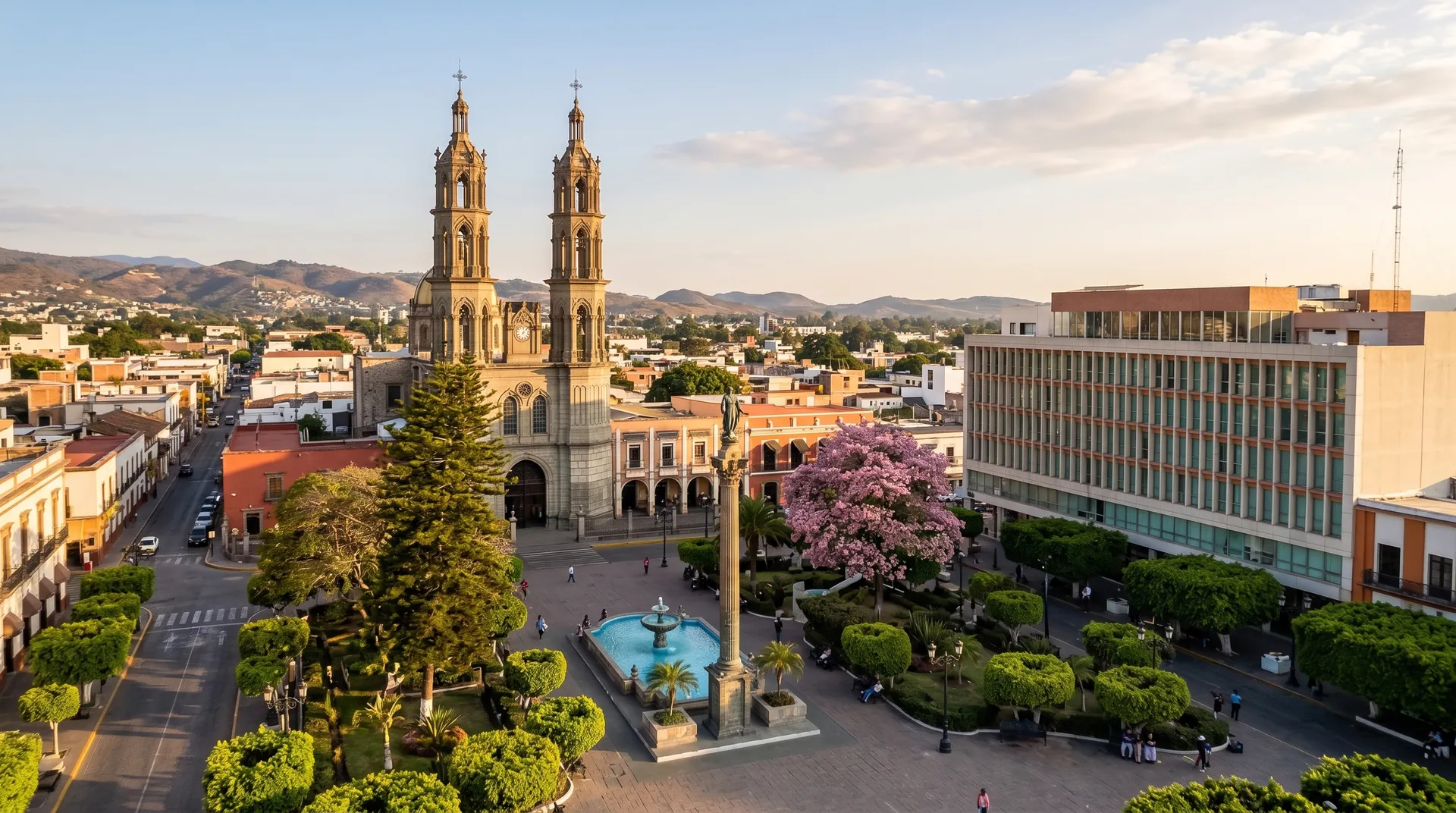
Tepic, the capital city of Nayarit, Mexico, occupies a strategic position in western Mexico with growing importance in regional logistics networks. The city's location provides access to Mexico's Pacific coast and connects to major transportation corridors linking the interior states with coastal ports. Federal Highway 15 serves as the primary artery for freight movement, connecting Tepic to Guadalajara, Mazatlán, and other key economic centers. The city's transportation infrastructure continues to develop, supporting increased commercial activity and trade flows.
The economy of Tepic and the surrounding Nayarit region encompasses diverse sectors including electronics manufacturing, agriculture, tourism, and light industry. The city has attracted investment in technology and manufacturing, particularly in the electronics and automotive components sectors. Tepic's growing industrial base creates demand for reliable freight transportation services, particularly for raw materials, components, and finished goods moving between Mexico and the United States. The region's agricultural production also contributes to freight volumes, particularly for refrigerated shipments of fresh produce and other perishable goods.










