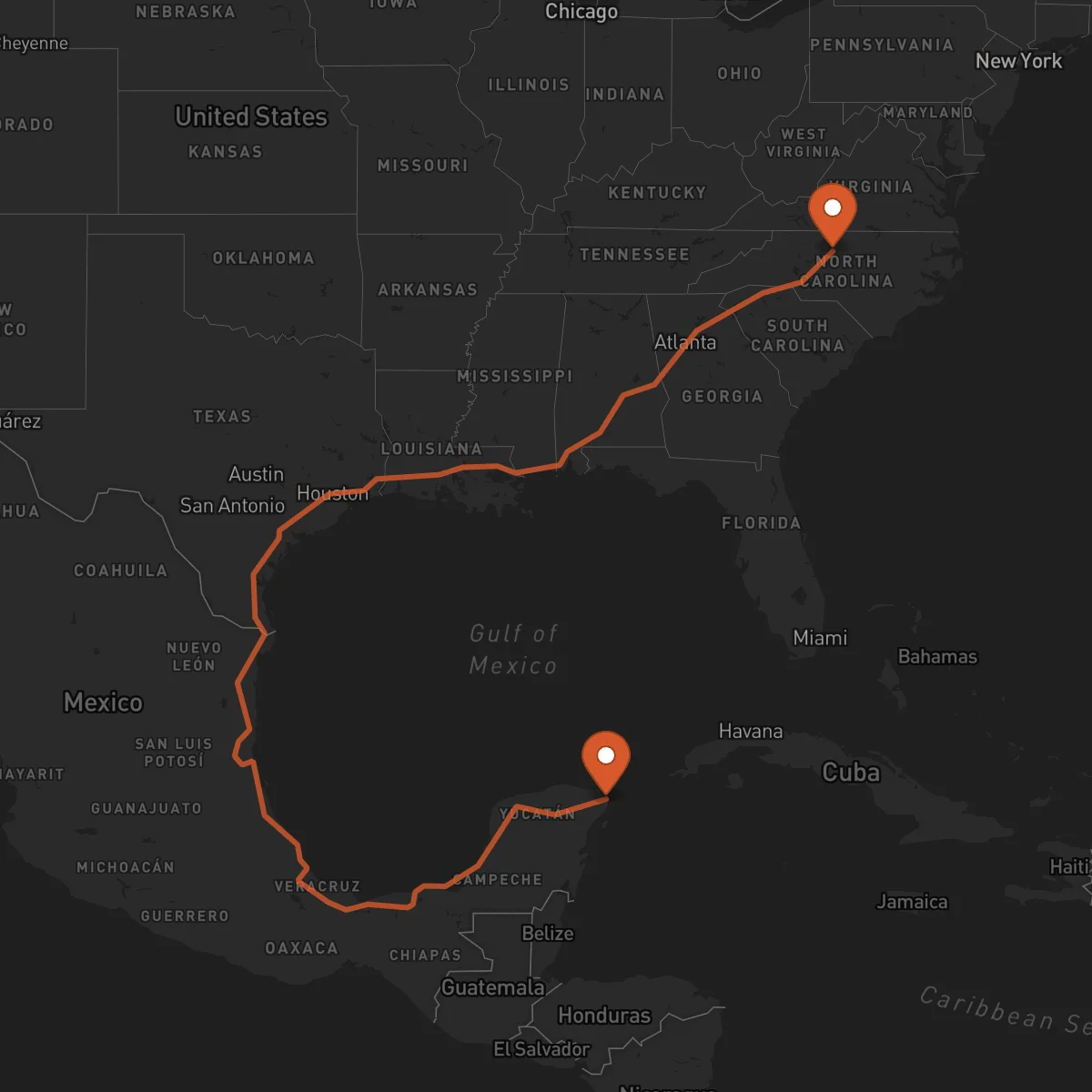
Greensboro to Cancún
Cancún → GreensboroFTL freight transportation service between Greensboro and Cancún. Reliable logistics solutions for your business.
Route Description
Everything you need to know about the corridor Greensboro - Cancún
The logistics corridor between Greensboro, North Carolina, and Cancún, Quintana Roo, represents a vital cross-border connection linking the industrial heartland of the southeastern United States with one of Mexico's most dynamic tourist and economic hubs. This 1,794-kilometer route traverses diverse terrain and crosses multiple states, creating a strategic pathway for goods movement between two major economic regions.
The corridor connects Greensboro's robust manufacturing and logistics ecosystem with Cancún's thriving tourism industry, automotive sector, and growing industrial park developments. This route serves as a critical supply chain link, facilitating the movement of everything from automotive parts and consumer goods to food products and industrial equipment. The economic relationship between North Carolina and the Yucatán Peninsula continues to strengthen, making this corridor increasingly important for bilateral trade.
Transportation infrastructure along this corridor includes major interstate highways such as I-85 and I-40, connecting through key logistics hubs like Atlanta and facilitating efficient movement through the southeastern United States. The route continues through Mexico via federal highways, with the final leg connecting to Cancún's modern port facilities and airport infrastructure. Control Terrestre provides comprehensive cross-border transportation services along this corridor, managing customs clearance, regulatory compliance, and the complexities of international freight movement to ensure seamless delivery from origin to destination.
Services for this Route
Available services for the corridor Greensboro - Cancún
 Origin
Greensboro
Greensboro, North Carolina, serves as a strategic logistics hub in the southeastern United States, positioned at the intersection of major transportation networks. The city benefits from its location within the Piedmont Triad region, which includes Winston-Salem and High Point, creating a tri-city logistics powerhouse. Greensboro's economy is anchored by advanced manufacturing, particularly in the textile, furniture, and transportation equipment sectors, alongside a growing technology and healthcare presence.
The city boasts excellent transportation infrastructure, including the Piedmont Triad International Airport, which handles significant cargo volumes, and direct access to major interstate highways such as I-40, I-85, and I-73. The nearby ports of Virginia provide ocean freight connectivity, while the region's extensive rail network, operated by Norfolk Southern and CSX, offers intermodal transportation options. Greensboro's concentration of warehousing and distribution centers makes it an ideal origin point for cross-border freight movements.
 Destination
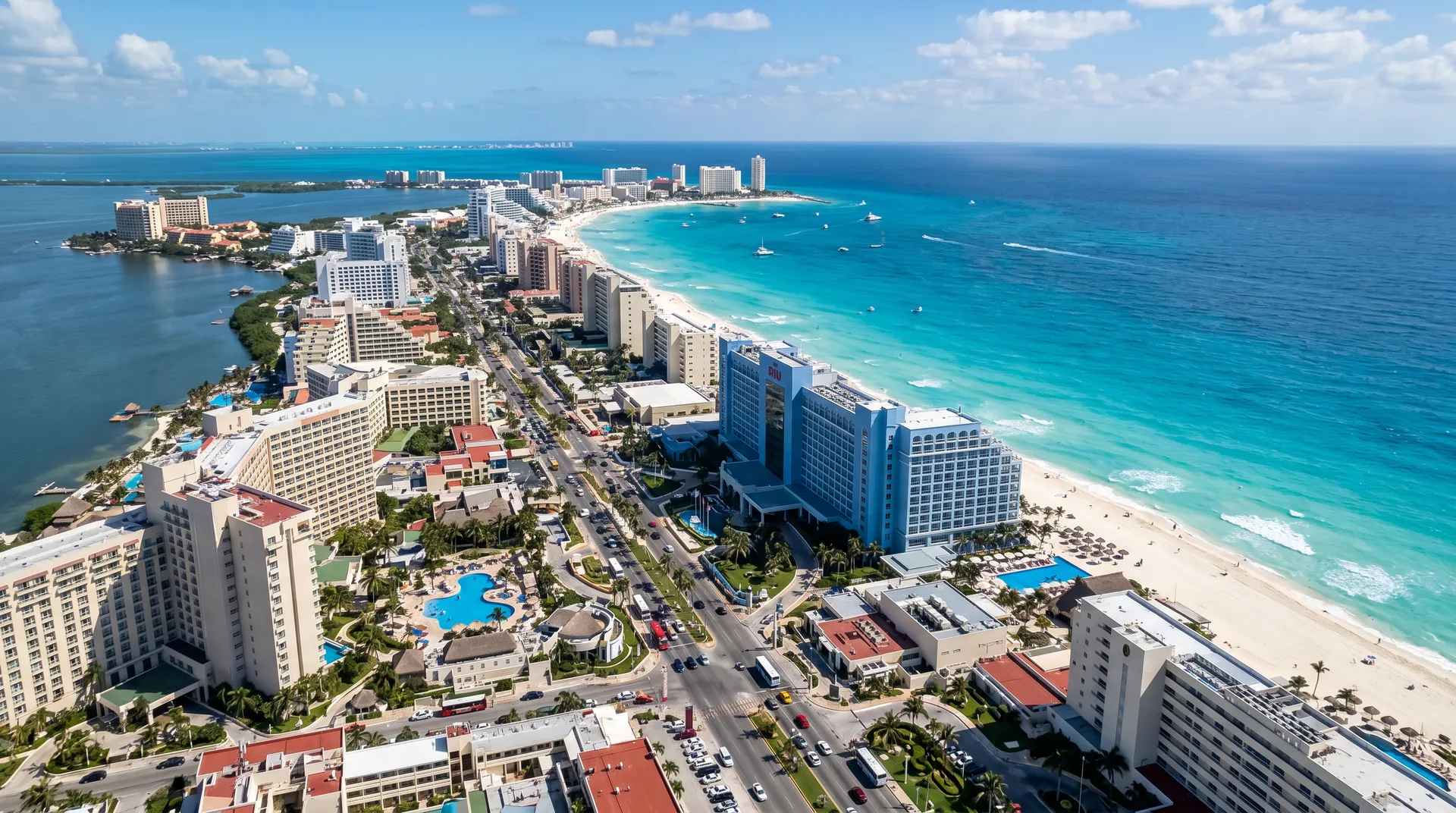
Cancún
Cancún, Quintana Roo, stands as a strategic logistics gateway to Mexico's southeastern region and the Caribbean. Beyond its world-renowned tourism industry, Cancún has developed into a significant industrial and commercial center, with growing automotive, aerospace, and electronics manufacturing sectors. The city's proximity to the Riviera Maya and its position as a gateway to Central America enhances its importance in regional trade networks.
The destination benefits from modern infrastructure, including the Cancún International Airport, one of Mexico's busiest, which handles substantial cargo traffic. The nearby Puerto Morelos intermodal center provides rail and highway connections, while the region's expanding industrial parks offer modern warehousing solutions. Cancún's strategic location near the Caribbean Sea also provides maritime shipping options, creating multimodal transportation possibilities for freight arriving from the United States.










