Fort Worth to Tucson
Tucson → Fort WorthFTL freight transportation service between Fort Worth and Tucson. Reliable logistics solutions for your business.
Route Description
Everything you need to know about the corridor Fort Worth - Tucson
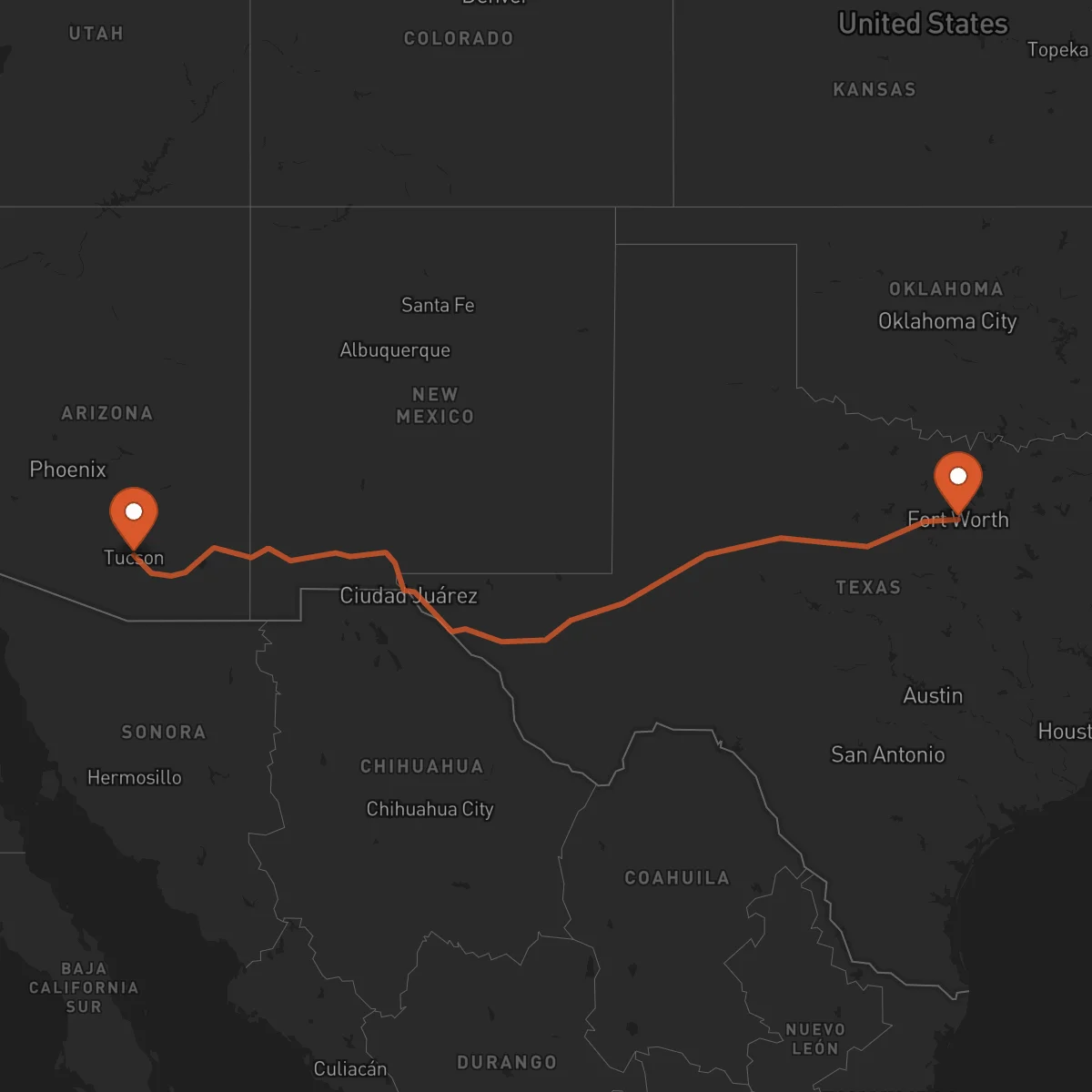
The Fort Worth to Tucson corridor represents a vital freight transportation route connecting two strategic hubs in the southwestern United States. This 1,280 km domestic corridor traverses diverse terrain and serves as a critical link between the Dallas-Fort Worth metropolitan area and southern Arizona. The route facilitates the movement of goods between major industrial centers, supporting the economic integration of Texas and Arizona.
The corridor's significance stems from the complementary economic profiles of both regions. Fort Worth anchors a major logistics and manufacturing ecosystem, while Tucson serves as a gateway to the Southwest and Mexico. Together, they form an important commercial axis that supports industries ranging from aerospace and defense to automotive and technology. The transportation infrastructure includes major highways such as I-20 and I-10, providing reliable connectivity for freight movement.
Control Terrestre specializes in optimizing freight operations along this corridor through our network of certified transportation providers. Our full truckload (FTL) services ensure dedicated capacity for your cargo, eliminating the delays and handling risks associated with consolidated freight. We leverage our strategic partnerships to provide consistent service quality, real-time tracking, and specialized equipment options tailored to your cargo requirements. Whether you need standard dry van transport or specialized solutions for oversized or temperature-sensitive freight, our team coordinates every aspect of your shipment from origin to destination.
Services for this Route
Available services for the corridor Fort Worth - Tucson
 Origin
Fort Worth
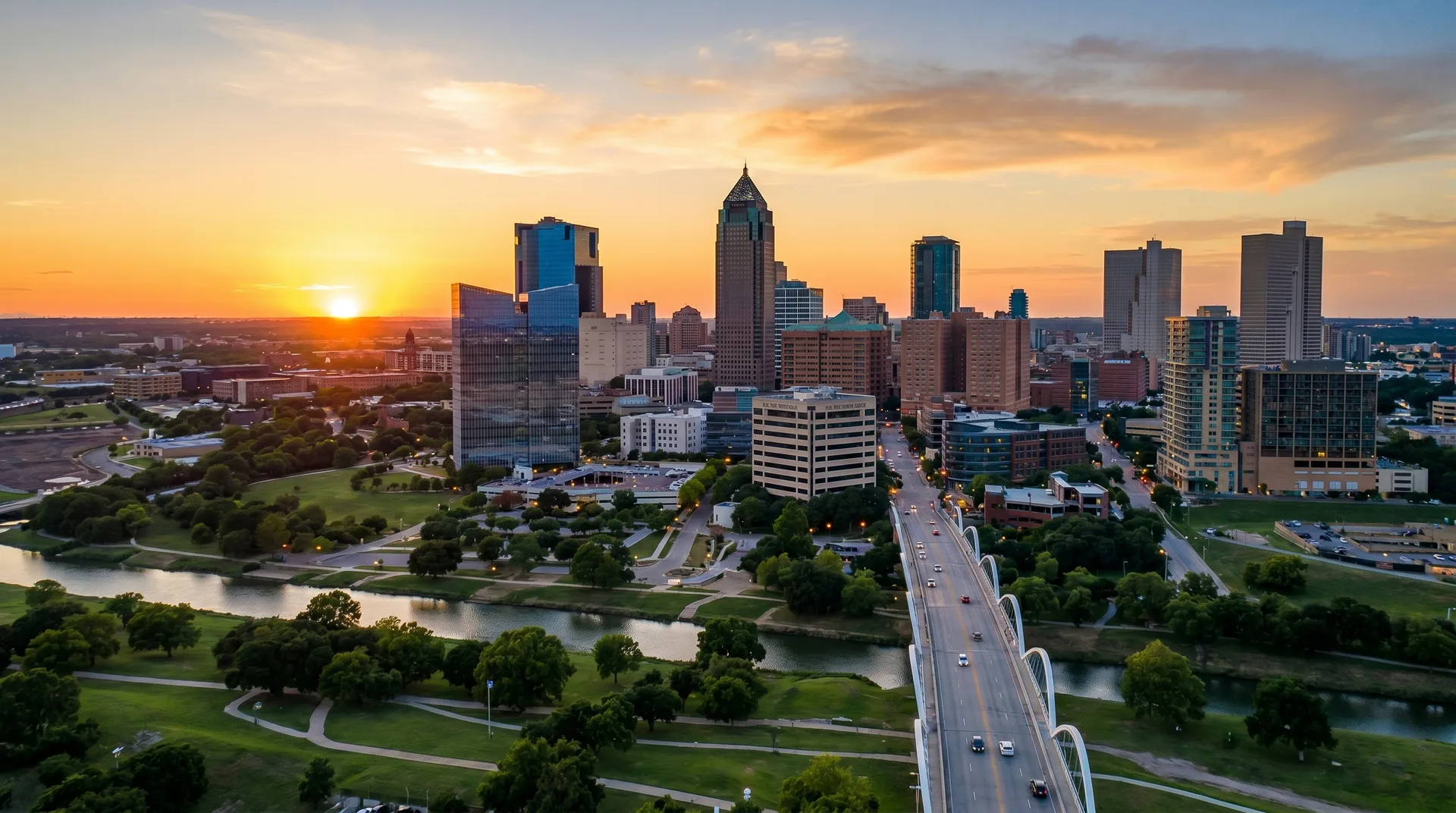
Fort Worth stands as a major logistics hub in North Texas, strategically positioned within the Dallas-Fort Worth Metroplex. The city's location provides excellent access to major transportation networks, including three interstate highways (I-20, I-35W, and I-30) and direct rail connections. Dallas/Fort Worth International Airport, one of the busiest cargo airports in the world, enhances the region's multimodal capabilities. Fort Worth's economic foundation includes strong manufacturing, aerospace, and distribution sectors, supported by a business-friendly environment and extensive warehousing infrastructure.
 Destination
Tucson
Tucson serves as a critical logistics gateway to the Southwest, leveraging its strategic location near the U.S.-Mexico border and major transportation corridors. The city benefits from excellent connectivity through I-10, which provides direct access to both coasts, and proximity to the Port of entry at Nogales. Tucson's economic landscape includes significant aerospace and defense industries, anchored by Davis-Monthan Air Force Base and the University of Arizona's research facilities. The region's growing technology sector and distribution centers make it an increasingly important destination for freight traffic from across the country.










