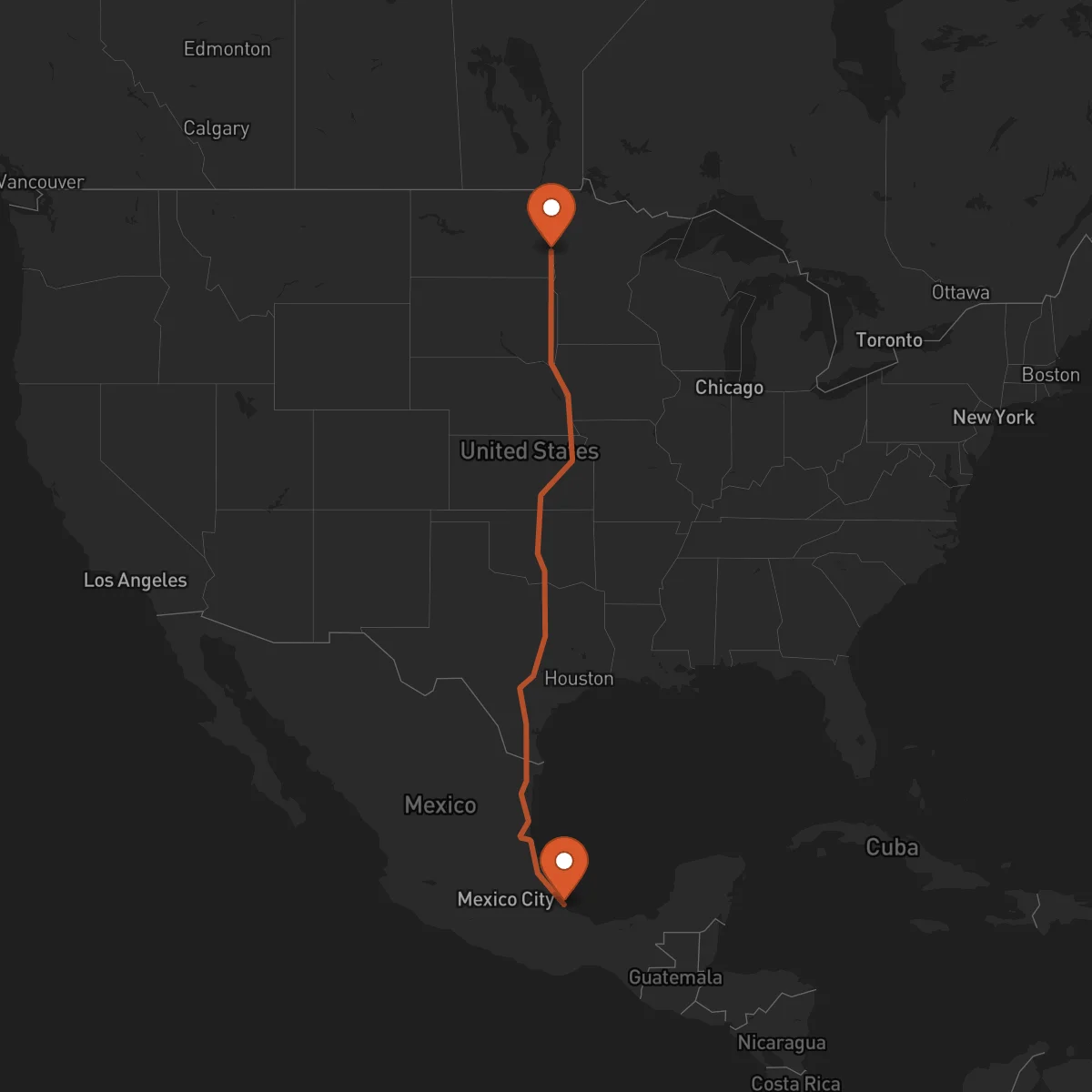
Fargo to Veracruz
Veracruz → FargoFTL freight transportation service between Fargo and Veracruz. Reliable logistics solutions for your business.
Route Description
Everything you need to know about the corridor Fargo - Veracruz
The logistics corridor between Fargo, North Dakota and Veracruz, Veracruz represents a vital cross-border transportation route connecting the industrial heartland of the United States with Mexico's major Gulf port. This 3,081 km corridor facilitates the movement of goods between North America's manufacturing centers and international trade hubs, serving as a crucial link in the North American supply chain. The route traverses diverse geographic and economic regions, connecting the agricultural and manufacturing powerhouse of the Upper Midwest with Mexico's busiest cargo port.
The corridor's economic significance stems from the complementary industrial strengths of both regions. Fargo serves as a logistics hub for the Northern Plains, with strong agricultural, technology, and manufacturing sectors, while Veracruz is Mexico's primary Gulf port, handling over 50% of the country's maritime cargo. This creates a dynamic trade relationship where agricultural products, industrial equipment, and manufactured goods flow in both directions. The route particularly benefits companies engaged in automotive manufacturing, agricultural exports, and industrial equipment distribution.
Transportation along this corridor relies on major interstate highways including I-29 South and I-35, connecting to Mexican Federal Highway 180. The primary border crossing at Laredo facilitates the majority of cross-border freight, where Control Terrestre's C-TPAT certified partners ensure efficient customs clearance. Our dedicated FTL services provide temperature-controlled options for perishable goods and specialized handling for industrial equipment, ensuring reliable door-to-door delivery between Fargo and Veracruz.
Services for this Route
Available services for the corridor Fargo - Veracruz
 Origin
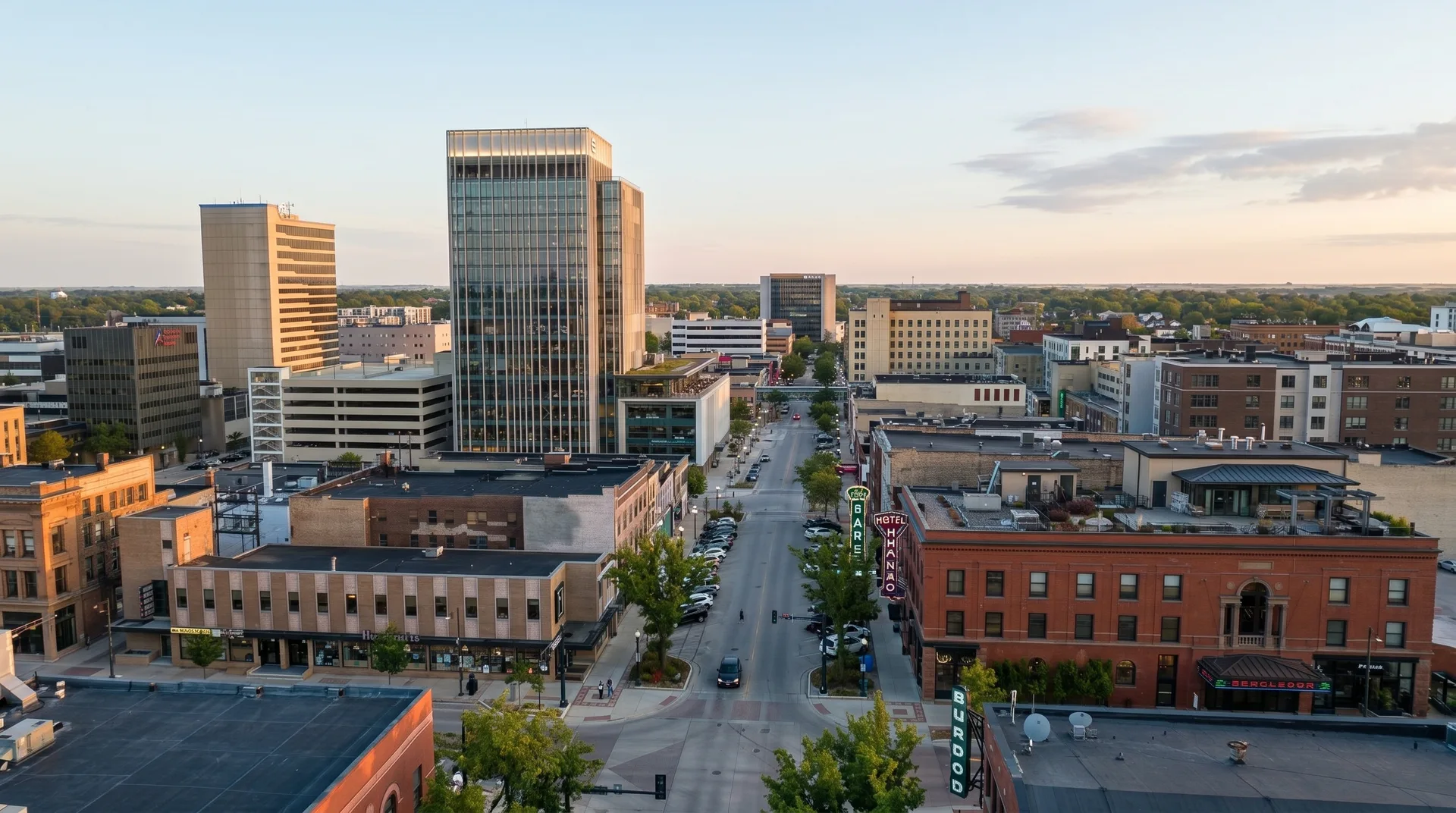
Fargo
Fargo, North Dakota serves as a strategic logistics hub in the Upper Midwest, positioned at the crossroads of major transportation networks. The city's location provides excellent connectivity to regional distribution centers and manufacturing facilities throughout North Dakota, Minnesota, and the broader Northern Plains region. Fargo's robust infrastructure includes access to major highways such as I-29 and I-94, as well as the nearby Hector International Airport and rail connections through BNSF Railway, making it an ideal origin point for cross-border freight operations.
The economic landscape of Fargo is diverse, with strong sectors in agricultural technology, manufacturing, and food processing. The region is known for its grain production, food manufacturing facilities, and growing technology sector, particularly in agricultural software and equipment. These industries generate consistent freight volumes requiring reliable transportation solutions, from agricultural commodities to specialized industrial equipment. Fargo's central location in North America makes it a strategic point for companies looking to distribute products throughout the continent.
 Destination
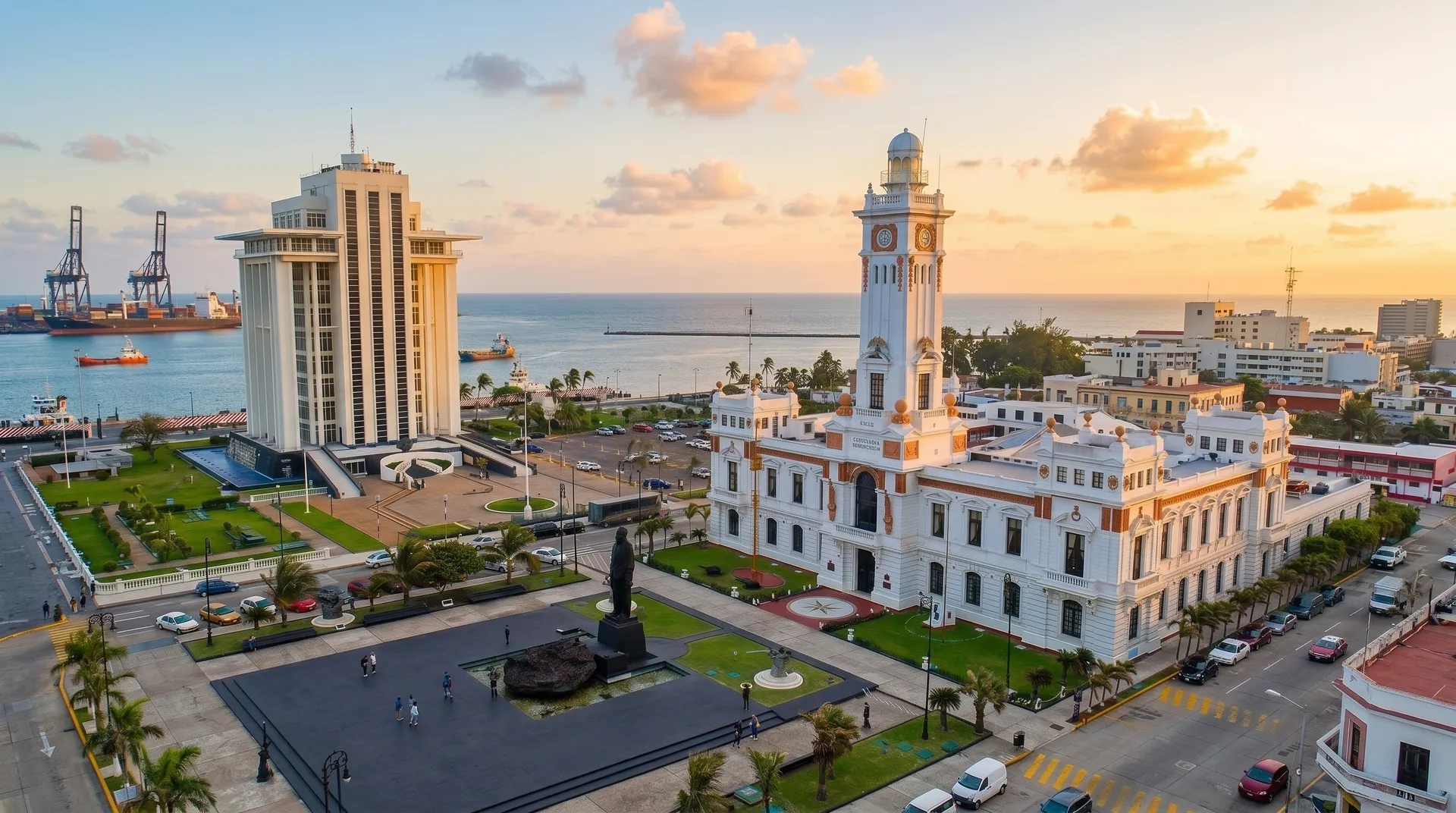
Veracruz, located on Mexico's Gulf coast, stands as the country's most important maritime port and a critical logistics hub for international trade. The Port of Veracruz handles over 25 million tons of cargo annually, serving as the primary gateway for imports and exports to and from the central and southern regions of Mexico. Its strategic coastal location provides direct access to major shipping routes, connecting North American manufacturers with global markets and facilitating the efficient movement of goods throughout Mexico's extensive transportation network.
The economic importance of Veracruz extends beyond its port facilities, with strong industrial sectors in petrochemicals, food processing, and automotive manufacturing. The surrounding region, known as the Veracruz Industrial Corridor, hosts numerous maquiladoras and manufacturing plants that require reliable inbound and outbound logistics services. The city's comprehensive transportation infrastructure includes connections to Mexico's Federal Highway system, rail links through Ferrocarril del Istmo de Tehuantepec, and modern warehousing facilities, making it an ideal destination for cross-border freight operations.










