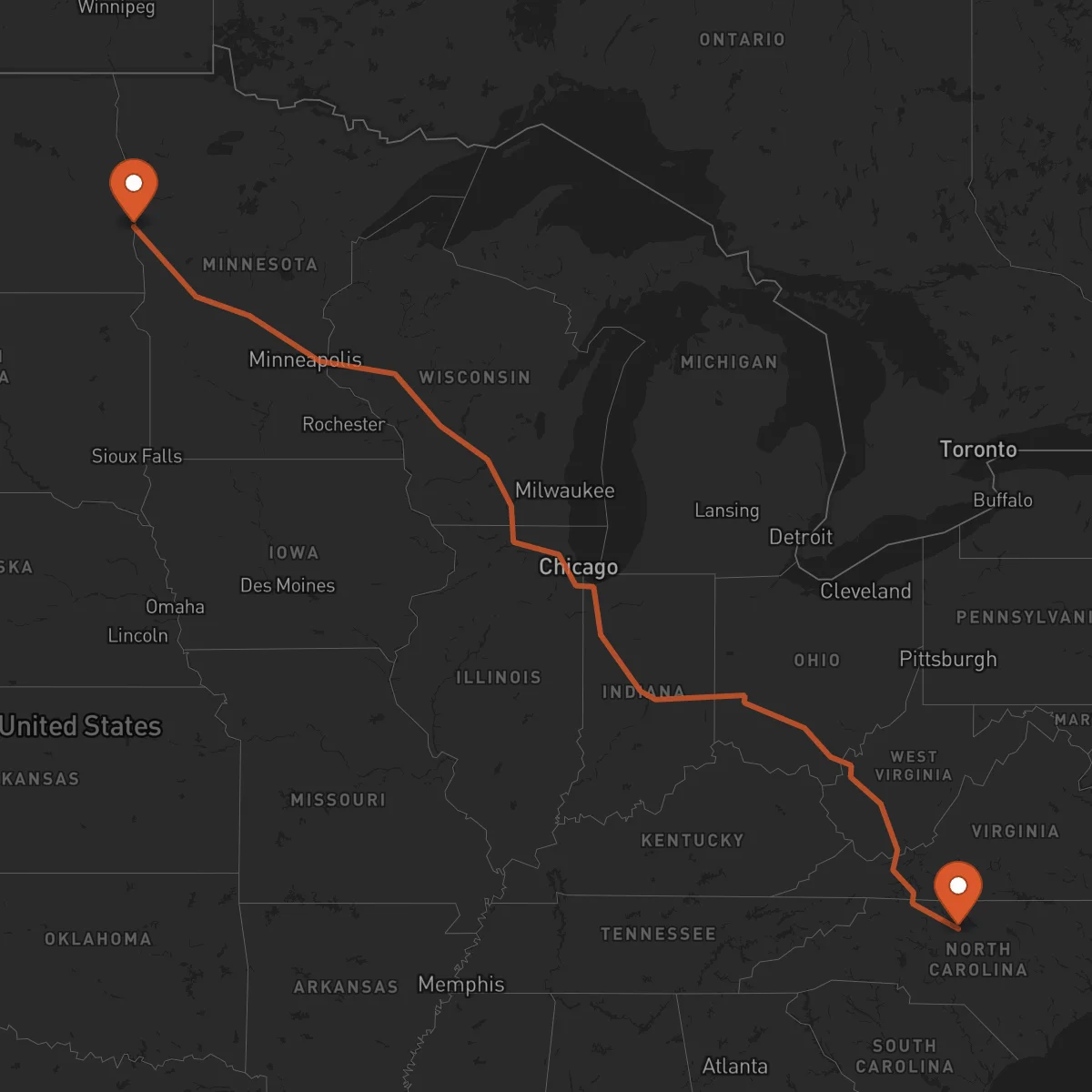
Fargo to Greensboro
Greensboro → FargoFTL freight transportation service between Fargo and Greensboro. Reliable logistics solutions for your business.
Route Description
Everything you need to know about the corridor Fargo - Greensboro
The freight corridor between Fargo, North Dakota, and Greensboro, North Carolina, spans approximately 1,850 kilometers and connects two important economic centers in the United States. This north-south route traverses multiple states, crossing diverse terrain and linking the Midwest with the Southeast. The corridor is strategically significant for companies operating between these regions, facilitating the movement of goods between the Great Plains and the Piedmont area of North Carolina.
The route primarily follows major interstate highways, including I-29 South from Fargo to connect with I-80 East, then I-74 East through Illinois and Indiana, and finally I-85 South into Greensboro. This well-established transportation network ensures reliable transit times for freight moving between these points. The corridor serves as a vital link for businesses in both regions, connecting Fargo's role as a regional distribution hub with Greensboro's position as a major logistics center in the Southeast.
Control Terrestre specializes in providing full truckload (FTL) services along this corridor, offering dedicated transportation solutions for companies moving freight between Fargo and Greensboro. Our experienced carrier network ensures consistent, reliable service for time-sensitive shipments and high-value cargo. We understand the unique requirements of this route and provide customized solutions to meet the specific needs of businesses operating between these two important economic centers.
Services for this Route
Available services for the corridor Fargo - Greensboro
 Origin
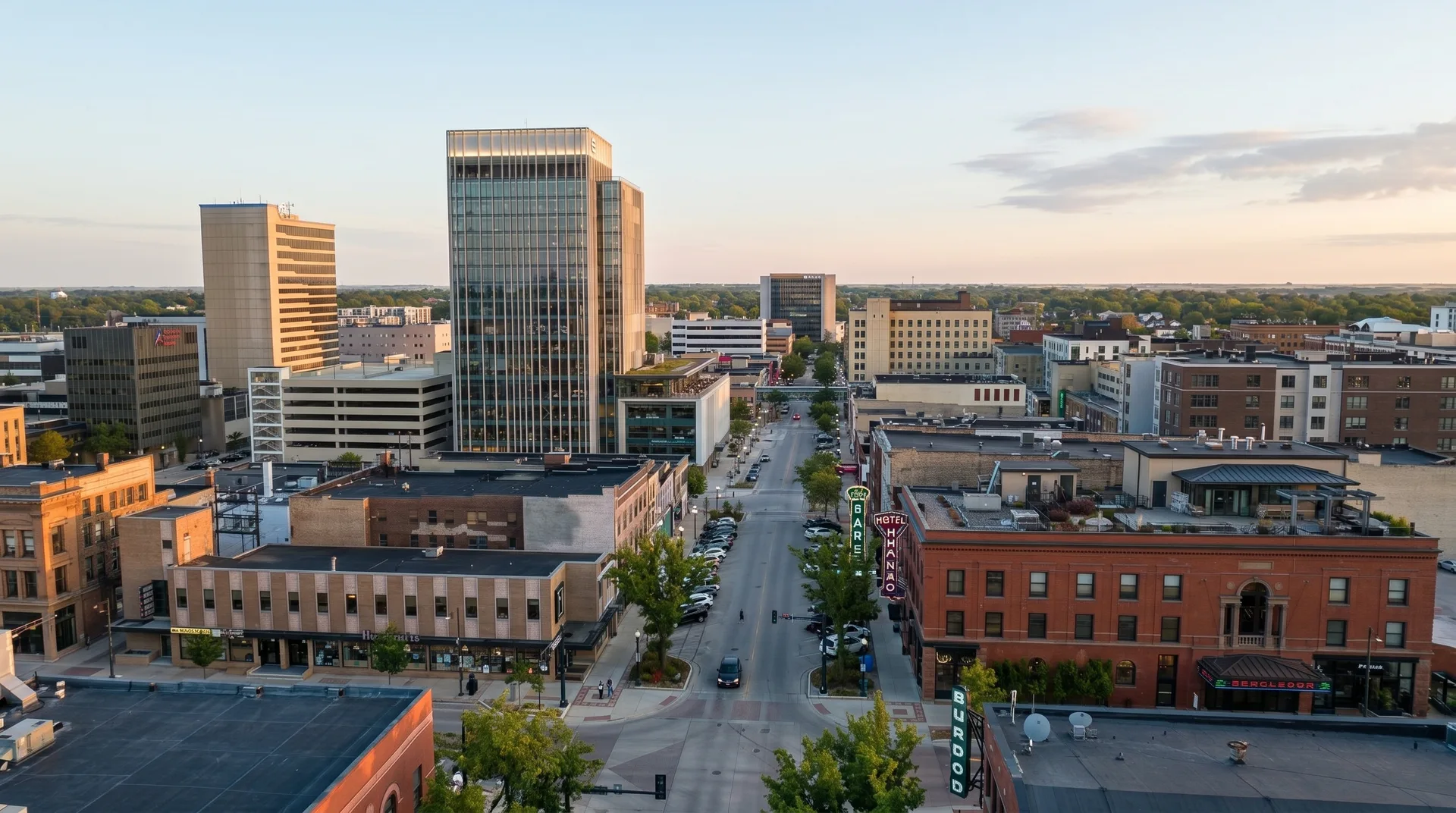
Fargo
Fargo, North Dakota, serves as a strategic logistics hub in the Upper Midwest, located along the Red River with excellent transportation connectivity. The city's position at the intersection of major highways, including I-29 and I-94, makes it an ideal origin point for freight distribution throughout the region. Fargo's economy is diverse, with strong sectors in agriculture, manufacturing, healthcare, education, and technology. The city is home to North Dakota State University and serves as a regional center for retail, healthcare, and professional services.
The transportation infrastructure in Fargo includes multiple rail connections through BNSF Railway and Canadian Pacific Railway, as well as Hector International Airport for air cargo. The city's location near the Canadian border also facilitates cross-border trade, making it an important point for freight moving between the United States and Canada. With its combination of educational institutions, research facilities, and industrial capabilities, Fargo produces a wide variety of goods that require reliable transportation to markets across the country.
 Destination
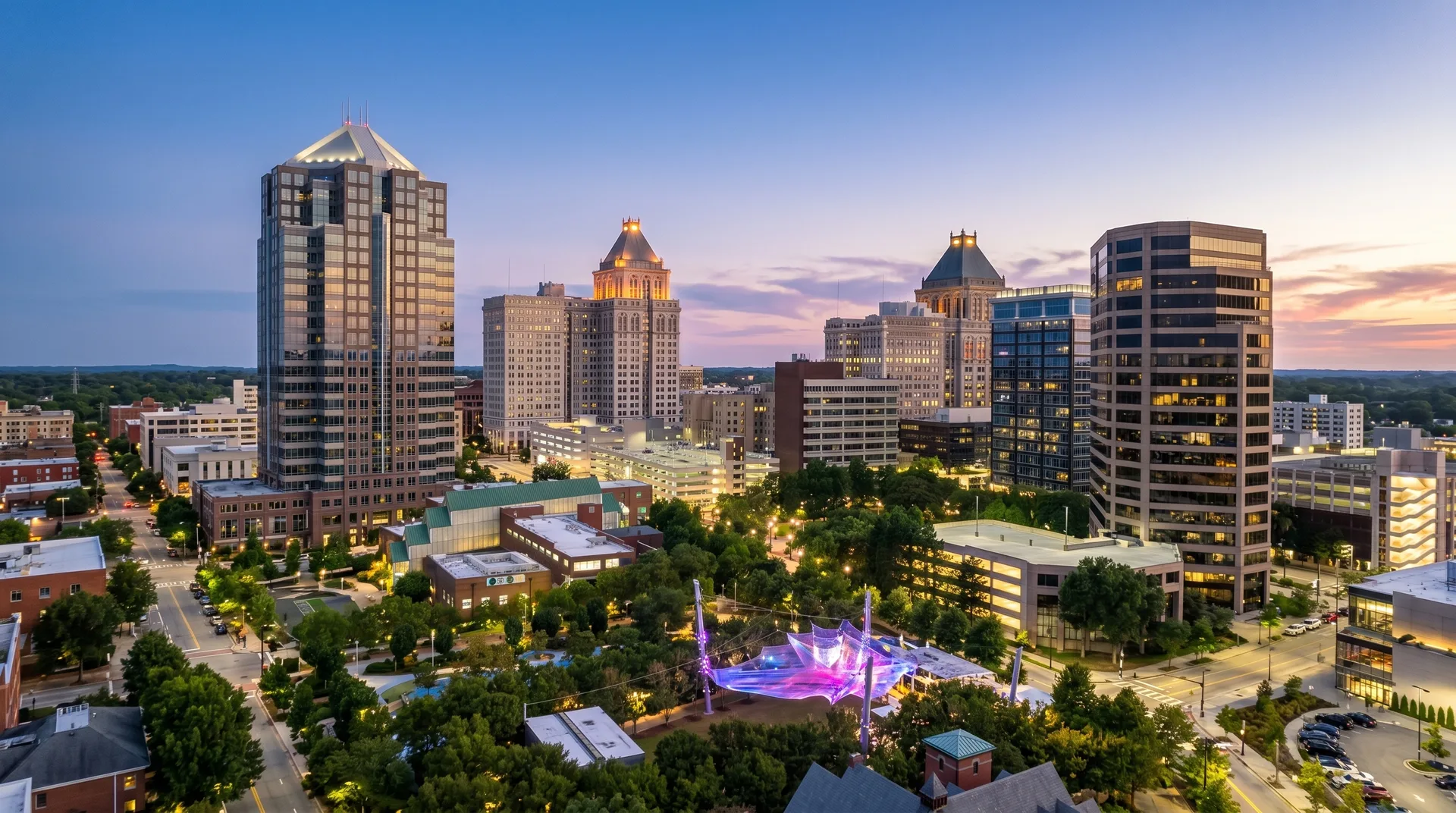
Greensboro
Greensboro, North Carolina, is strategically located in the Piedmont Triad region, offering excellent access to major East Coast markets. The city's central location in North Carolina, combined with its extensive transportation infrastructure, makes it a crucial logistics and distribution center. Greensboro is served by three major interstate highways (I-40, I-85, and I-73), providing efficient connections to major metropolitan areas along the Eastern Seaboard. The Piedmont Triad International Airport offers air cargo services, and the nearby ports of Wilmington and Morehead City provide ocean freight access.
The Greensboro area has a diverse economy with strong manufacturing, healthcare, education, and logistics sectors. The region is known for its textile and furniture industries, as well as growing technology and biotechnology sectors. Major employers include healthcare systems, educational institutions, and manufacturing companies. The presence of multiple universities and research institutions contributes to a skilled workforce and innovation-driven economy. Greensboro's role as a distribution center is enhanced by its proximity to major population centers like Charlotte, Raleigh, and the Washington, D.C. metropolitan area.










