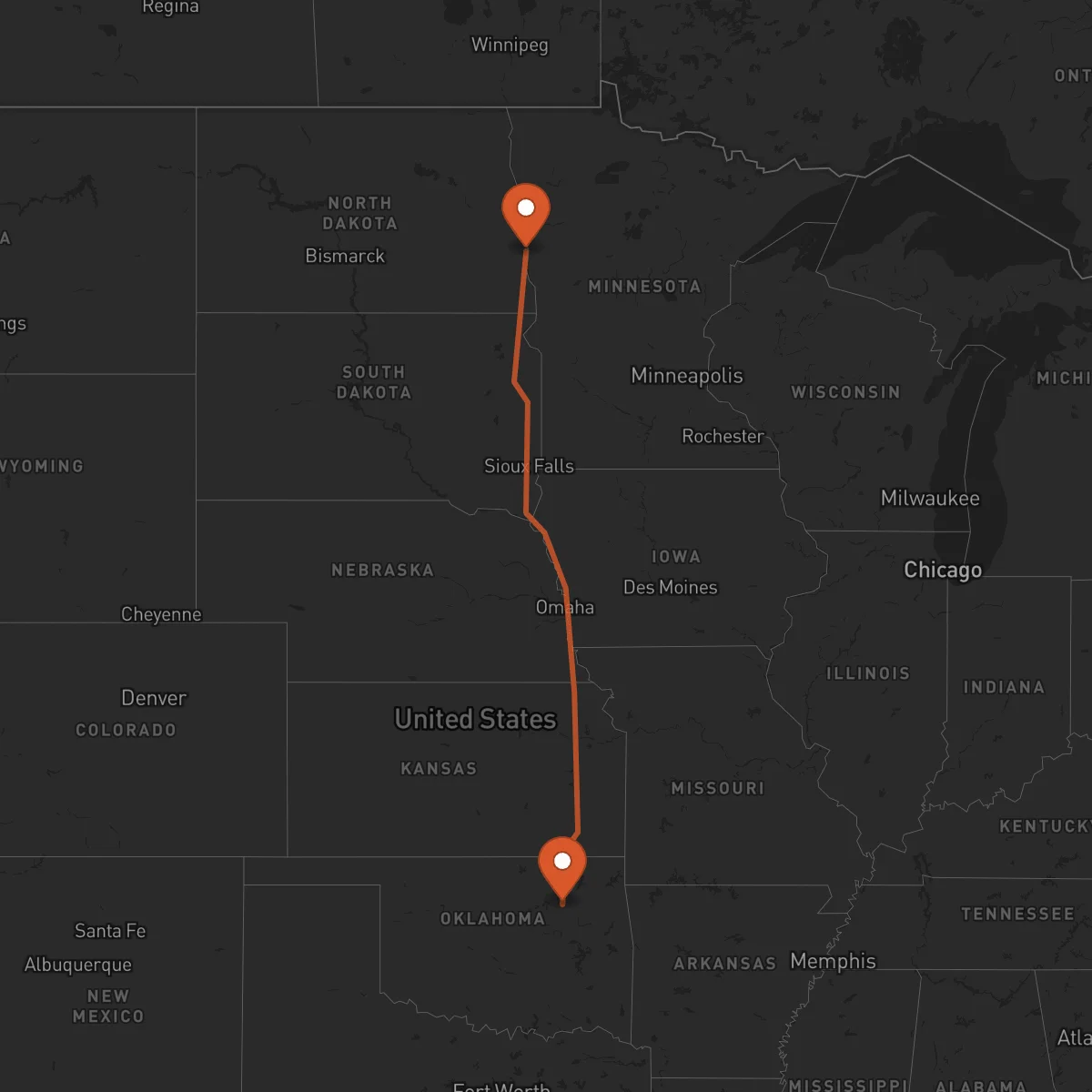
Fargo to Tulsa
Tulsa → FargoFTL freight transportation service between Fargo and Tulsa. Reliable logistics solutions for your business.
Route Description
Everything you need to know about the corridor Fargo - Tulsa
The Fargo to Tulsa corridor connects North Dakota with Oklahoma, spanning approximately 1,194 kilometers through the heart of the American Midwest. This vital domestic route links two dynamic economic regions, facilitating the movement of goods between the Northern Plains and the Southern Central United States. The corridor traverses diverse landscapes and crosses multiple state lines, making it a crucial artery for interregional commerce.
The economic significance of this corridor lies in its ability to connect distinct industrial strengths. Fargo, situated in the Red River Valley, serves as a gateway to the agricultural heartland of the Northern Plains, while Tulsa represents a major hub for energy, aerospace, and manufacturing in the Southern Central United States. The route passes through key states including North Dakota, South Dakota, Nebraska, Kansas, and Oklahoma, each contributing to the corridor's economic importance through their respective industrial and agricultural outputs.
Major highways serving this corridor include I-29 south from Fargo, connecting to I-70 and I-35, which provide direct access to Tulsa. This infrastructure network ensures reliable transportation for various cargo types, from agricultural products and machinery to energy equipment and manufactured goods. The route's strategic positioning makes it particularly valuable for companies requiring efficient north-south transportation across the central United States.
Control Terrestre provides specialized FTL transportation services along this corridor, offering dedicated solutions for companies moving full truckloads between Fargo and Tulsa. Our network of certified carriers ensures reliable, secure transportation of your cargo, whether you're shipping industrial equipment, agricultural products, or other freight requiring dedicated capacity.
Services for this Route
Available services for the corridor Fargo - Tulsa
 Origin
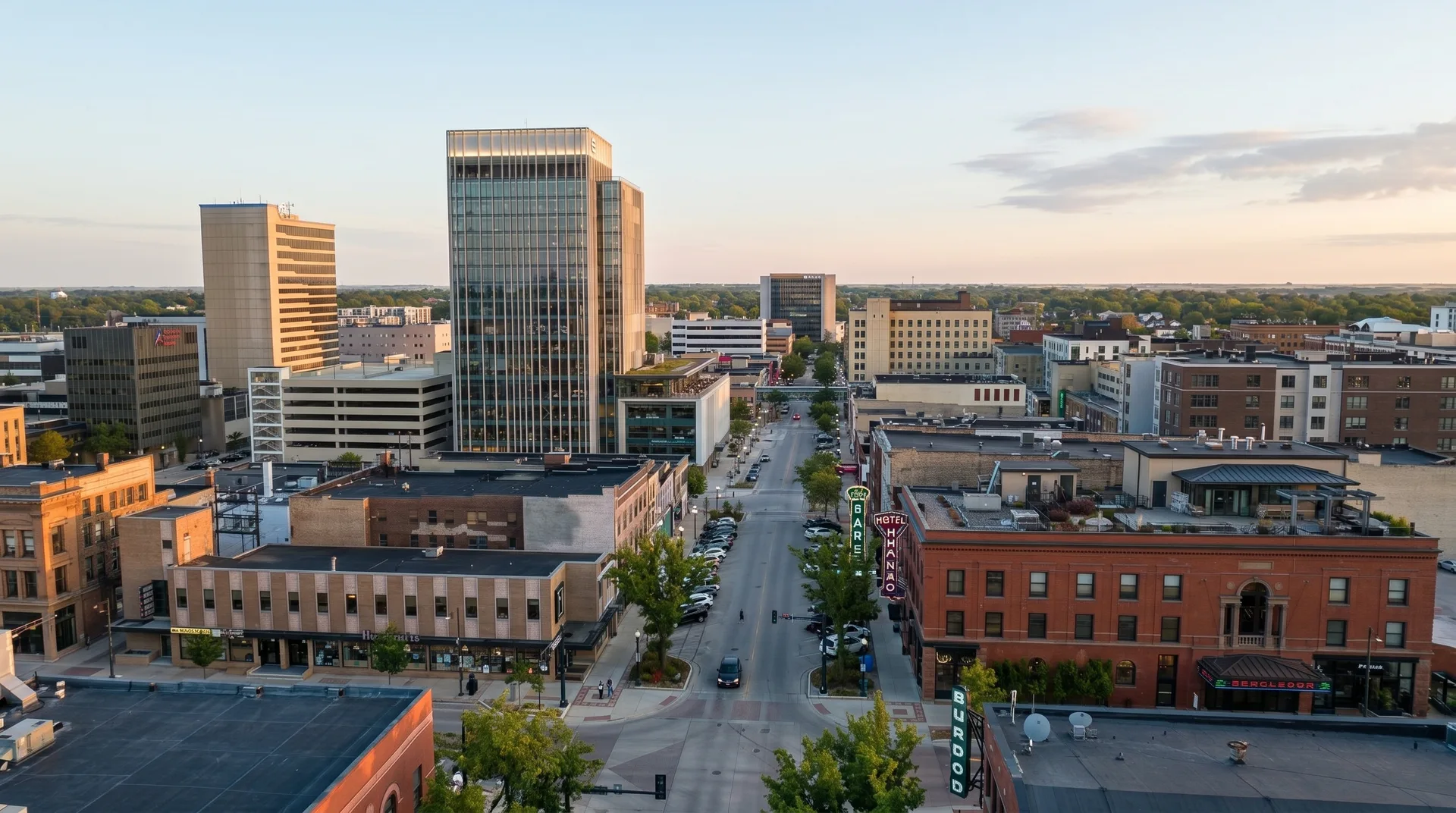
Fargo
Fargo, North Dakota serves as a strategic logistics hub in the Northern Plains, positioned at the intersection of major transportation routes in the Red River Valley. The city's location provides excellent connectivity to both regional and national markets, with access to I-29 and other key highways facilitating efficient freight movement. Fargo's infrastructure includes the Hector International Airport and rail connections, creating a multimodal transportation environment that supports diverse logistics operations.
The city's economy is anchored by agriculture, manufacturing, healthcare, and education sectors. As the largest city in North Dakota, Fargo serves as a commercial center for the region, with strong ties to the agricultural industry that dominates the surrounding areas. The presence of North Dakota State University also contributes to a skilled workforce and technological innovation in logistics and transportation. Local warehousing and distribution facilities are well-developed, supporting both inbound and outbound freight operations.
 Destination
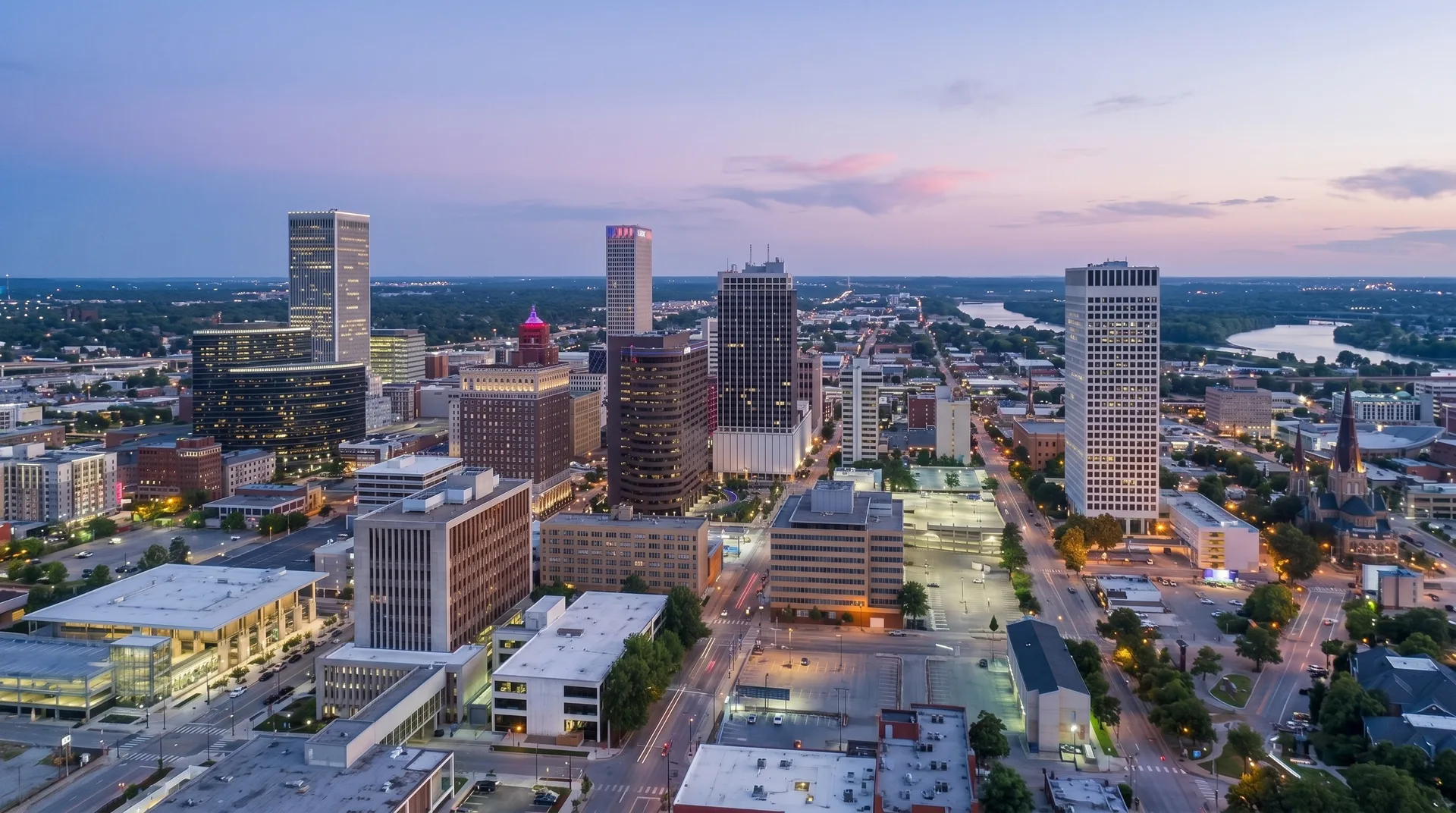
Tulsa
Tulsa, Oklahoma stands as a major logistics and industrial center in the Southern Central United States, strategically positioned along the I-44 corridor. The city's transportation infrastructure includes multiple interstate highways, the Tulsa International Airport, and extensive rail networks, making it a crucial node for freight movement throughout the region. Tulsa's port on the McClellan-Kerr Arkansas River Navigation System provides additional waterway access, enhancing its multimodal capabilities.
The Tulsa economy is diverse, with strong foundations in energy, aerospace, manufacturing, and logistics sectors. Historically known as the "Oil Capital of the World," Tulsa continues to be a major energy hub while also developing significant presence in aerospace and advanced manufacturing. The city hosts numerous corporate headquarters and distribution centers, benefiting from its central location within the United States. Tulsa's logistics infrastructure is well-developed, with modern warehousing facilities and a skilled transportation workforce supporting efficient supply chain operations.










