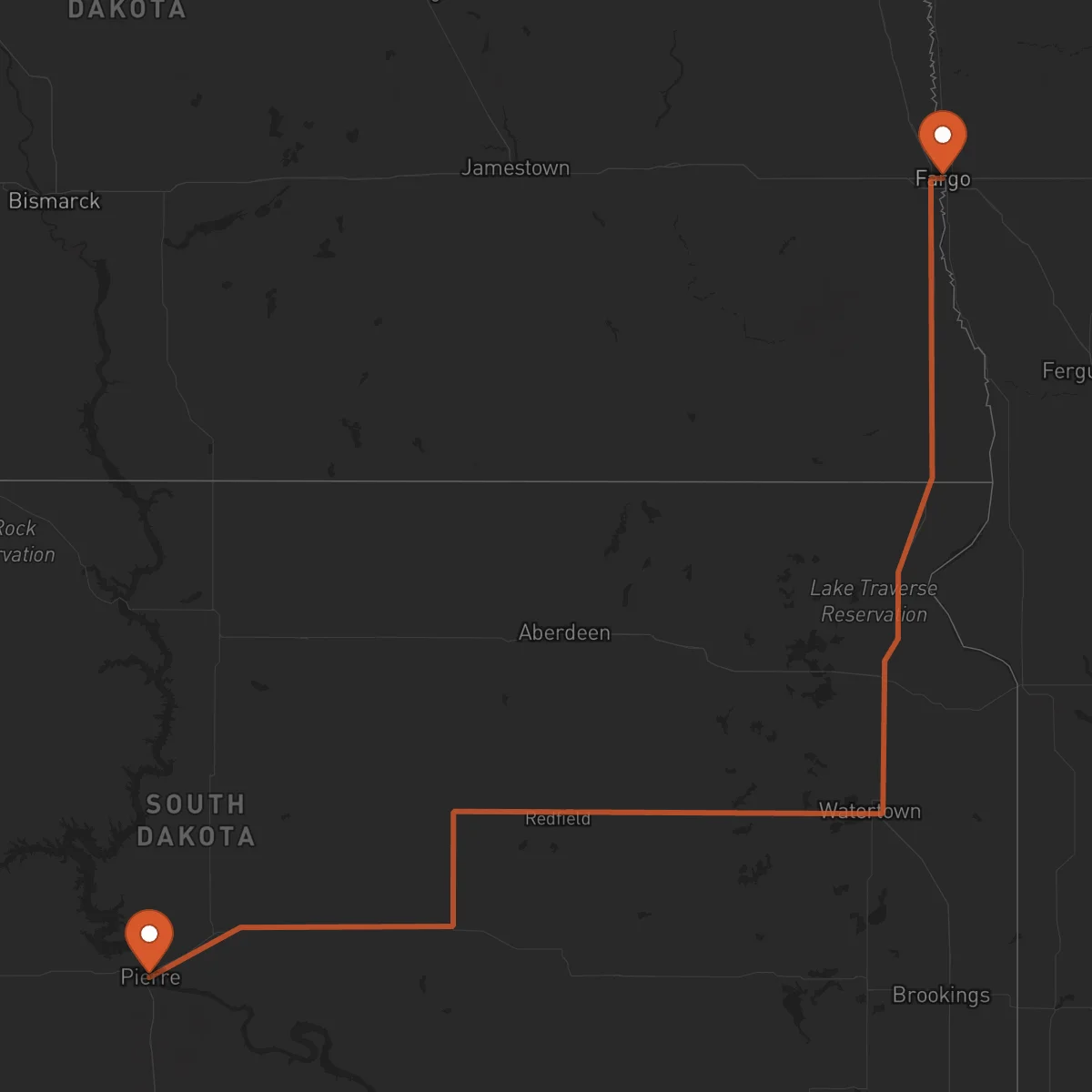
Fargo to Pierre
Pierre → FargoFTL freight transportation service between Fargo and Pierre. Reliable logistics solutions for your business.
Route Description
Everything you need to know about the corridor Fargo - Pierre
The Fargo to Pierre corridor is a vital logistics route connecting two key cities in the Northern Plains region of the United States. This 393-kilometer domestic corridor links North Dakota's largest city with South Dakota's capital, facilitating the movement of goods across state lines and supporting the economic integration of the region. The route traverses the heart of America's agricultural and manufacturing belt, making it a crucial artery for freight transportation in the Midwest.
The region served by this corridor is characterized by its strong agricultural base, with extensive grain production, livestock operations, and food processing facilities. Additionally, both Fargo and Pierre benefit from growing manufacturing sectors, healthcare services, and government operations. The corridor supports the movement of agricultural commodities, industrial equipment, construction materials, and consumer goods between these economic centers.
Transportation along this route primarily utilizes Interstate 29 South and Interstate 90 East, providing reliable and efficient highway connections. These well-maintained interstate highways offer excellent conditions for freight movement, with adequate rest areas and truck stops along the way. The route's relatively flat terrain and minimal elevation changes make it particularly suitable for efficient truck operations year-round, though winter weather conditions should be considered during planning.
Control Terrestre facilitates seamless operations on this corridor through our network of certified transportation providers. Our specialized FTL services ensure that your cargo moves directly from origin to destination without unnecessary stops or transfers. We understand the unique requirements of shipping across state lines and provide dedicated solutions that maintain the integrity and timely delivery of your freight between Fargo and Pierre.
Services for this Route
Available services for the corridor Fargo - Pierre
 Origin
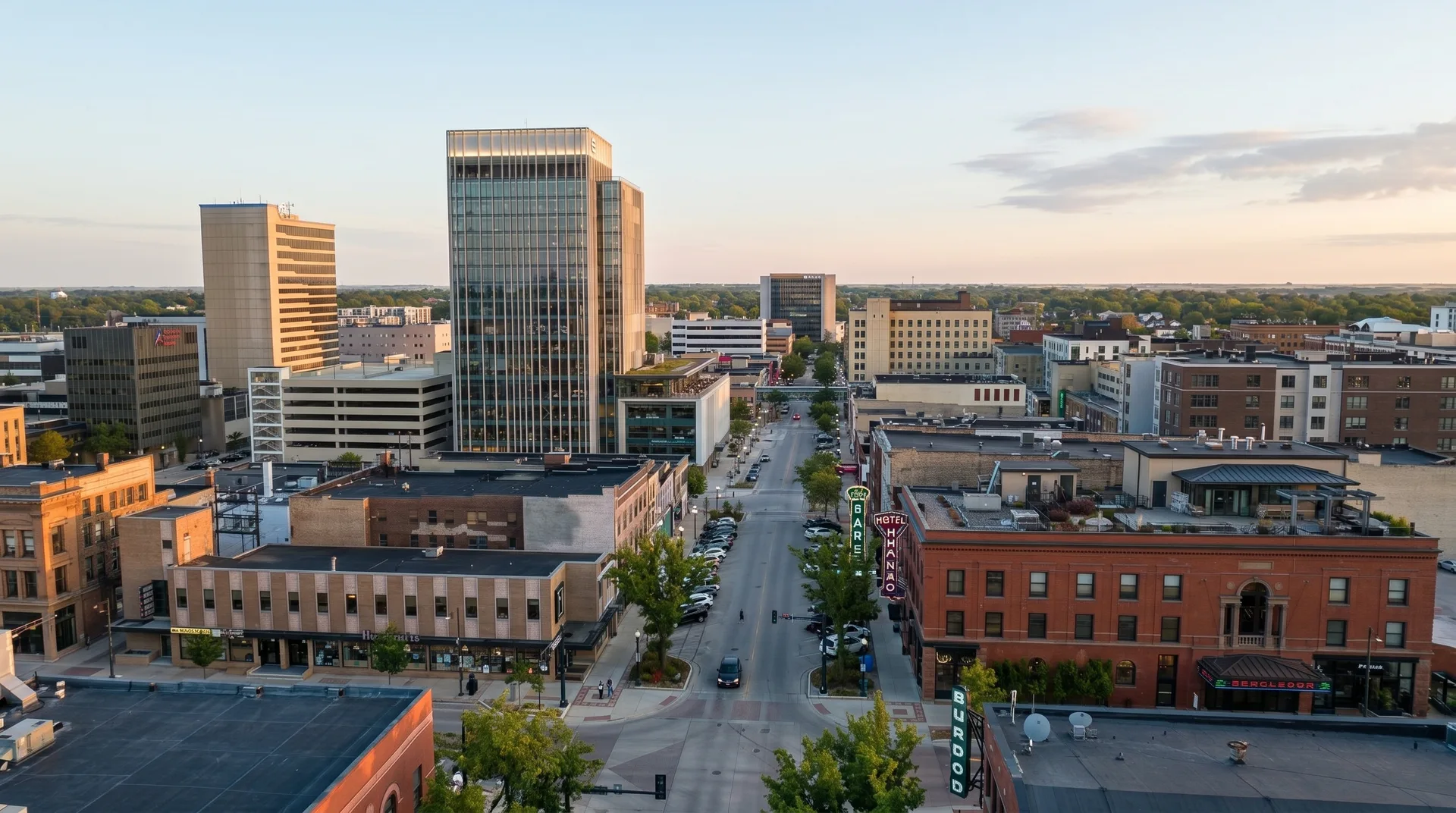
Fargo
Fargo, North Dakota serves as a strategic logistics hub in the Upper Midwest, positioned at the crossroads of major transportation networks. As North Dakota's largest city, Fargo offers exceptional connectivity through its proximity to Interstate 29 and Interstate 94, providing direct access to regional and national freight corridors. The city's location on the eastern border of North Dakota makes it an ideal gateway for cross-border and interstate shipments, particularly to the eastern United States and Canada.
The economic landscape of Fargo is diverse and robust, anchored by strong agricultural, manufacturing, healthcare, and technology sectors. The city hosts numerous food processing facilities, agricultural equipment manufacturers, and distribution centers that rely on efficient freight transportation. Fargo's growing tech industry and educational institutions, including North Dakota State University, contribute to a dynamic business environment that generates consistent freight movement throughout the year.
 Destination
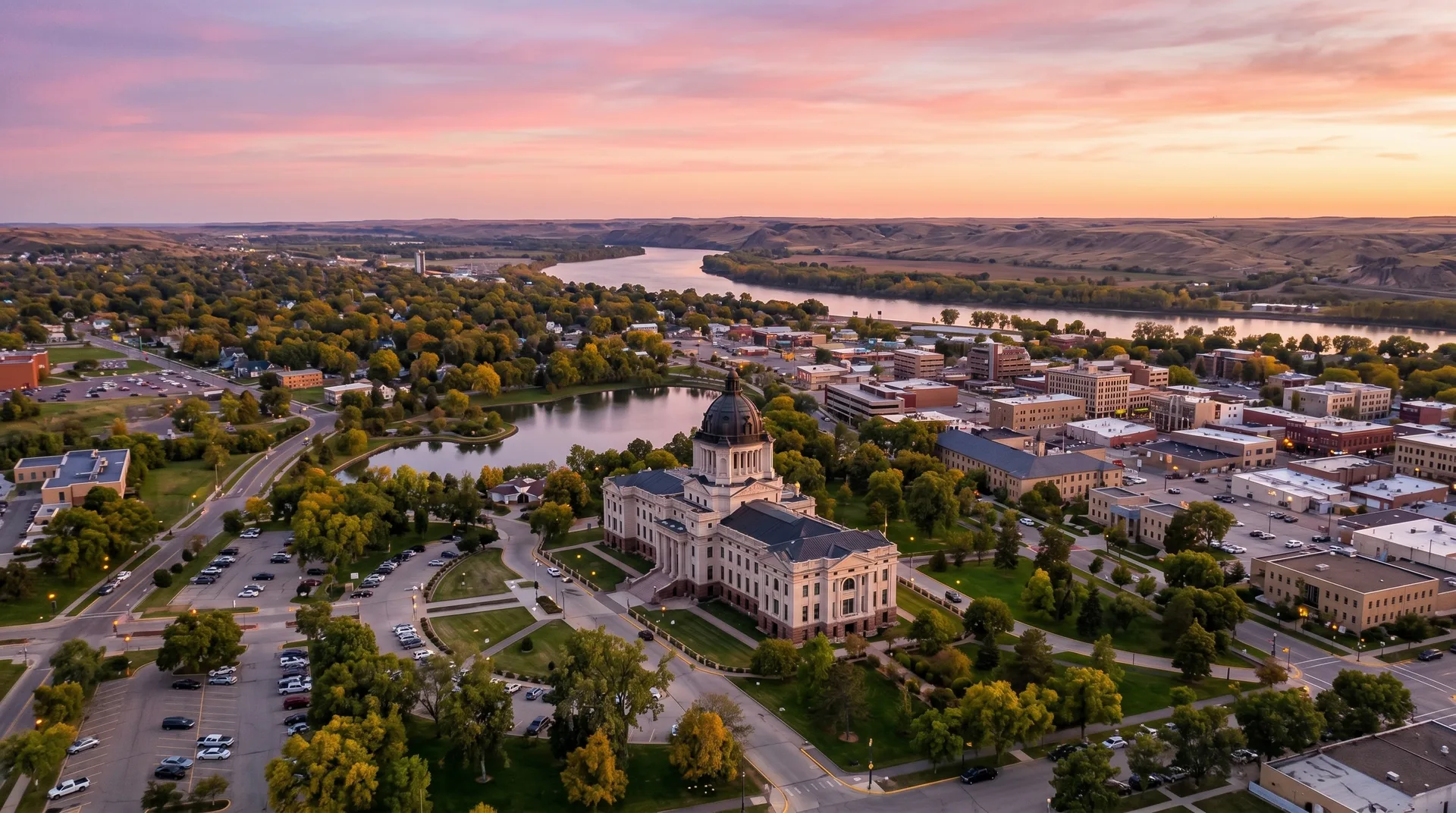
Pierre
Pierre, South Dakota, as the state capital, holds a unique strategic position in the logistics network of the Northern Plains. Located along the Missouri River in the geographic center of South Dakota, Pierre serves as a central distribution point for the state and surrounding regions. The city's location at the intersection of U.S. Highway 83 and U.S. Highway 14 provides essential connectivity for freight movement across South Dakota and beyond.
The economy of Pierre is anchored by state government operations, healthcare services, and a growing tourism sector centered around outdoor recreation and historical sites. The city's role as the state capital creates consistent demand for specialized freight services, including secure transportation of government materials and equipment. Additionally, Pierre's proximity to agricultural areas in central South Dakota supports the movement of farming supplies, equipment, and agricultural products, making it an important node in the regional supply chain.










