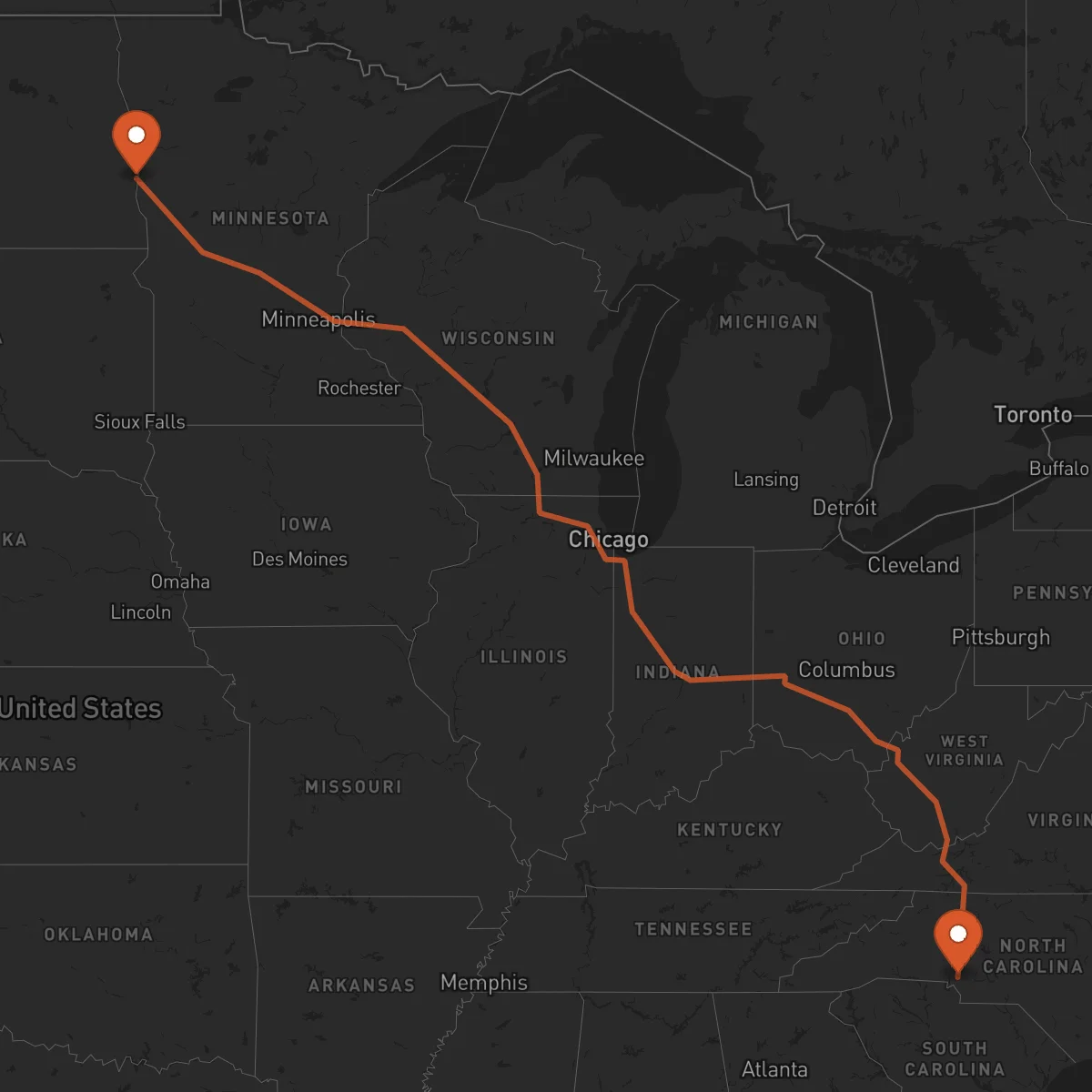
Fargo to Charlotte
Charlotte → FargoFTL freight transportation service between Fargo and Charlotte. Reliable logistics solutions for your business.
Route Description
Everything you need to know about the corridor Fargo - Charlotte
The freight corridor connecting Fargo, North Dakota, to Charlotte, North Carolina, spans approximately 1,855 kilometers across the heart of the United States. This vital domestic route links the Upper Midwest with the Southeast, traversing key industrial and agricultural regions. The corridor serves as a critical artery for moving goods between the manufacturing hubs of the Great Lakes region and the growing logistics centers of the Carolinas.
The transportation infrastructure along this route includes major interstate highways such as I-94, I-90, I-80, and I-77, providing reliable connectivity through diverse geographic regions. Control Terrestre leverages this established infrastructure to provide efficient full truckload (FTL) transportation services, ensuring your cargo moves seamlessly from origin to destination.
This corridor is particularly important for industries including automotive parts, agricultural products, industrial machinery, and consumer goods. The route connects Fargo's agricultural and manufacturing base with Charlotte's position as a major financial and distribution center. Control Terrestre's specialized FTL services on this corridor are designed to meet the specific needs of these industries, offering dedicated transportation solutions that maintain cargo integrity and delivery reliability.
Services for this Route
Available services for the corridor Fargo - Charlotte
 Origin
Fargo
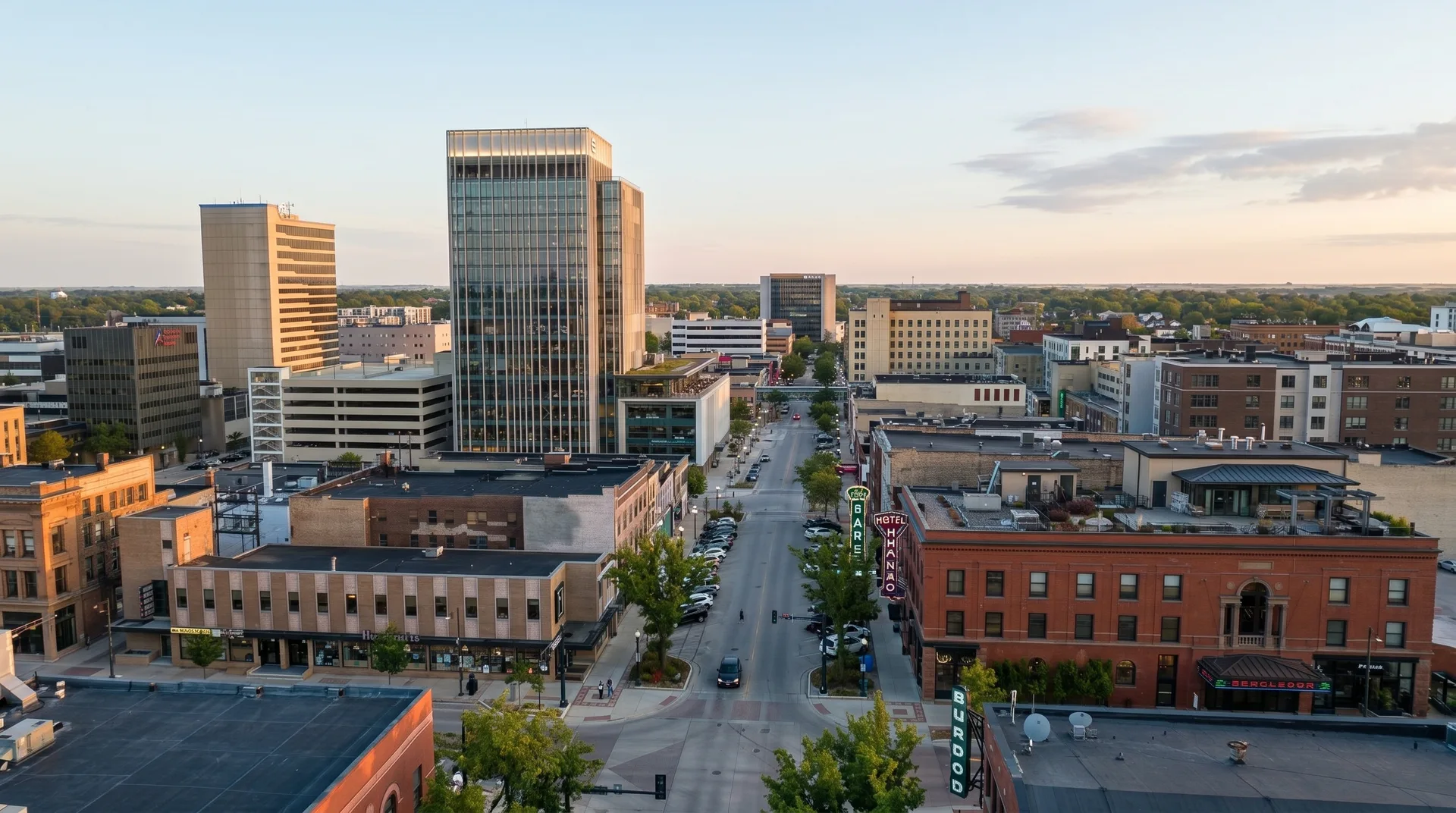
Fargo, North Dakota, serves as a strategic logistics hub in the Upper Midwest, positioned at the crossroads of major transportation networks. The city's location provides access to both Canadian and U.S. markets, with proximity to the Red River Valley's agricultural heartland. Fargo's transportation infrastructure includes the Hector International Airport, extensive rail connections through BNSF Railway, and direct access to Interstate 29 and Interstate 94, facilitating efficient distribution throughout the region.
The local economy is anchored by agriculture, manufacturing, technology, and healthcare sectors. Major employers include agricultural equipment manufacturers, food processing companies, and logistics providers. The region's strong agricultural base generates significant freight volume, particularly in grains, processed foods, and agricultural machinery, making Fargo a key origin point for freight moving to distribution centers across the United States.
 Destination
Charlotte
Charlotte, North Carolina, stands as a major logistics and distribution center in the Southeast United States. The city's strategic location provides access to the East Coast's major markets within a day's drive, with proximity to the Port of Charleston and Port of Wilmington for international freight connections. Charlotte's transportation infrastructure includes Charlotte Douglas International Airport, extensive rail networks through Norfolk Southern and CSX, and direct access to Interstate 77, Interstate 85, and Interstate 485, creating a multimodal logistics ecosystem.
The Charlotte metropolitan area is a powerhouse for financial services, energy, healthcare, and advanced manufacturing. The region hosts numerous distribution centers for major retailers and e-commerce companies, benefiting from North Carolina's pro-business environment and central East Coast location. Charlotte's growing population and economic diversity create consistent demand for inbound freight, while its manufacturing and distribution sectors generate substantial outbound freight volume.










