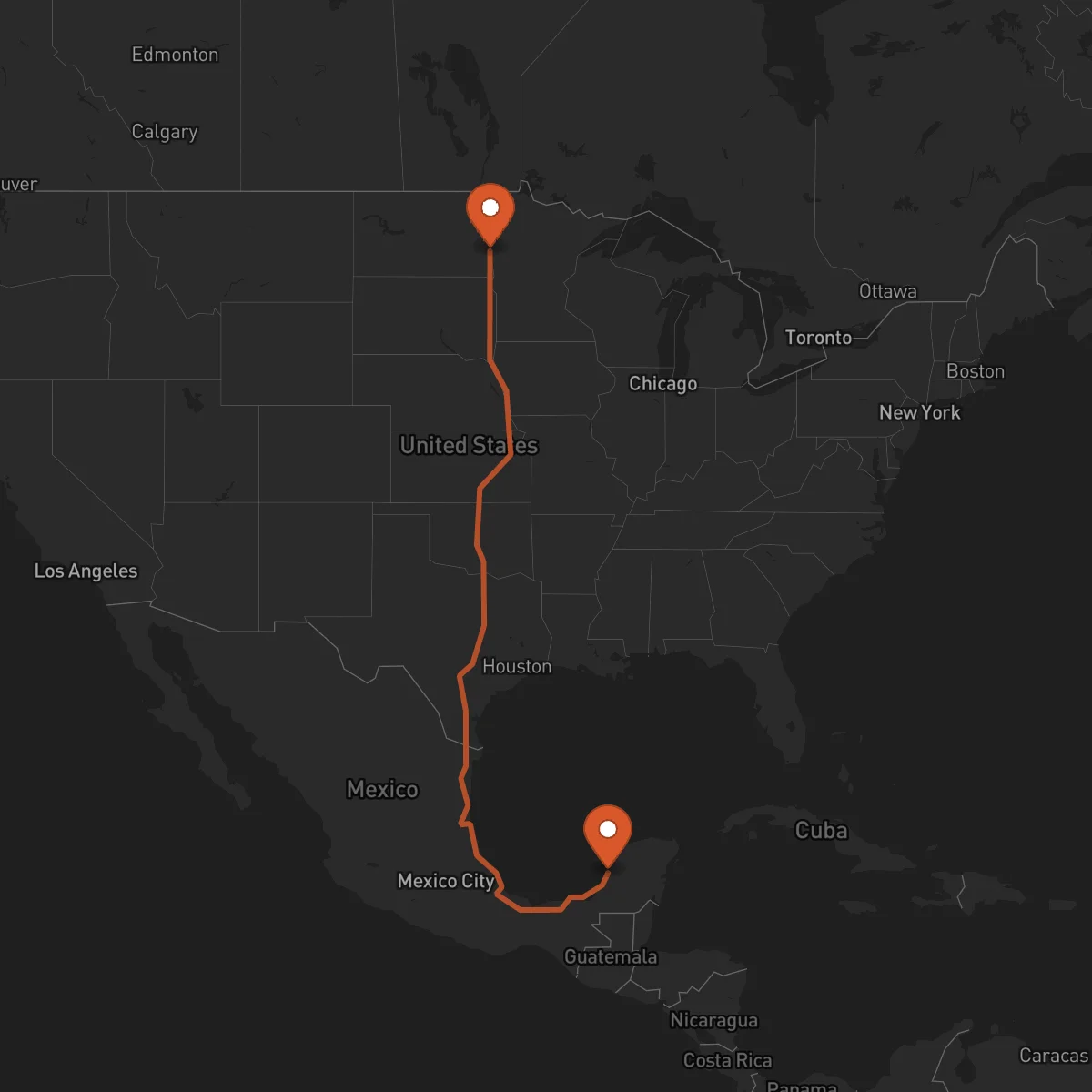
Fargo to Campeche
Campeche → FargoFTL freight transportation service between Fargo and Campeche. Reliable logistics solutions for your business.
Route Description
Everything you need to know about the corridor Fargo - Campeche
The Fargo to Campeche corridor represents a vital logistics connection between the United States and Mexico, spanning approximately 3,061 kilometers through key industrial and agricultural regions. This cross-border route facilitates the movement of diverse cargo types, from agricultural products and manufacturing components to specialized freight requiring temperature-controlled transportation. The corridor traverses major economic zones in both countries, connecting the manufacturing and agricultural heartland of the northern United States with the energy and tourism sectors of Mexico's Yucatan Peninsula.
The transportation infrastructure along this route includes major interstate highways in the United States, transitioning to Mexico's federal highways that provide direct access to Campeche. Key border crossings at Laredo or McAllen facilitate the international movement of goods, with established customs procedures that experienced logistics providers can navigate efficiently. The route passes through multiple states, each with specific regulations and requirements that demand thorough knowledge for seamless operations.
Control Terrestre leverages our extensive network of certified carriers and deep understanding of cross-border regulations to ensure reliable full truckload (FTL) service along this corridor. Our expertise in customs documentation, compliance with C-TPAT and other security programs, and real-time tracking capabilities provide our clients with the confidence that their freight will move efficiently from origin to destination. We understand the unique challenges of this specific route and have developed optimized processes to minimize transit times while maintaining the highest standards of cargo safety and regulatory compliance.
Services for this Route
Available services for the corridor Fargo - Campeche
 Origin
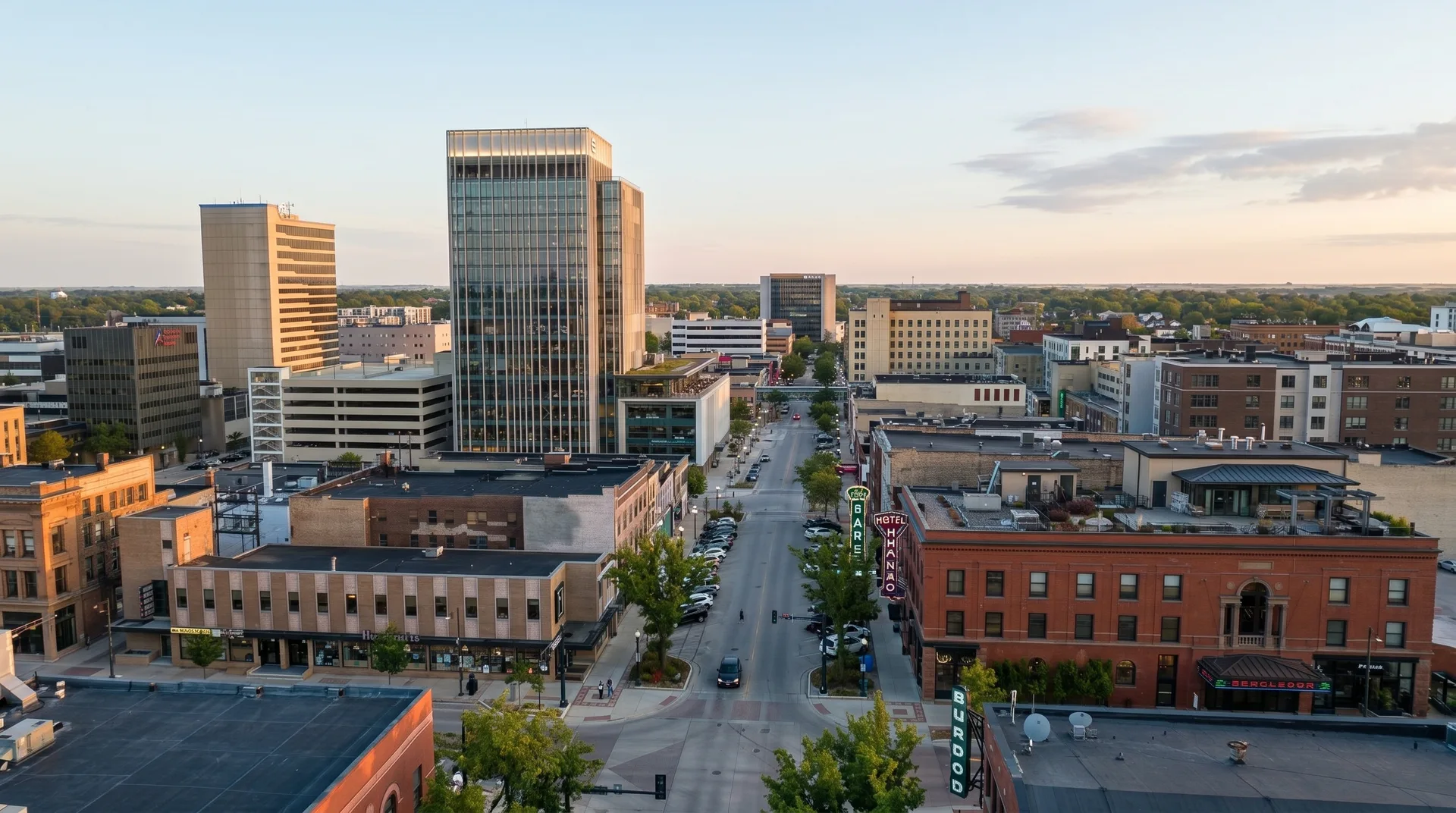
Fargo
Fargo, North Dakota serves as a strategic logistics hub in the Upper Midwest, positioned advantageously for distribution throughout the central United States. The city's location provides excellent connectivity to major markets through an extensive network of interstate highways, including I-29 and I-94, which link Fargo to regional and national transportation systems. The area benefits from a robust infrastructure that includes rail connections, an international airport, and proximity to the Port of Duluth for multimodal shipping options.
The Fargo region is characterized by strong agricultural, manufacturing, and technology sectors. Major industries include agricultural equipment manufacturing, food processing, and energy production, all of which generate significant freight volume requiring reliable transportation solutions. The presence of educational institutions and healthcare facilities also contributes to the diverse economic landscape, creating consistent demand for logistics services to move both raw materials and finished goods.
 Destination
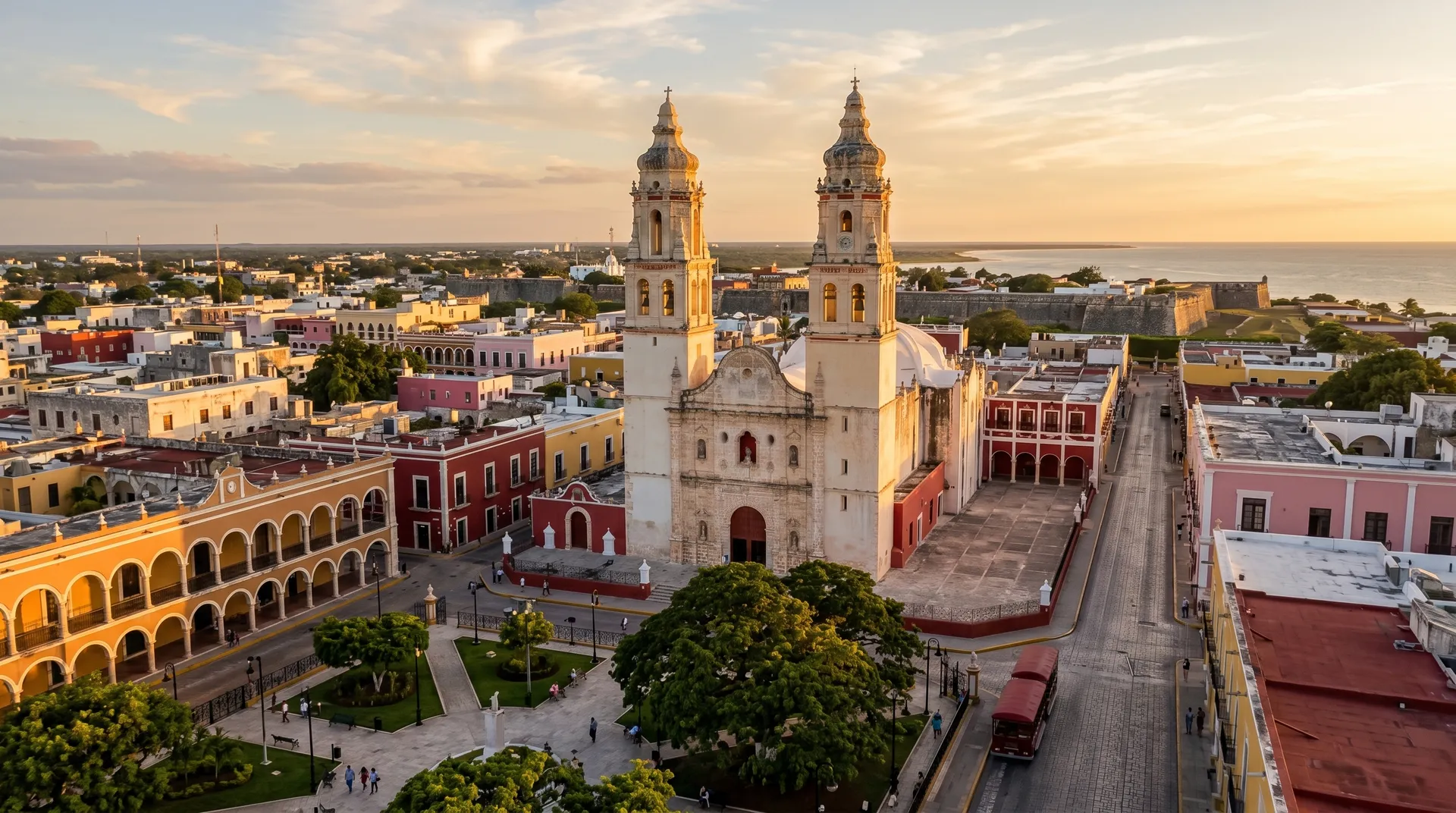
Campeche, located on Mexico's Gulf Coast, represents a strategic gateway to the Yucatan Peninsula and serves as an important logistics center for the region. The city's port facilities provide maritime connections for international trade, while its road infrastructure offers access to major industrial centers throughout southeastern Mexico. Campeche's location facilitates distribution to nearby states including Yucatan, Quintana Roo, and Chiapas, making it a valuable node in Mexico's logistics network.
The economy of Campeche is anchored by the energy sector, with significant oil and gas operations in the surrounding region. Tourism also plays a vital role, as Campeche serves as a cultural and historical destination for visitors exploring the Mayan Riviera. The combination of energy production, tourism, and agricultural activities creates diverse freight transportation needs, from heavy equipment and specialized cargo to consumer goods and perishables requiring temperature-controlled transport.










