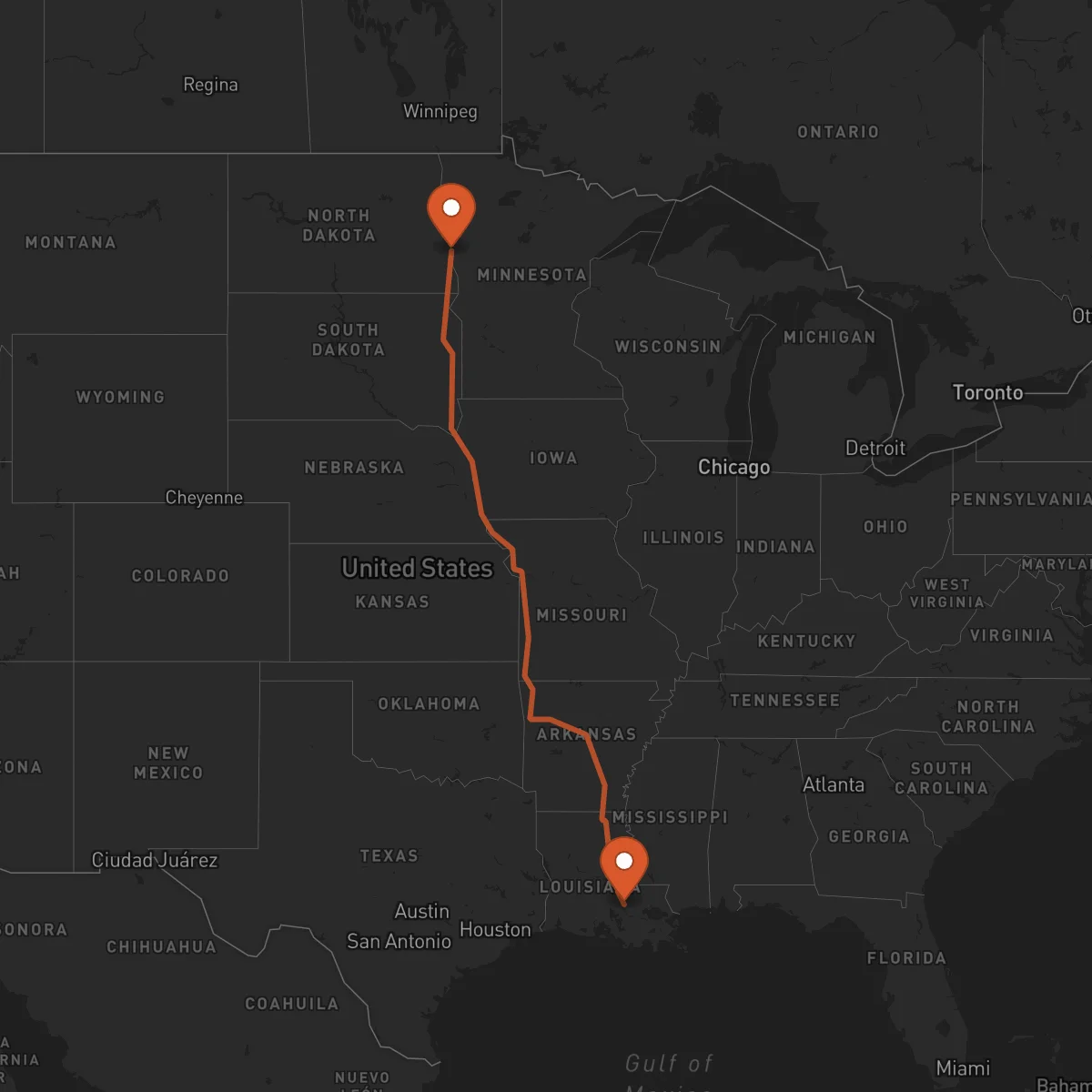
Fargo to Baton Rouge
Baton Rouge → FargoFTL freight transportation service between Fargo and Baton Rouge. Reliable logistics solutions for your business.
Route Description
Everything you need to know about the corridor Fargo - Baton Rouge
The logistics corridor between Fargo, North Dakota, and Baton Rouge, Louisiana, represents a vital connection spanning approximately 1,889 kilometers across the central United States. This north-to-south route traverses diverse economic regions, linking the agricultural heartland of the Upper Midwest with the industrial and petrochemical hub of the Gulf Coast. The corridor facilitates the movement of goods between these distinct economic zones, supporting supply chains that are crucial to both regional and national commerce.
The route connects Fargo's strong agricultural and manufacturing base with Baton Rouge's position as a major center for petrochemical production, refining, and port activities. Along the way, it passes through key states including Minnesota, Iowa, Missouri, Arkansas, and Mississippi, each contributing to the corridor's economic significance. The main transportation infrastructure consists of Interstate highways, primarily I-29 south to I-55, which provide reliable and efficient freight movement. This well-established highway network ensures consistent transit times and supports the high-volume freight traffic characteristic of this corridor.
Control Terrestre specializes in providing dedicated Full Truckload (FTL) services along this corridor, offering companies reliable transportation solutions for their freight needs. Our strategic alliance of experienced carriers ensures that shipments move efficiently between Fargo and Baton Rouge, whether transporting agricultural products, industrial equipment, or manufactured goods. We understand the specific requirements of this route and provide tailored solutions that address the unique challenges of moving freight across such diverse geographic and economic regions.
Services for this Route
Available services for the corridor Fargo - Baton Rouge
 Origin
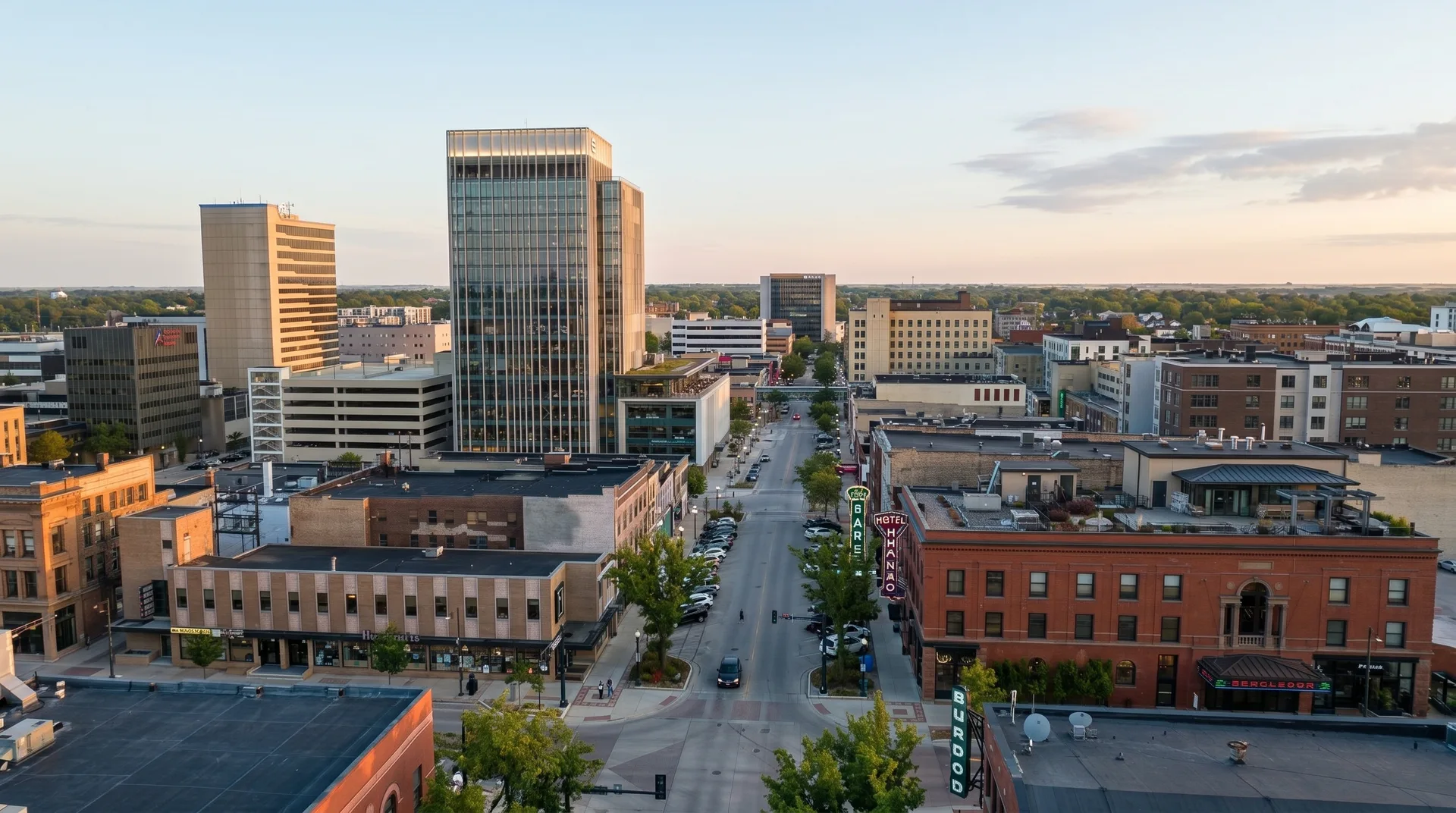
Fargo
Fargo, North Dakota, serves as a strategic logistics hub in the Upper Midwest, benefiting from its location near major transportation corridors and its proximity to the Canadian border. The city is a center for agriculture, manufacturing, technology, and healthcare, with a strong presence of food processing companies and agricultural equipment manufacturers. Fargo's economic landscape is characterized by its resilience and innovation, particularly in sectors that support both local and international supply chains.
The city boasts excellent transportation infrastructure, including access to Interstate 29, which provides direct connections to major markets. Hector International Airport supports air cargo operations, while the nearby ports of entry facilitate cross-border trade with Canada. The region's extensive rail network, operated by major carriers, further enhances Fargo's connectivity and its ability to serve as a distribution point for goods moving throughout the Midwest and beyond.
 Destination
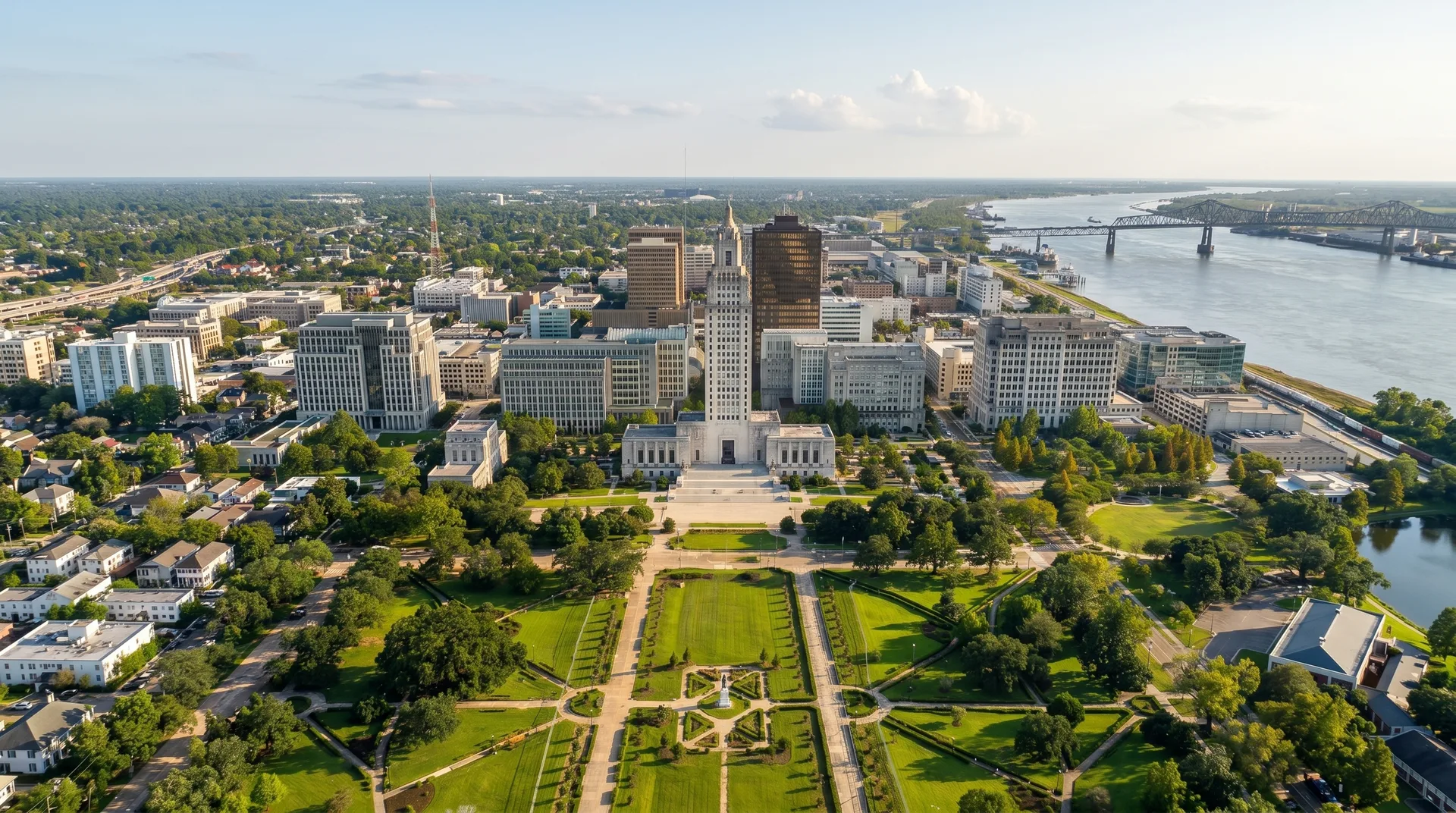
Baton Rouge
Baton Rouge, Louisiana, is strategically positioned along the Mississippi River and serves as a critical logistics center for the Gulf Coast region. As the state capital, it hosts a diverse economy centered around petrochemical refining, manufacturing, and port activities. The Port of Greater Baton Rouge is one of the nation's top ports, providing deep-water access and extensive facilities for handling bulk cargo, containers, and project cargo. This makes Baton Rouge a key gateway for international trade and domestic distribution.
The city's transportation infrastructure is highly developed, featuring access to major interstate highways including I-10 and I-12, which connect to the broader national highway system. The Mississippi River provides vital waterway access for barge transportation, while Baton Rouge Metropolitan Airport supports air freight operations. This multimodal transportation network enables efficient movement of goods to and from the region, supporting industries such as chemical manufacturing, oil and gas, and agriculture.










