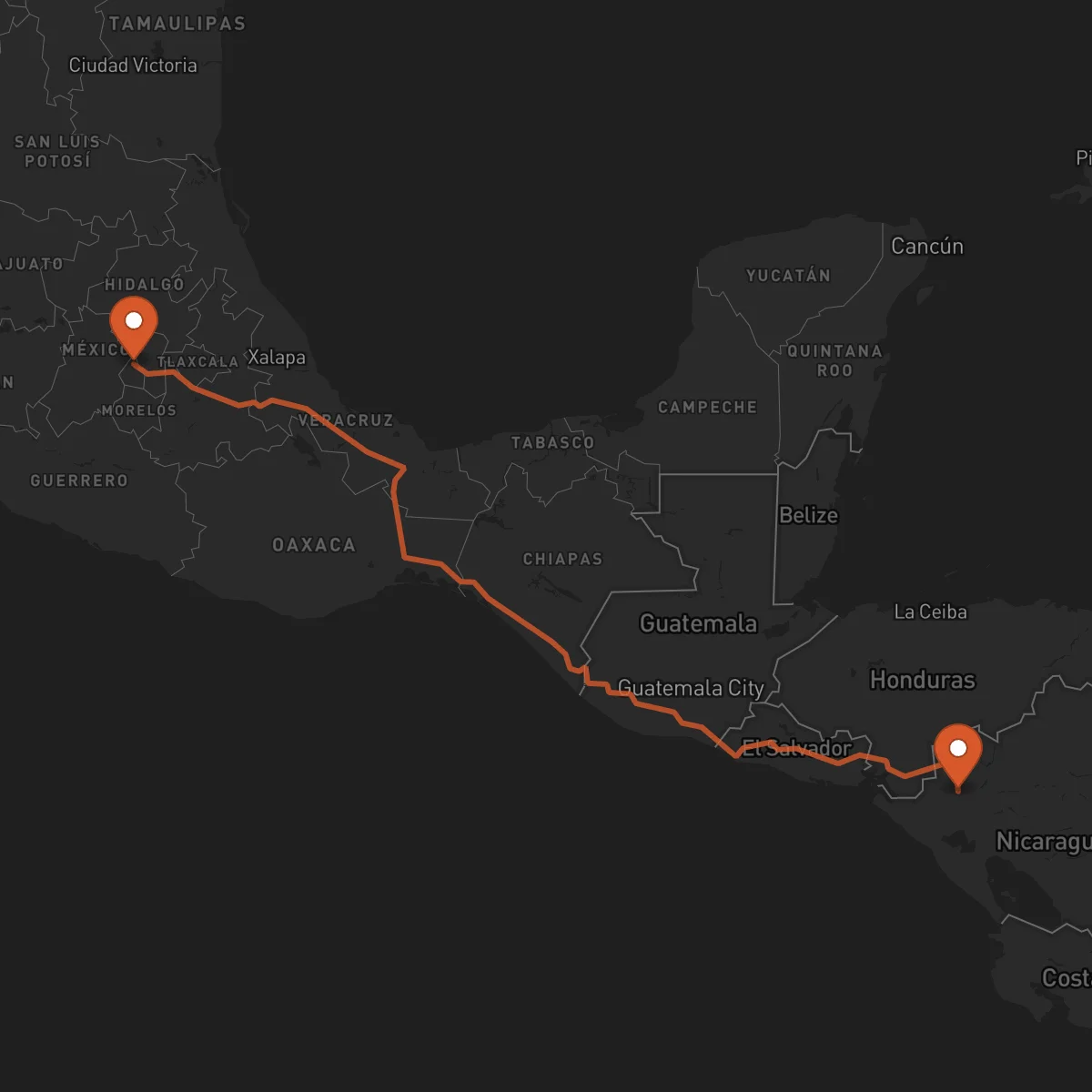
Estelí to Mexico City
Mexico City → EstelíFTL freight transportation service between Estelí and Mexico City. Reliable logistics solutions for your business.
Route Description
Everything you need to know about the corridor Estelí - Mexico City
The Estelí to Ciudad de México corridor is a critical north-south artery connecting the agricultural heartland of Nicaragua with the industrial and consumer powerhouse of Mexico's capital. This cross-border route facilitates the essential flow of goods between Central America and one of North America's largest metropolitan markets, underpinning regional trade and economic integration. The corridor primarily serves the movement of raw materials from Nicaragua's productive regions to Mexican manufacturing centers, as well as the distribution of finished goods and consumer products south to north. Key industries leveraging this route include agriculture (coffee, tobacco, tropical fruits), basic manufacturing, and consumer goods distribution.
Transportation infrastructure relies on a combination of national highways. The journey begins on Nicaragua's portion of the Pan-American Highway (NIC-1), connecting Estelí to the northern border. After crossing into Mexico, the route typically integrates with Mexico's Federal Highway 85D (the Autopista México-Pachuca) and other major toll roads (autopistas) that provide efficient access into the Valle de México. The primary border crossing for this corridor is generally the Paso del Norte (Ciudad Juárez/El Paso) or the Nuevo Laredo/Colombia crossing, depending on the specific routing and carrier alliance, requiring meticulous customs clearance and compliance with both Nicaraguan and Mexican regulations.
Control Terrestre facilitates seamless operations on this corridor through our strategic alliance of certified carriers. Our partners hold key certifications such as C-TPAT, FAST, and BASC, which streamline customs procedures and enhance security for cross-border shipments. We exclusively provide Full Truckload (FTL) solutions, ensuring dedicated capacity and direct transit for your cargo, whether it is standard dry van, refrigerated, or specialized. Our network manages the complex logistics of international documentation, border coordination, and Mexican customs brokerage, providing a single point of contact for a door-to-door service that optimizes your supply chain from origin to destination.
Services for this Route
Available services for the corridor Estelí - Mexico City
 Origin
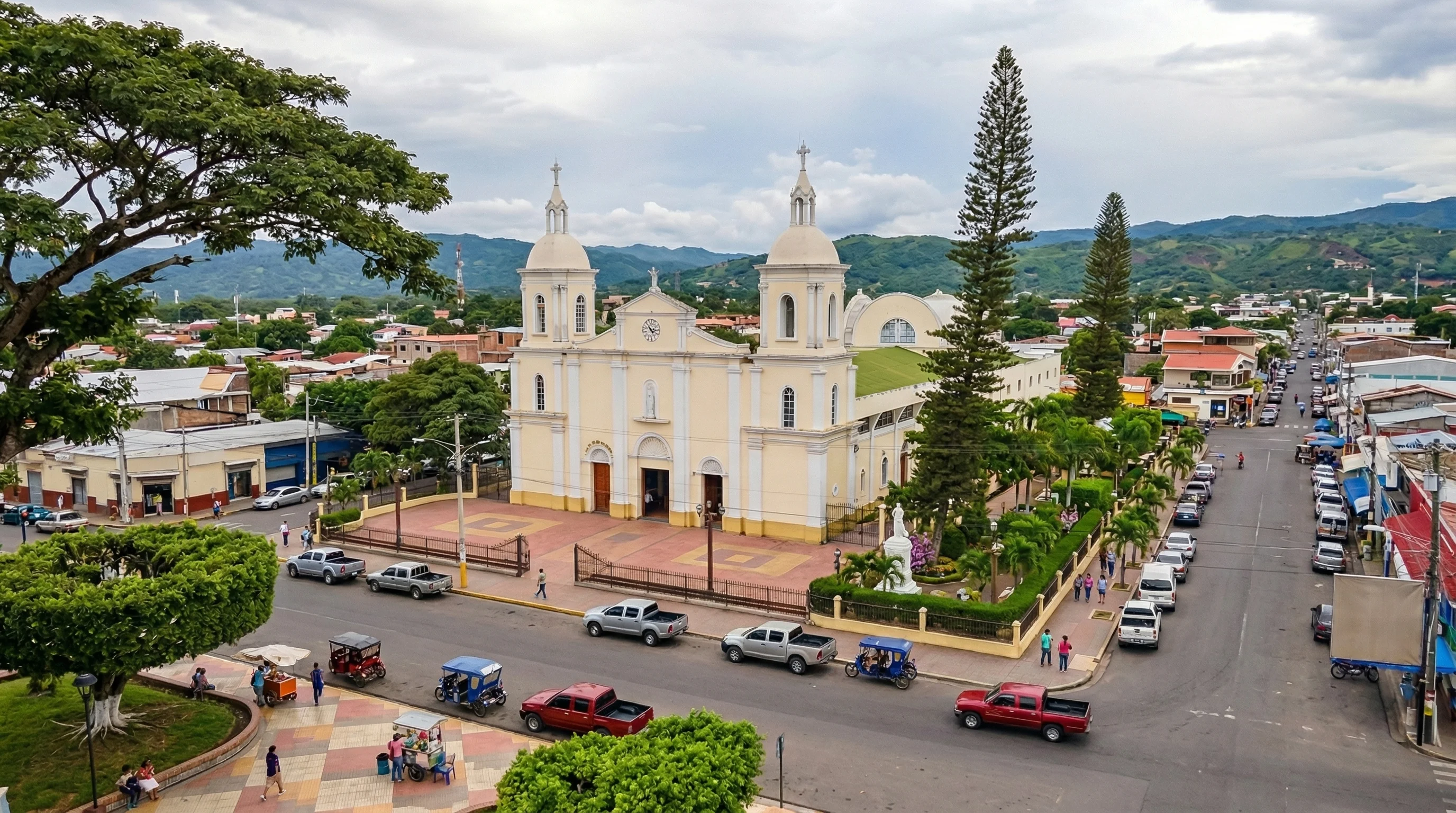
Estelí, Nicaragua, is a strategically significant inland city located in the country's northern highlands, approximately 150 km north of Managua. Its position along the Pan-American Highway (NIC-1) makes it a natural logistics hub for northern Nicaragua, providing direct road access to the Honduran and Costa Rican borders. The region's economy is dominated by agriculture, most notably premium tobacco for cigar production, along with coffee, sugarcane, and livestock. This agricultural output generates substantial demand for outbound freight transportation of raw materials and inbound movement of packaging, fertilizers, and equipment. The city's infrastructure includes well-maintained regional roads connecting to the main highway, supported by warehousing and distribution services tailored to agribusiness. For exporters, Estelí serves as a consolidation point for goods destined for international markets via the northern border crossings.
 Destination
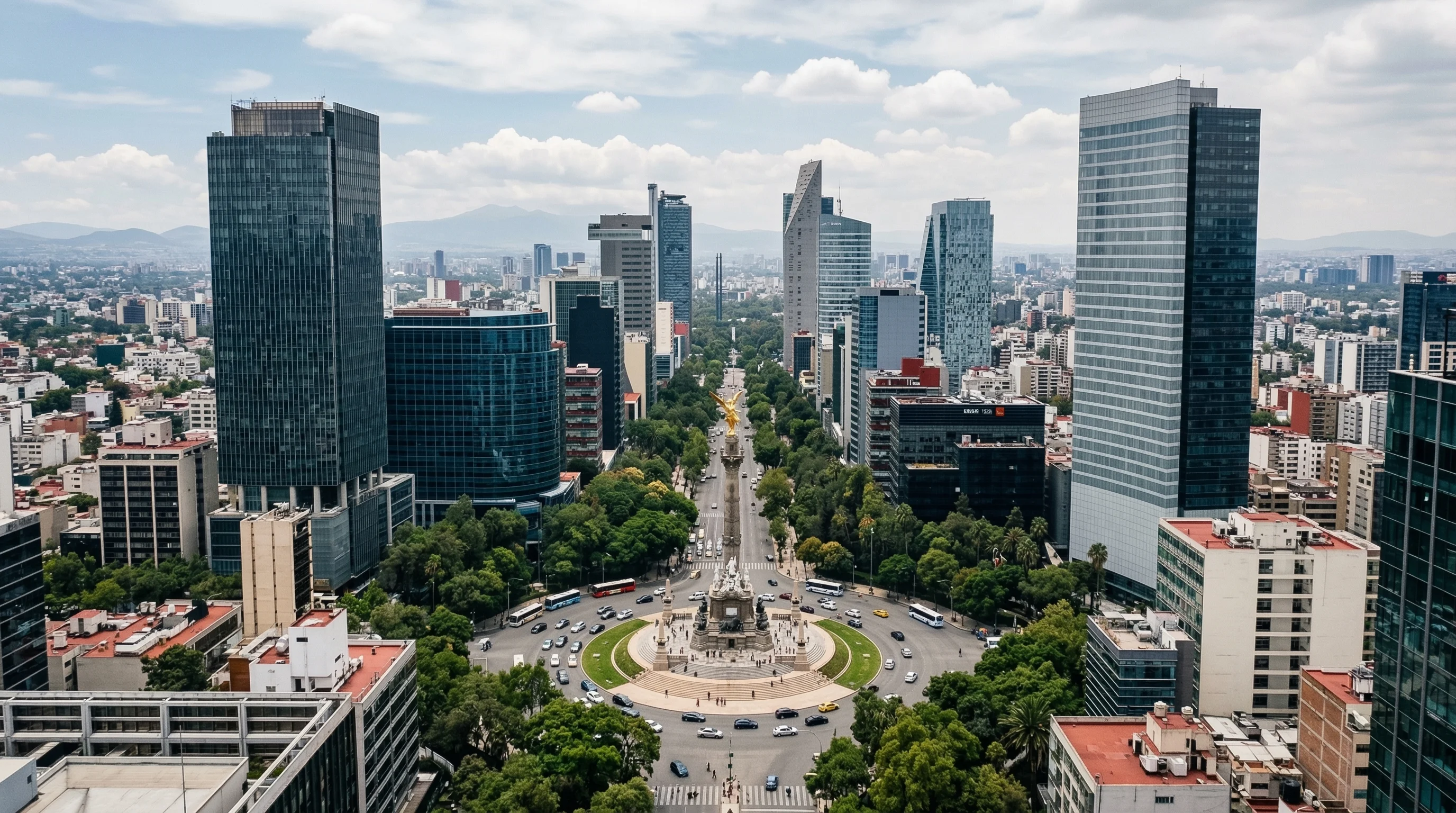
Mexico City
Ciudad de México, the capital of Mexico, is a colossal economic, political, and distribution epicenter. Its strategic location in the heart of the country makes it the final destination for goods from across the republic and the primary gateway for imports. The city's economy is profoundly diverse, anchored by massive manufacturing sectors (automotive, aerospace, electronics, pharmaceuticals), a vast retail market, food and beverage processing, and a huge service industry. This generates immense demand for freight transportation, both for supplying local industries with raw materials and for distributing finished products to a population of over 20 million. The metropolitan area is served by an extensive network of federal highways and toll roads (autopistas), including the Mexico-Querétaro, Mexico-Pachuca, and Mexico-Cuernavaca corridors, which connect it to all major border crossings and ports. Key logistics infrastructure includes numerous private and public warehouses, distribution centers, and proximity to major customs clearance points for land arrivals.










