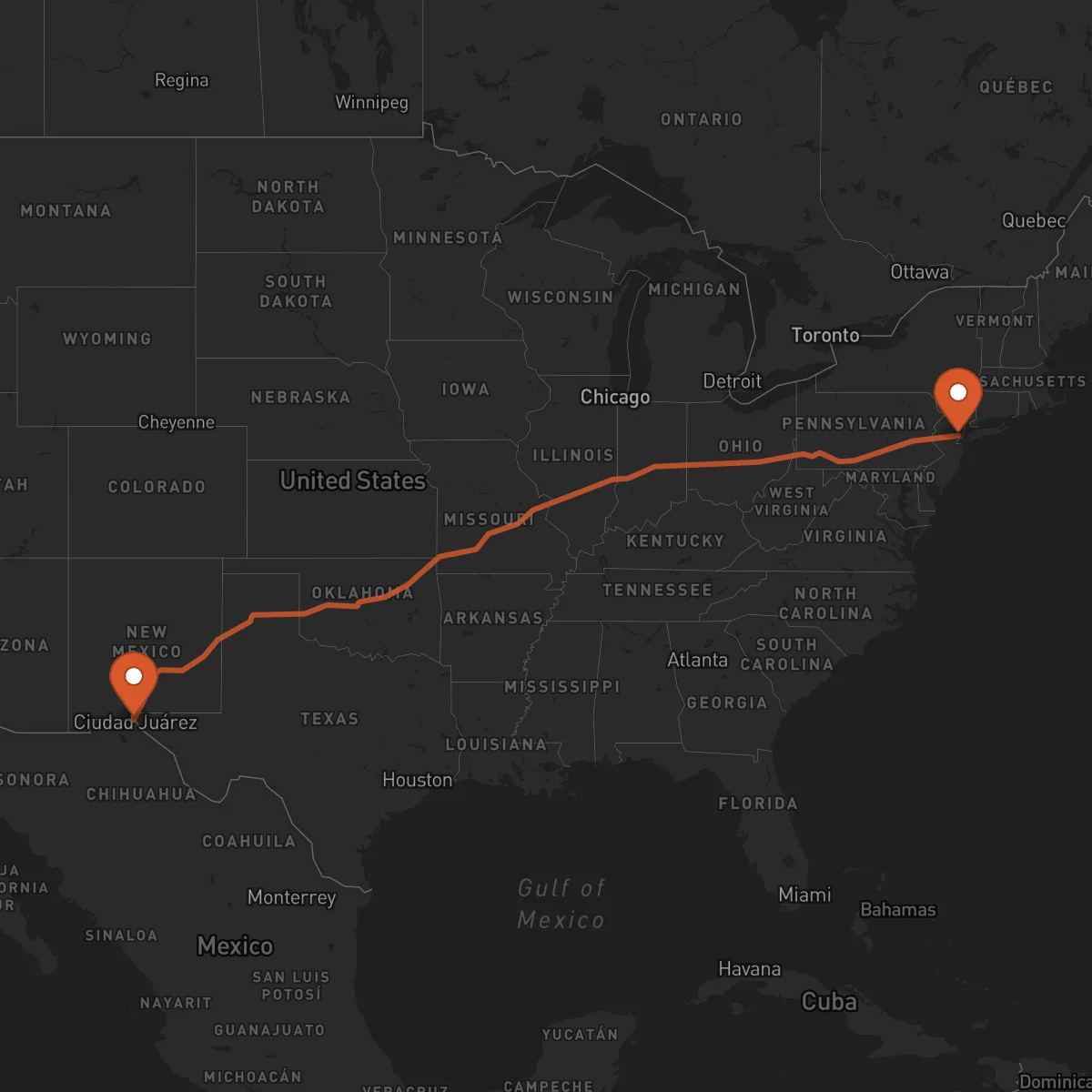
El Paso to Newark
Newark → El PasoFTL freight transportation service between El Paso and Newark. Reliable logistics solutions for your business.
Route Description
Everything you need to know about the corridor El Paso - Newark
The logistics corridor connecting El Paso, Texas, to Newark, New Jersey, represents one of the most critical transportation routes in the United States. Spanning approximately 3,044 kilometers, this corridor traverses the heart of America, linking the southwestern border region with the bustling Northeast corridor. This strategic route serves as a vital artery for commerce, connecting major industrial centers, manufacturing hubs, and distribution networks across the country.
The economic significance of this corridor cannot be overstated. El Paso serves as a major gateway for international trade, particularly with Mexico, while Newark functions as a crucial entry point to the New York metropolitan area and the broader northeastern United States. The route facilitates the movement of diverse cargo types, including automotive parts, electronics, consumer goods, and industrial equipment. Key industries along this corridor include manufacturing, retail distribution, technology, and automotive sectors, all of which rely on efficient and reliable transportation services to maintain their supply chains.
Control Terrestre specializes in providing comprehensive FTL (Full Truckload) services along this important corridor. Our extensive network of certified carriers ensures that your cargo moves efficiently and securely from origin to destination. We understand the unique challenges of this long-haul route and have developed specialized solutions to address them. Our team of logistics experts works diligently to optimize routes, manage documentation, and provide real-time tracking, ensuring that your freight arrives on time and in perfect condition. With our commitment to excellence and our deep understanding of the El Paso-Newark corridor, Control Terrestre stands ready to be your trusted partner in navigating this crucial transportation route.
Services for this Route
Available services for the corridor El Paso - Newark
 Origin
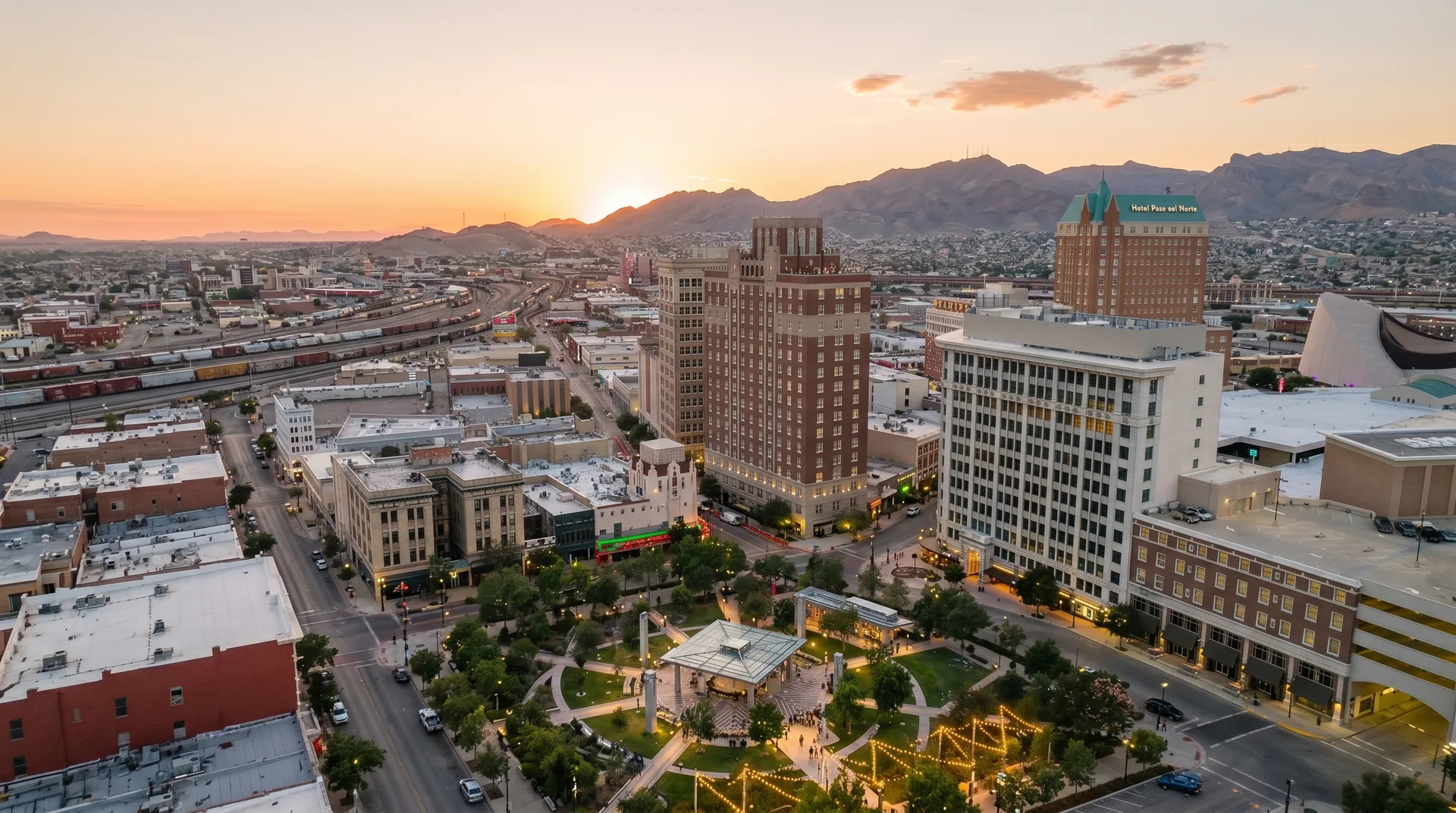
El Paso
El Paso, Texas, strategically positioned on the U.S.-Mexico border, serves as a critical logistics hub for both domestic and international freight. Its location at the intersection of major highways, including I-10, makes it an ideal gateway for cross-border trade and a key distribution point for goods moving throughout the southwestern United States. The city's proximity to major ports of entry and its robust transportation infrastructure, including the El Paso International Airport and Union Pacific Railroad facilities, further enhance its logistical capabilities.
The region's economy is diverse, with strong sectors in manufacturing, particularly in the automotive and electronics industries. El Paso's maquiladora industry, which involves manufacturing operations by U.S. companies in Mexico, creates a significant demand for efficient transportation services. The city's strategic location also makes it a crucial point for the distribution of goods to other major markets in the southwestern United States, including Phoenix, Dallas, and Houston.
 Destination
Newark
Newark, New Jersey, located in the heart of the New York metropolitan area, is a pivotal logistics and distribution center on the East Coast. Its strategic position provides easy access to major markets in the Northeast, including New York City, Philadelphia, and Boston. Newark Liberty International Airport, one of the busiest in the country, and the Port Newark-Elizabeth Marine Terminal, the largest container port on the East Coast, make the city a crucial gateway for both air and sea freight.
The region's economy is characterized by its diverse industrial base, including pharmaceuticals, telecommunications, and financial services. Newark's proximity to major consumer markets and its extensive transportation infrastructure, including major highways like I-95 and I-78, make it an ideal location for distribution centers and warehouses. The city's role in the supply chain of the northeastern United States is further enhanced by its connections to rail networks and its proximity to major urban centers, facilitating the efficient movement of goods throughout the region.










