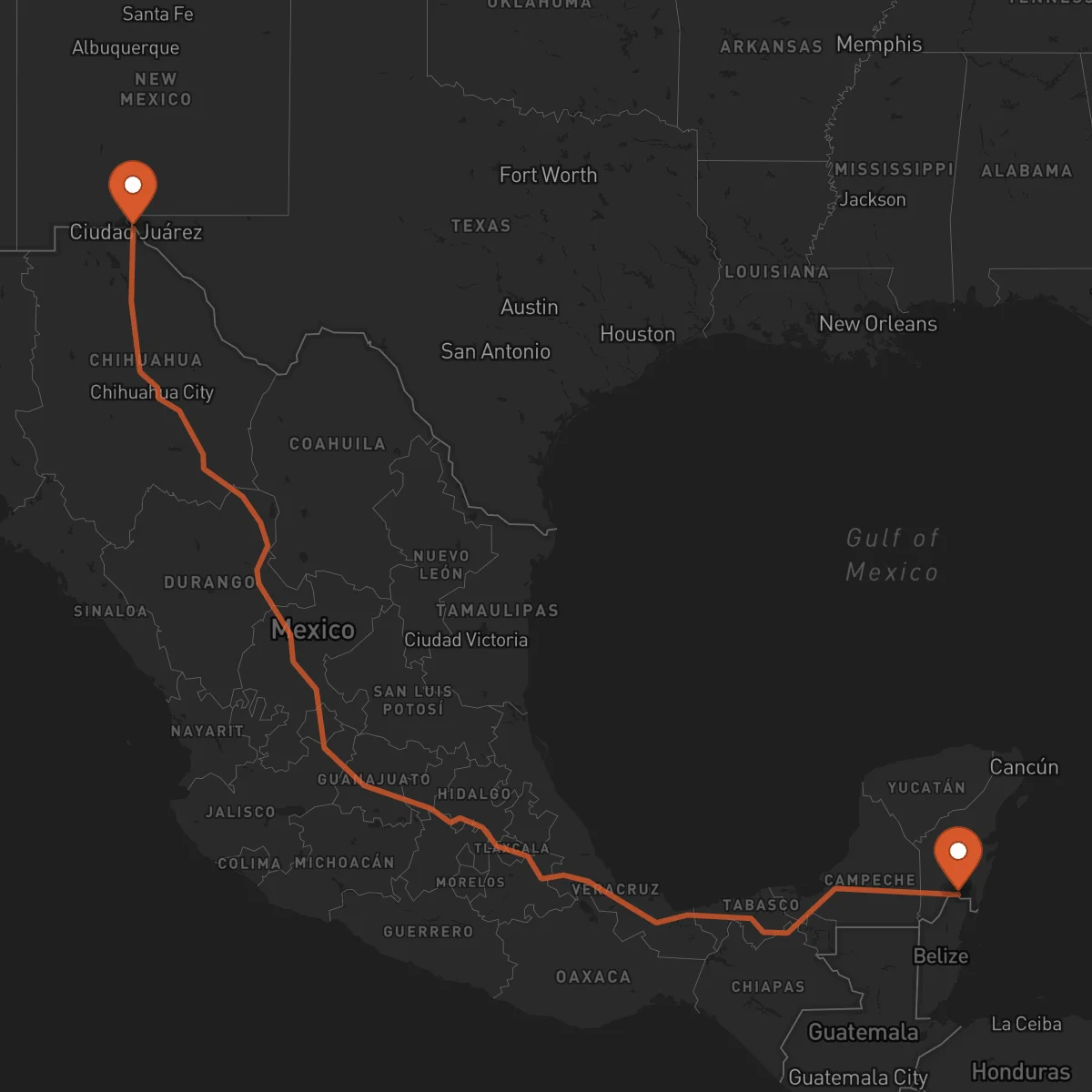
El Paso to Chetumal
Chetumal → El PasoFTL freight transportation service between El Paso and Chetumal. Reliable logistics solutions for your business.
Route Description
Everything you need to know about the corridor El Paso - Chetumal
The El Paso-Chetumal corridor represents a vital logistics connection between the United States and Mexico, spanning approximately 2,345 kilometers from the Texas border to the southeastern tip of the Yucatan Peninsula. This cross-border route traverses diverse terrain and connects two distinct economic regions, facilitating the movement of goods between North American markets and the growing industrial centers of southeastern Mexico.
The corridor's strategic importance lies in its ability to bridge the manufacturing and commercial powerhouse of El Paso with the emerging markets of Quintana Roo and the Yucatan Peninsula. El Paso serves as a critical gateway for trade between the United States and Mexico, while Chetumal represents access to the Caribbean coast and Central American markets. This route enables businesses to efficiently distribute products across both nations, supporting supply chain continuity and market expansion.
Key industries utilizing this corridor include automotive manufacturing, electronics, consumer goods, agricultural products, and industrial equipment. The route accommodates both northbound and southbound freight, with manufacturers in the El Paso area shipping components to assembly plants in central and southern Mexico, while finished products and raw materials flow in the opposite direction. The corridor also supports tourism-related logistics, connecting manufacturing centers with the hospitality and service industries concentrated in Quintana Roo.
Transportation infrastructure along this corridor includes major highways such as Mexico Federal Highway 180 and connecting routes through the central Mexican states. The route passes through key industrial hubs including Monterrey, Mexico City, and Villahermosa, offering multiple distribution opportunities along the way. Control Terrestre facilitates seamless operations on this corridor through our expertise in cross-border logistics, customs clearance, and our network of certified transportation partners who understand the complexities of moving freight across international boundaries.
Services for this Route
Available services for the corridor El Paso - Chetumal
 Origin
El Paso
El Paso, Texas serves as a strategic logistics hub at the U.S.-Mexico border, offering direct access to Ciudad Juárez and the broader maquiladora industry. The city's location at the intersection of Interstate 10 and the border makes it a critical gateway for North American trade, handling significant volumes of freight moving between the United States and Mexico. El Paso's logistics infrastructure includes multiple rail yards, trucking terminals, and warehousing facilities that support just-in-time manufacturing and distribution operations.
The region's economy is driven by international trade, with major industries including automotive manufacturing, electronics assembly, medical device production, and consumer goods. The presence of numerous cross-border manufacturing facilities creates consistent demand for reliable transportation services. El Paso's transportation infrastructure features modern highway systems, international bridges, and proximity to major ports of entry, enabling efficient cross-border movement of goods.
 Destination
Chetumal
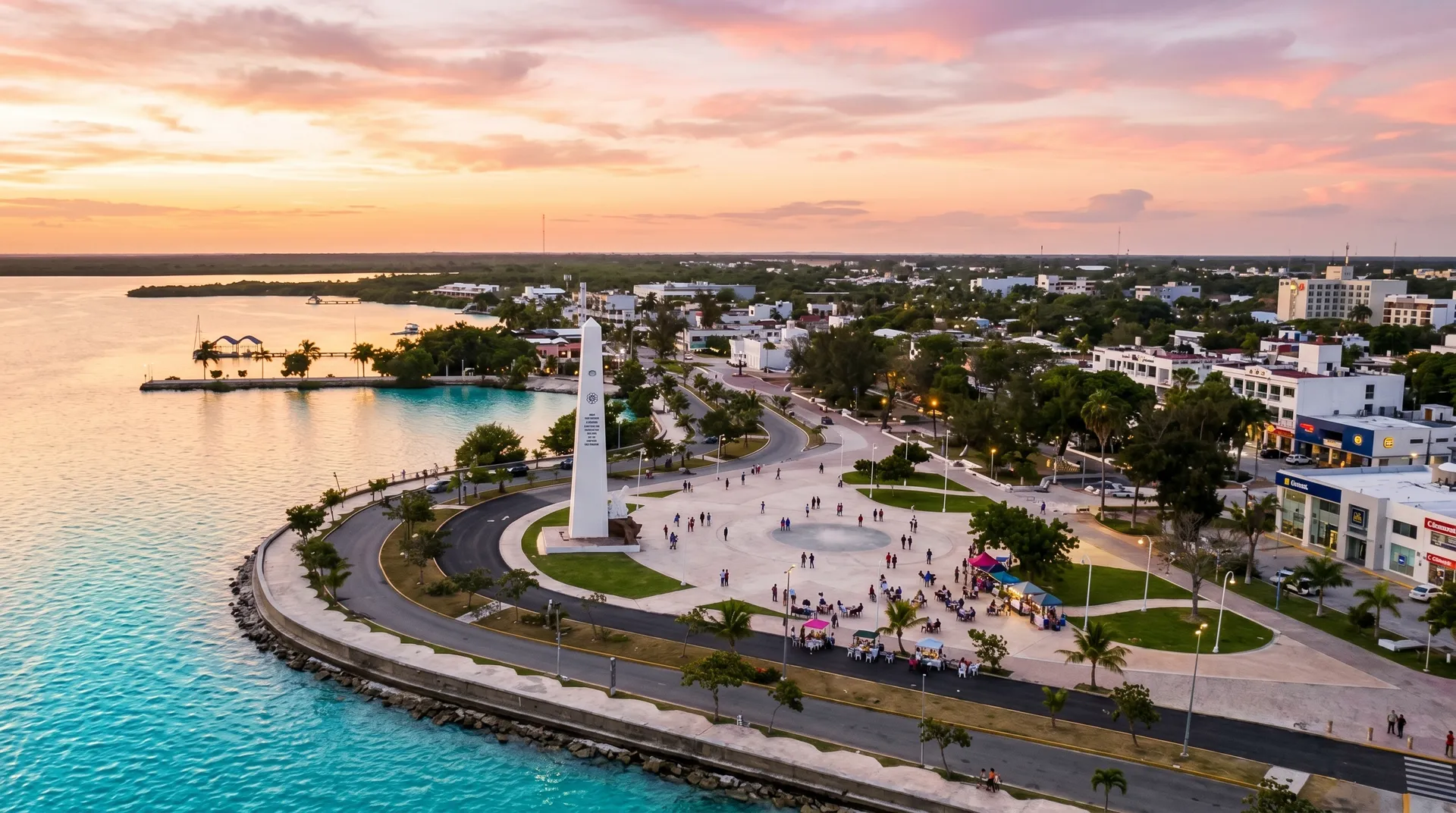
Chetumal, Quintana Roo represents a strategic logistics point in southeastern Mexico, serving as the capital of the state and a gateway to the Yucatan Peninsula and Central America. The city's location near the Belize border and its proximity to the Caribbean coast make it an important distribution center for reaching the growing markets of the region. Chetumal's port facilities and road connections provide access to maritime shipping routes and land transportation networks extending throughout the peninsula.
The local economy benefits from government administration, tourism, and emerging manufacturing sectors. Quintana Roo's rapid development as a tourism destination has increased demand for logistics services supporting the hospitality industry, while agricultural production in the surrounding region requires efficient transportation to markets in central and northern Mexico. The city's transportation infrastructure includes access to Federal Highway 307 and connections to the broader Mexican highway network, facilitating the movement of goods throughout the region.










