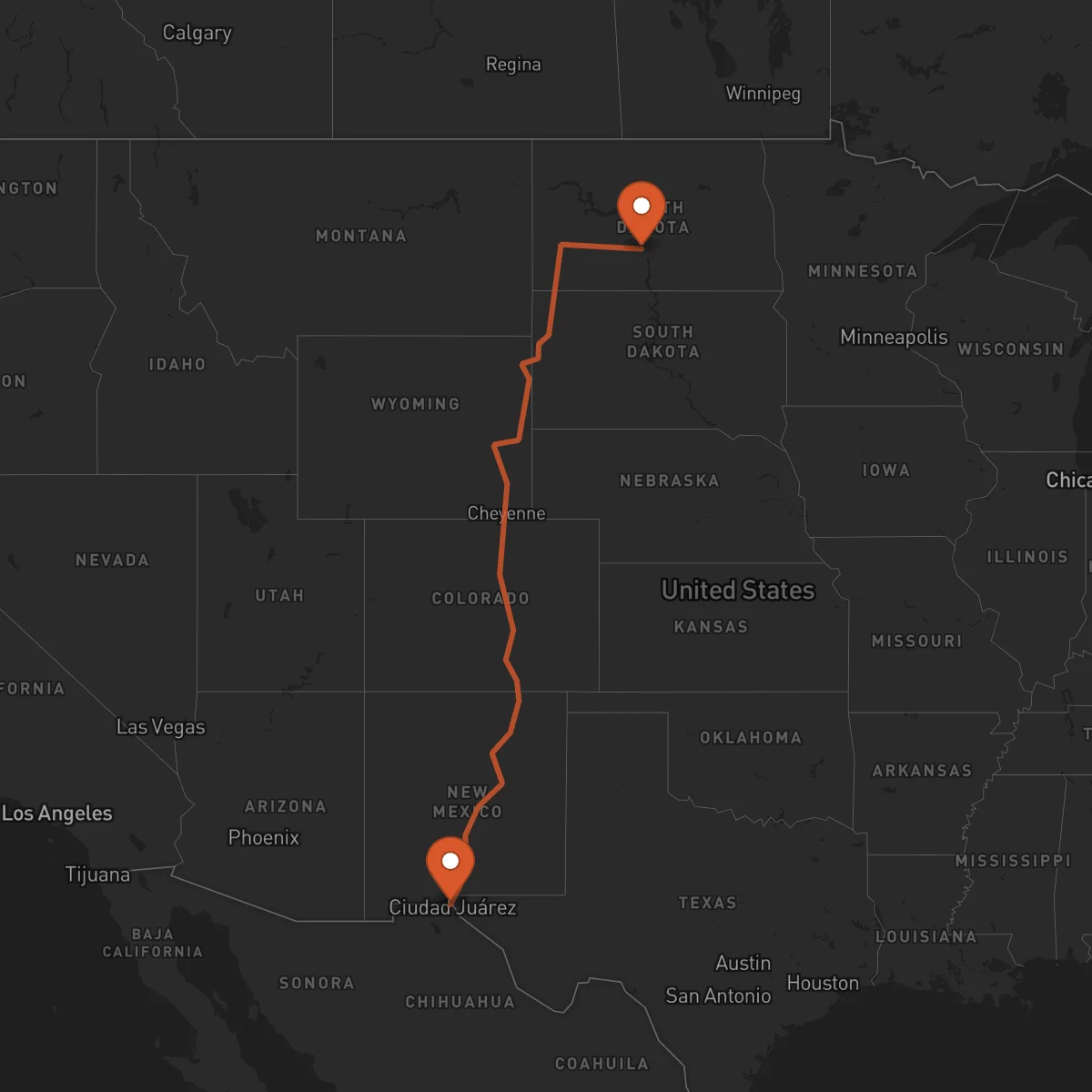
El Paso to Bismarck
Bismarck → El PasoFTL freight transportation service between El Paso and Bismarck. Reliable logistics solutions for your business.
Route Description
Everything you need to know about the corridor El Paso - Bismarck
The El Paso to Bismarck corridor connects two key economic hubs in the United States, spanning approximately 1742 km across diverse landscapes. This domestic freight route traverses from the southern border region through the heart of the Midwest, linking Texas's border economy with North Dakota's energy and agricultural sectors. The corridor passes through major metropolitan areas including Albuquerque, Denver, and Rapid City, providing access to numerous industrial centers along the way.
The transportation infrastructure along this route is robust, primarily utilizing I-25 North from El Paso through New Mexico and Colorado, connecting to I-90 East in Wyoming, and finally I-94 East into North Dakota. This major freight artery supports the movement of diverse cargo types between the border region and the northern plains. Control Terrestre leverages this established infrastructure to provide reliable full truckload (FTL) services, ensuring your cargo moves efficiently between these strategic locations.
This corridor serves critical industries including energy (particularly oil and gas from the Bakken formation near Bismarck), agriculture, manufacturing, and cross-border trade. The route facilitates the movement of everything from industrial equipment and agricultural products to consumer goods and specialized cargo. Control Terrestre's dedicated FTL services ensure that shipments maintain their integrity throughout the journey, with direct delivery and no intermediate handling, making us the ideal partner for companies requiring reliable transportation between El Paso and Bismarck.
Services for this Route
Available services for the corridor El Paso - Bismarck
 Origin
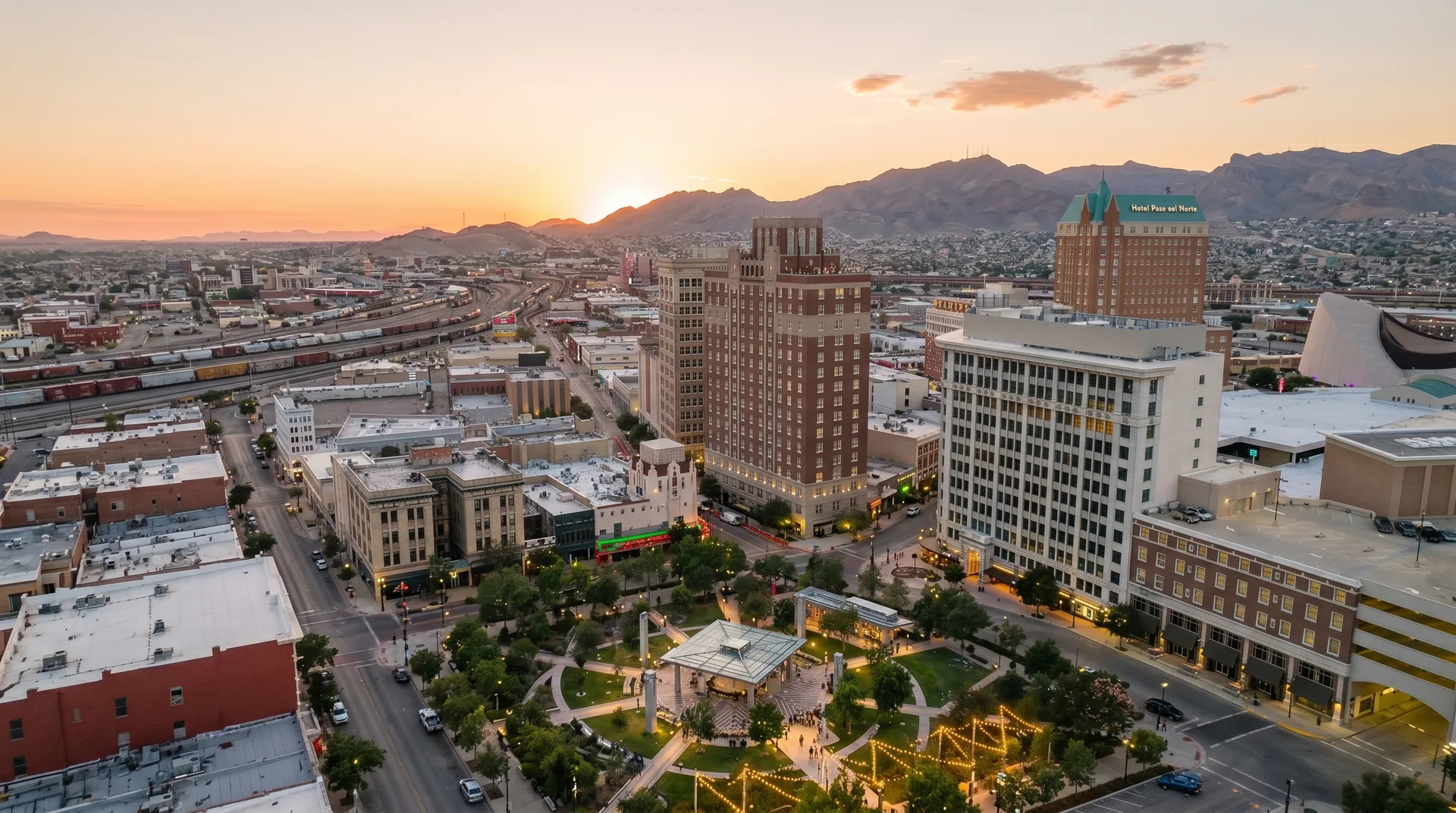
El Paso
El Paso, Texas stands as a strategic logistics gateway on the U.S.-Mexico border, offering unique advantages for freight transportation. With its proximity to Ciudad Juárez, this binational metropolitan area serves as a crucial trade hub handling billions in cross-border commerce annually. The city's location provides immediate access to major transportation networks, including Interstate 10, which runs coast-to-coast, and the Camino Real International Bridge connecting to Mexico.
The region's economy thrives on international trade, manufacturing, and logistics services. Major industries include automotive, electronics, and consumer goods production, with numerous maquiladoras operating in the surrounding area. El Paso's transportation infrastructure includes the El Paso International Airport, Union Pacific and BNSF rail terminals, and the Port of Entry, creating multiple options for freight movement. The city's C-TPAT certification and participation in trusted trader programs ensure secure and efficient cross-border operations.
 Destination
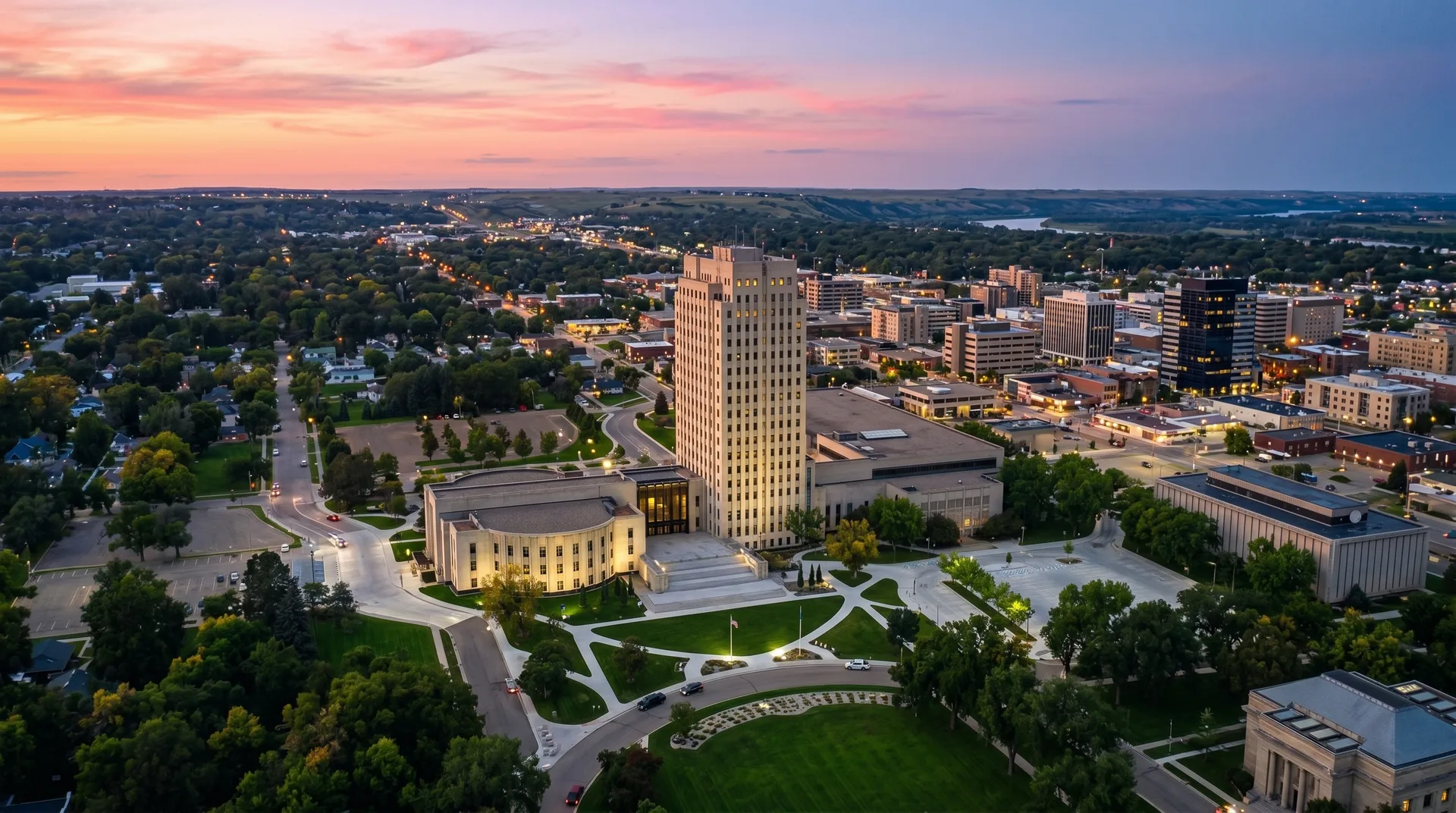
Bismarck
Bismarck, North Dakota serves as the state capital and a central hub for commerce in the northern Great Plains region. Located along the Missouri River, Bismarck's strategic position makes it a key distribution point for goods moving throughout North Dakota and neighboring states. The city's transportation network includes Interstate 94, providing east-west connectivity, and a growing logistics infrastructure supporting the region's economic development.
The Bismarck economy is anchored by government services, healthcare, retail, and energy sectors, with the Bakken oil formation driving significant industrial activity in the surrounding areas. The region's agricultural production, including grains and livestock, creates substantial freight movement requirements. Bismarck's industrial parks and distribution centers are strategically positioned to serve both urban and rural communities across the state. The city's growing logistics sector benefits from its central location, making it an ideal endpoint for freight moving from southern border regions.










