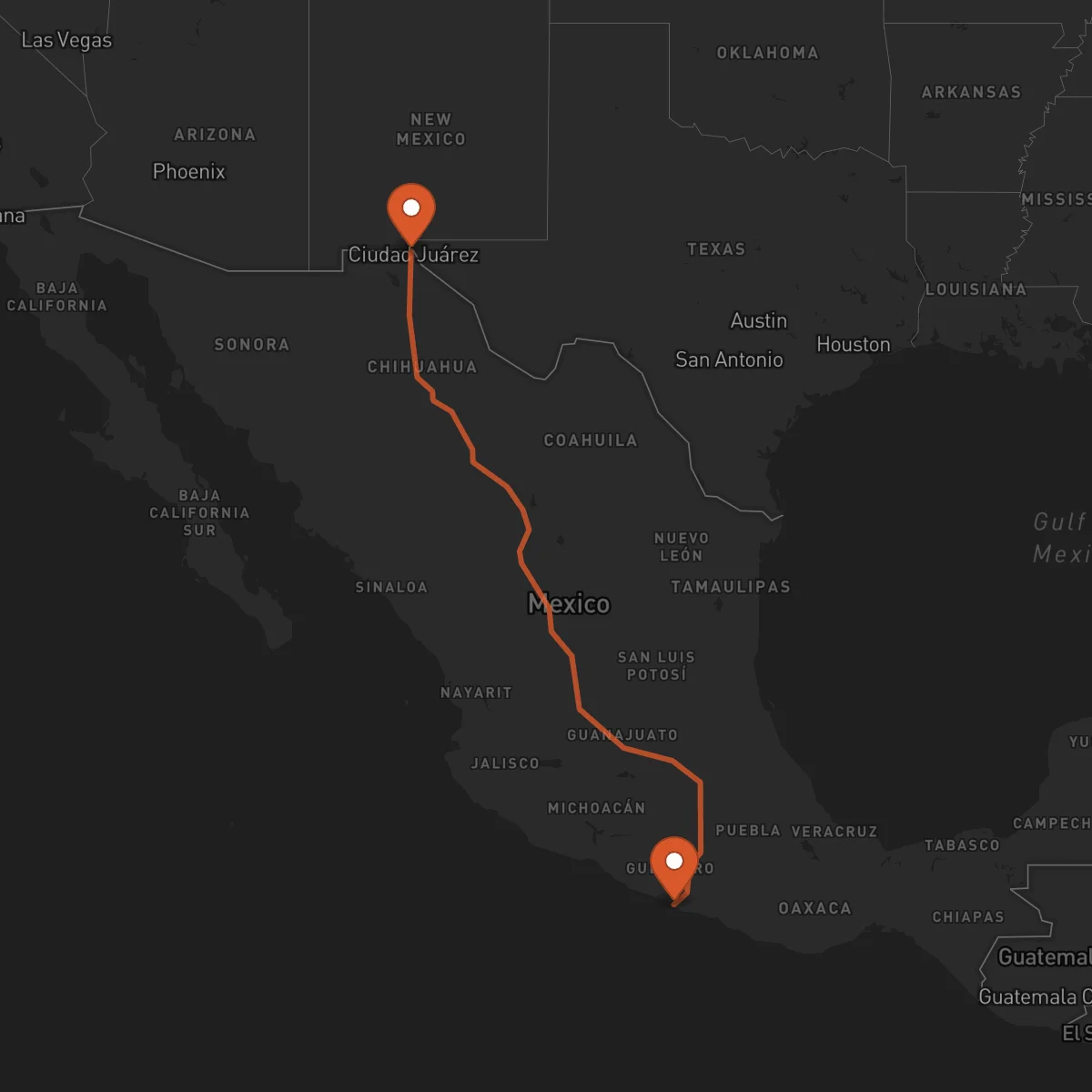
El Paso to Acapulco
Acapulco → El PasoFTL freight transportation service between El Paso and Acapulco. Reliable logistics solutions for your business.
Route Description
Everything you need to know about the corridor El Paso - Acapulco
The El Paso - Acapulco corridor represents a vital cross-border logistics connection between the United States and Mexico, spanning approximately 1,785 kilometers. This route connects the strategic border city of El Paso, Texas, with the Pacific port city of Acapulco, Guerrero, facilitating the movement of goods between the northern industrial corridor and southern Mexico. The corridor traverses diverse terrain and crosses multiple states, making it a complex but essential pathway for freight transportation. Control Terrestre specializes in managing this cross-border operation, ensuring seamless cargo movement through proper documentation, customs compliance, and strategic route planning. Our expertise in handling the specific requirements of this corridor allows us to provide reliable full truckload services that maintain cargo integrity throughout the journey.
Services for this Route
Available services for the corridor El Paso - Acapulco
 Origin
El Paso
El Paso, Texas serves as a crucial gateway for cross-border logistics operations. Located on the U.S.-Mexico border, this city benefits from its proximity to Ciudad Juárez and access to major interstate highways including I-10, which connects to the rest of the United States. El Paso's strategic position makes it a key distribution point for goods entering and exiting the U.S., with robust infrastructure including the Bridge of the Americas and Ysleta-Zaragoza Port of Entry. The region's economy is driven by international trade, manufacturing, and logistics services, supported by warehousing facilities and transportation hubs that facilitate efficient cargo handling and distribution.
 Destination
Acapulco, Guerrero stands as a significant destination on Mexico's Pacific coast, offering strategic access to southern markets and international shipping routes. As a major port city, Acapulco provides connections to maritime transportation and serves as a gateway to the Mexican interior. The city's infrastructure includes the Acapulco International Airport and port facilities that complement ground transportation options. Acapulco's economy traditionally relies on tourism but also includes industrial activities and commercial trade. The city's location makes it an important endpoint for freight moving from northern industrial centers, with highway connections facilitating distribution throughout the southern region of Mexico.










