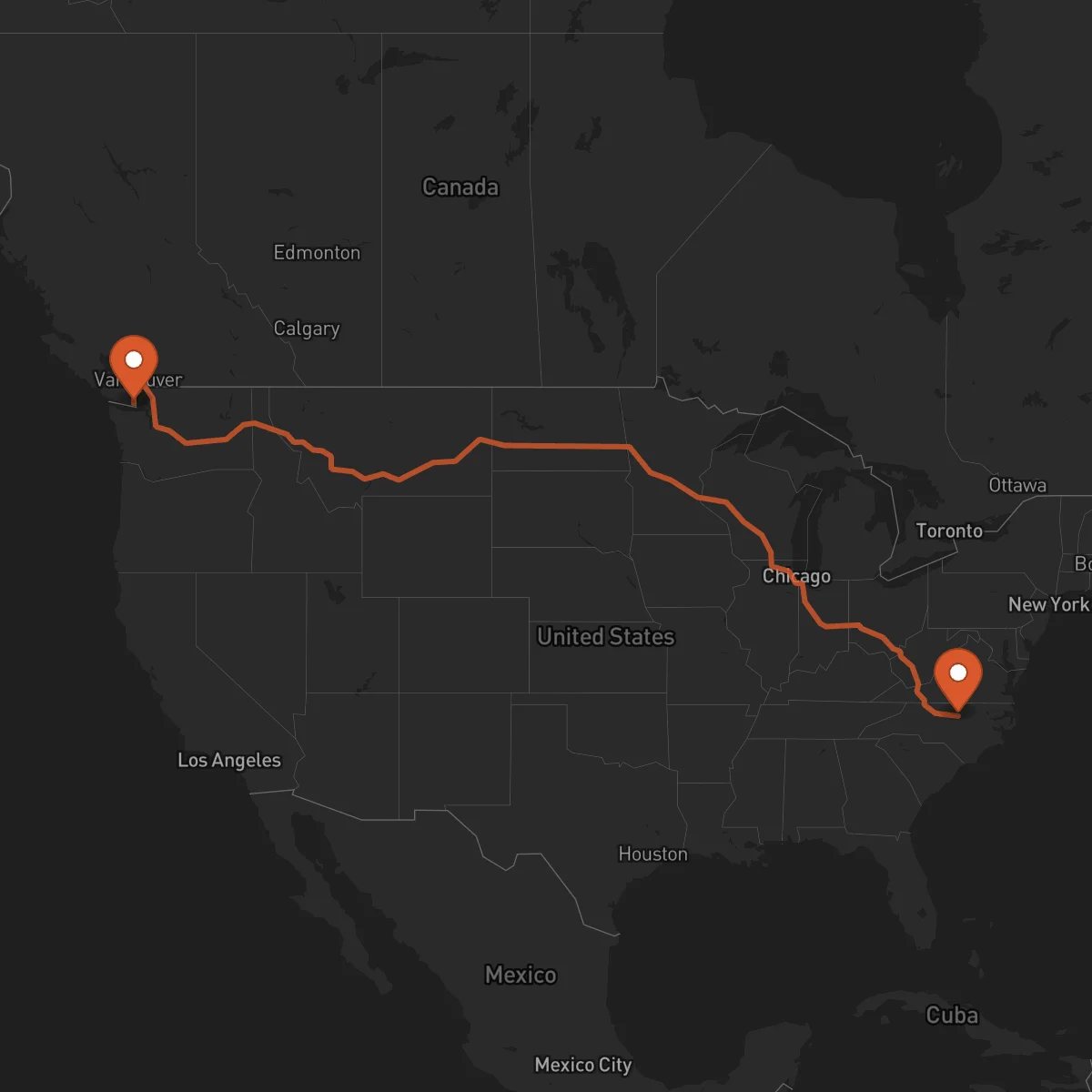
Durham to Victoria
Victoria → DurhamFTL freight transportation service between Durham and Victoria. Reliable logistics solutions for your business.
Route Description
Everything you need to know about the corridor Durham - Victoria
The logistics corridor connecting Durham, North Carolina to Victoria, British Columbia represents a critical cross-border freight route spanning approximately 3,851 kilometers across the United States and Canada. This corridor traverses diverse terrains and connects two major economic regions, making it essential for businesses engaged in North American trade. The route primarily follows Interstate 40 and Interstate 84 westward through the United States, crossing into Canada at various points before continuing north through British Columbia via major highways including the Trans-Canada Highway.
The economic significance of this corridor cannot be overstated, as it links the manufacturing and technology hub of North Carolina's Research Triangle with the growing port and technology center of Victoria on Vancouver Island. This route facilitates the movement of high-value goods, advanced manufacturing components, and technology products between these two dynamic regions. The corridor passes through key industrial centers including Nashville, St. Louis, and Spokane, providing access to numerous distribution hubs along the way.
Control Terrestre specializes in managing cross-border freight operations along this corridor, ensuring seamless transportation of full truckload shipments. Our expertise includes navigating customs procedures at various border crossings, coordinating with certified carriers who understand the regulatory requirements of both countries, and providing real-time tracking throughout the journey. We understand the unique challenges of this route, including varying weather conditions across different regions and the specific documentation requirements for cross-border shipments, allowing us to provide reliable FTL services from origin to destination.
Services for this Route
Available services for the corridor Durham - Victoria
 Origin
Durham
Durham, located in the heart of North Carolina's Research Triangle, serves as a strategic logistics hub with excellent connectivity to major East Coast markets. The city benefits from proximity to Raleigh-Durham International Airport and access to multiple interstate highways including I-85 and I-40, facilitating efficient distribution throughout the southeastern United States. Durham's economy is anchored by research, education, and healthcare sectors, with major employers including Duke University and Research Triangle Park driving demand for specialized freight services.
The region's industrial base includes pharmaceuticals, biotechnology, advanced manufacturing, and technology sectors, all requiring reliable transportation solutions for time-sensitive and high-value shipments. Durham's location provides strategic advantages for companies looking to distribute products throughout the eastern United States before routing cross-border shipments to Canadian destinations. The area's robust infrastructure supports efficient freight operations, with numerous warehousing and distribution facilities available to support supply chain needs.
 Destination
Victoria
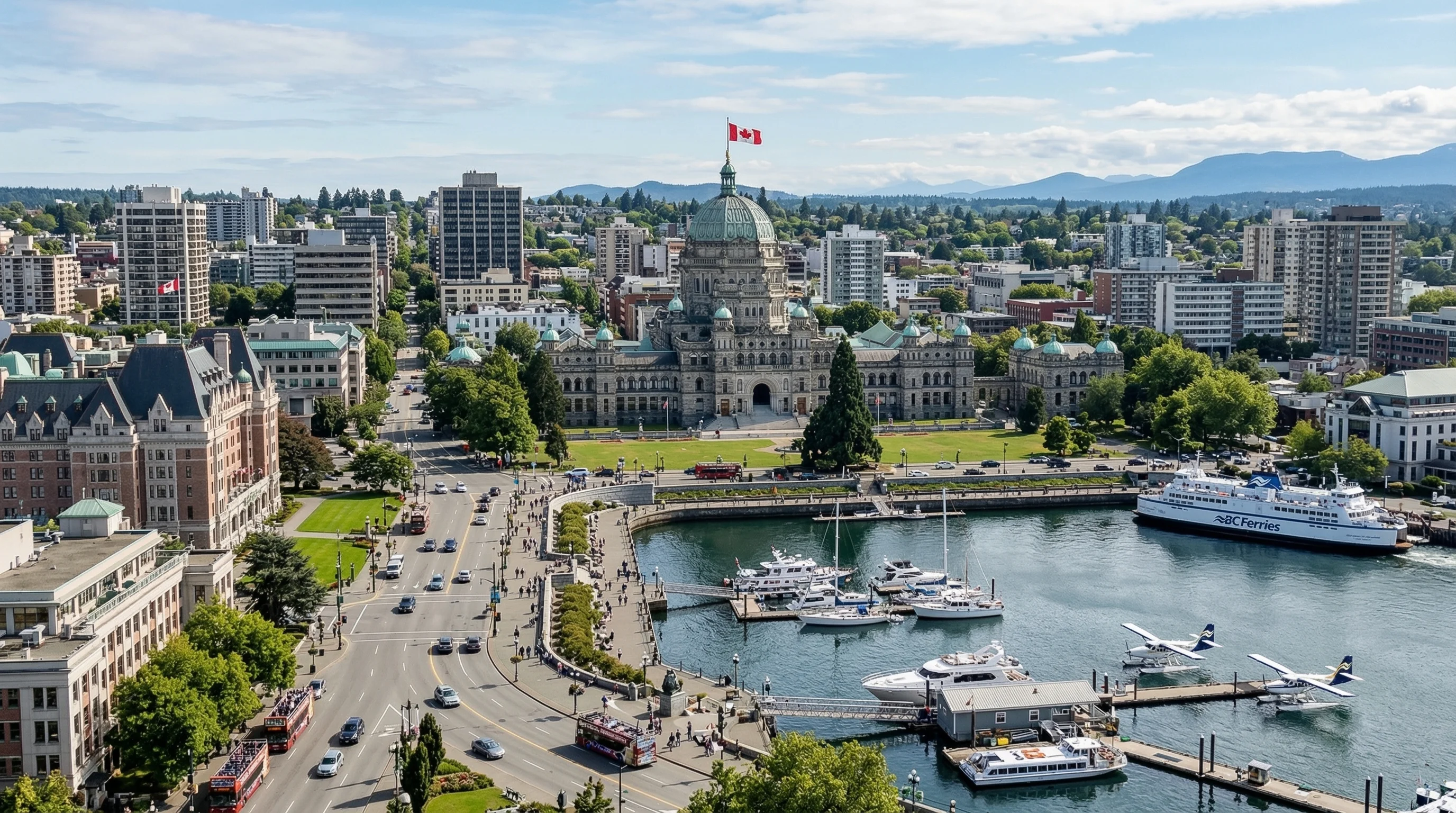
Victoria, situated on Vancouver Island in British Columbia, represents a unique logistics destination requiring specialized transportation solutions. As the capital city of British Columbia, Victoria serves as a gateway to Vancouver Island and the broader Pacific Northwest region. The city's strategic location at the southern tip of Vancouver Island provides access to major shipping routes and connects to mainland British Columbia via ferry services, though most cross-border freight arrives through mainland ports before being routed to the island.
The local economy in Victoria is diverse, with strong presence in government services, tourism, technology, and marine industries. The technology sector, often referred to as 'Tech Coast,' has been growing significantly, driving demand for reliable freight transportation of electronic components and specialized equipment. Victoria's port facilities handle various cargo types, though the unique geographic position means that freight arriving from the United States typically comes through mainland British Columbia before final delivery. The region's infrastructure includes well-maintained highways and access to major transportation networks, though the island geography requires careful logistics planning for final mile delivery.










