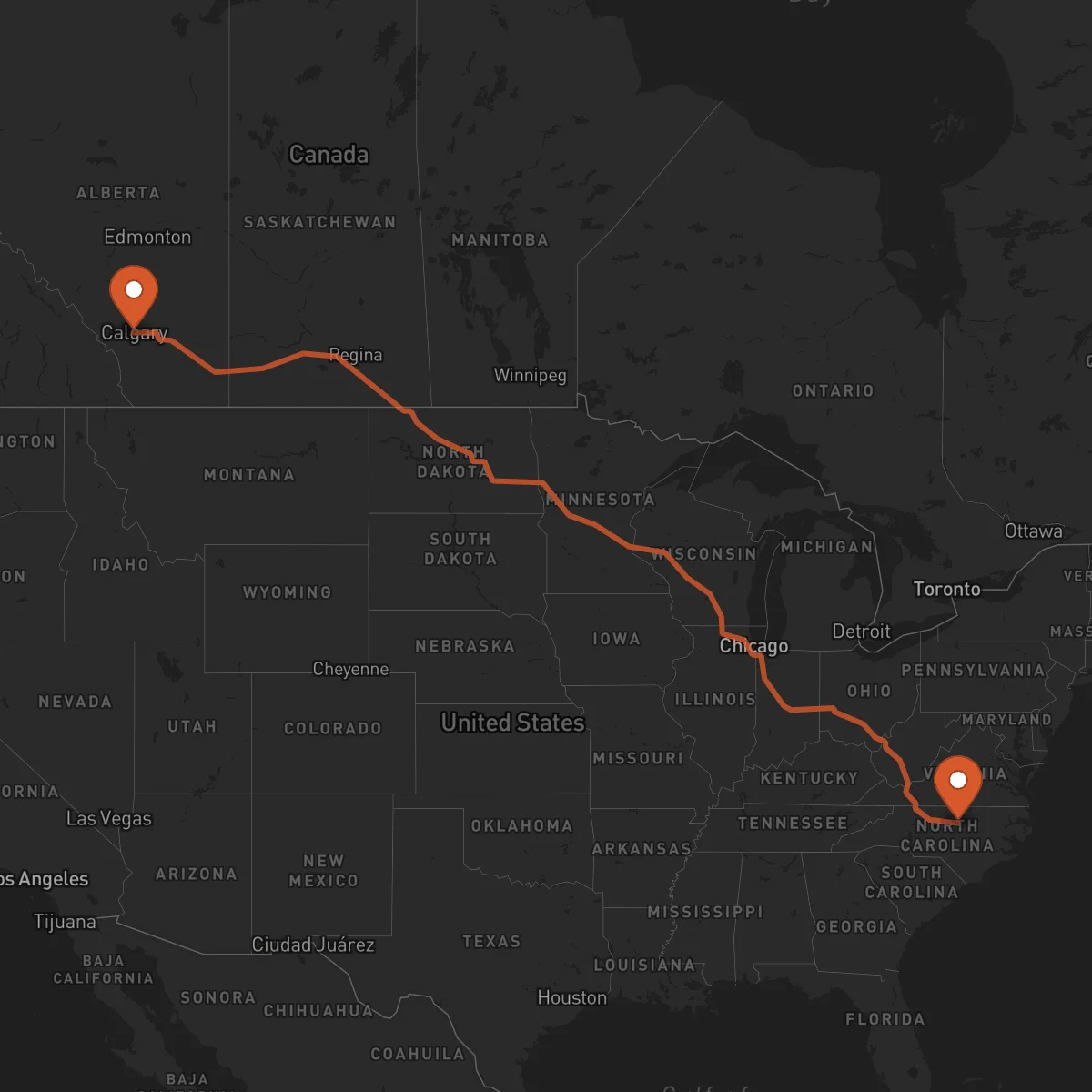
Durham to Calgary
Calgary → DurhamFTL freight transportation service between Durham and Calgary. Reliable logistics solutions for your business.
Route Description
Everything you need to know about the corridor Durham - Calgary
The Durham to Calgary corridor represents a critical cross-border freight transportation route connecting the industrial heart of North Carolina with Alberta's energy and logistics hub. This 3,248 km journey traverses diverse landscapes and crosses international borders, serving as a vital link for North American supply chains. The corridor connects the Research Triangle's manufacturing and technology sectors with Calgary's energy industry, creating essential trade flows between the southeastern United States and western Canada.
The economic significance of this route extends beyond simple distance, encompassing complex supply chain networks that support multiple industries. Companies in Durham's pharmaceutical, biotechnology, and advanced manufacturing sectors rely on efficient transportation to Calgary's energy companies, construction firms, and distribution centers. The corridor facilitates the movement of specialized equipment, industrial components, and finished goods that are crucial for both regional economies.
Key transportation infrastructure includes major interstate highways such as I-40, I-70, and I-15, which provide reliable cross-country connections. The route typically involves crossing at major ports of entry like Sweetgrass, MT or Coutts, AB, where efficient customs processing is essential for maintaining supply chain velocity. Control Terrestre's expertise in cross-border operations ensures seamless documentation, compliance with both US and Canadian regulations, and optimized routing to minimize delays and maximize efficiency throughout this important trade corridor.
Services for this Route
Available services for the corridor Durham - Calgary
 Origin
Durham
Durham, located in North Carolina's Research Triangle, serves as a strategic logistics hub with excellent access to major transportation networks. The city's proximity to Raleigh-Durham International Airport and its connection to Interstate 40 provides efficient access to both coastal ports and inland distribution centers. Durham's strong presence in pharmaceuticals, biotechnology, and advanced manufacturing creates consistent demand for specialized freight transportation services. The region's robust logistics infrastructure includes multiple warehousing facilities and distribution centers that support just-in-time inventory systems and complex supply chain operations.
 Destination
Calgary stands as Alberta's primary logistics and distribution center, strategically positioned near the Canadian Rockies and major energy production areas. The city's location provides access to key transportation routes including the Trans-Canada Highway and connections to the Port of Vancouver for international shipping. Calgary's economy, dominated by the energy sector alongside growing technology and logistics industries, creates substantial demand for reliable freight transportation services. The city's well-developed infrastructure includes the Calgary International Airport, extensive rail connections, and modern warehousing facilities that support both domestic and international trade.










