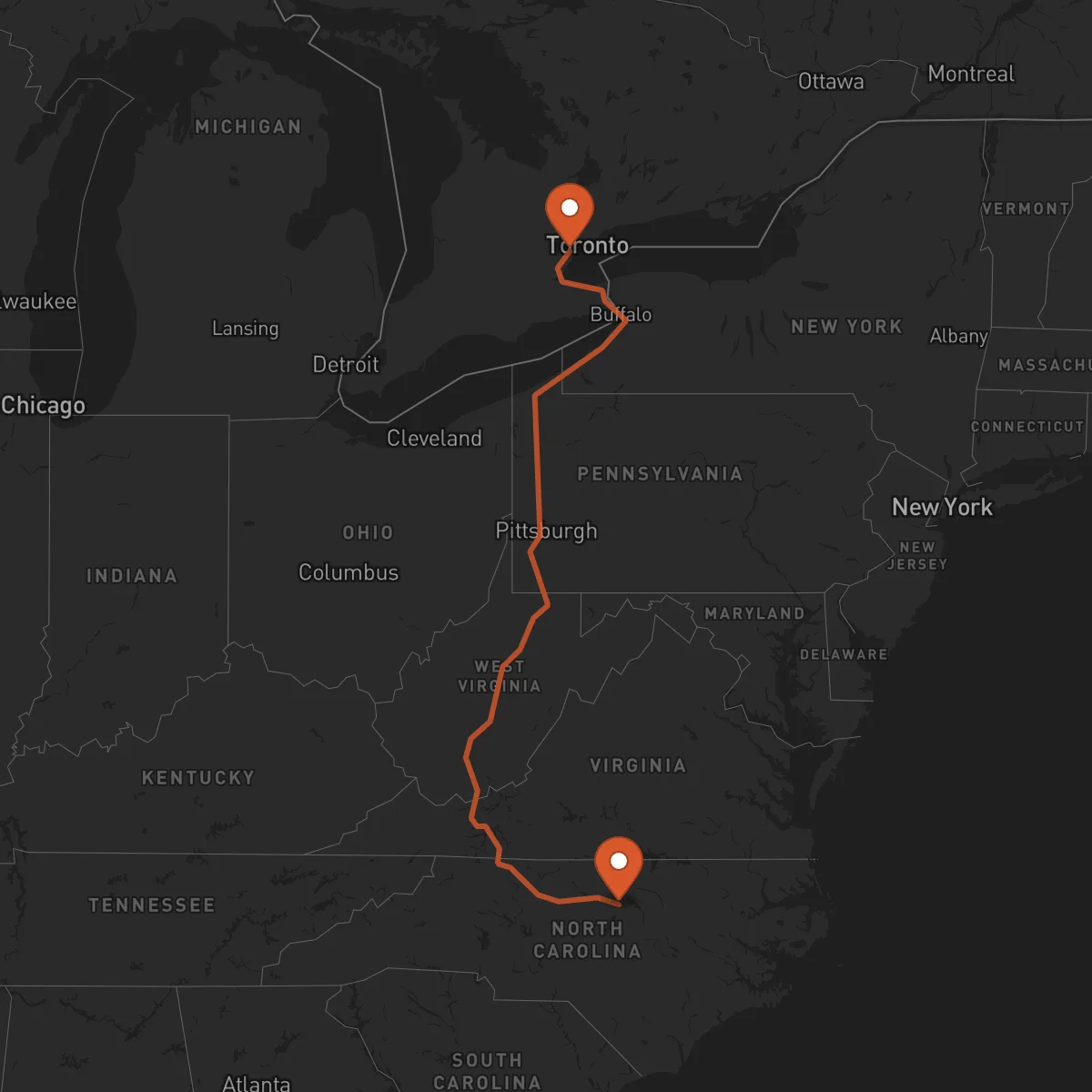
Durham to Mississauga
Mississauga → DurhamFTL freight transportation service between Durham and Mississauga. Reliable logistics solutions for your business.
Route Description
Everything you need to know about the corridor Durham - Mississauga
The logistics corridor between Durham, North Carolina, and Mississauga, Ontario, represents a vital cross-border connection for freight transportation in North America. This route spans approximately 846 kilometers and serves as a strategic link between the southeastern United States and Canada's largest province. The corridor facilitates the movement of goods between two major economic regions, connecting the Research Triangle's innovation hub with Canada's financial capital and manufacturing center.
The economic significance of this corridor is substantial, as it connects diverse industrial clusters. Durham's Research Triangle area is known for its technology, pharmaceutical, and research institutions, while Mississauga serves as a major logistics and distribution hub for the Greater Toronto Area. This route is particularly important for companies in the technology, automotive, pharmaceutical, and manufacturing sectors that require reliable cross-border transportation solutions.
Key transportation infrastructure along this corridor includes major highways such as I-85, I-40, and the 401 corridor in Canada. The primary border crossing for this route is typically the Thousand Islands Bridge or the Blue Water Bridge, depending on the specific origin and destination points. Control Terrestre facilitates seamless operations on this corridor through our network of certified carriers who are experienced in cross-border documentation, customs procedures, and the specific requirements for transporting goods between the United States and Canada.
Services for this Route
Available services for the corridor Durham - Mississauga
 Origin
Durham
Durham, located in the Research Triangle region of North Carolina, serves as a strategic logistics hub with excellent connectivity to major southeastern markets. The city benefits from proximity to Research Triangle Park, one of the largest research and development centers in the United States, which drives significant freight movement. Durham's transportation infrastructure includes access to major highways such as I-85 and I-40, providing efficient connections to other major cities along the eastern seaboard. The area's strong presence in technology, pharmaceuticals, and higher education creates consistent demand for freight transportation services, particularly for specialized and time-sensitive cargo.
 Destination
Mississauga, situated in the Greater Toronto Area, is one of Canada's most important logistics and distribution centers. Its strategic location near Toronto Pearson International Airport and major highways like the 401 and 407 makes it ideal for freight consolidation and distribution. The city hosts numerous corporate headquarters and warehouses, serving as a gateway to Canadian markets. Mississauga's diverse economy includes advanced manufacturing, aerospace, pharmaceuticals, and technology sectors, all of which require reliable freight transportation. The city's extensive intermodal facilities and proximity to the U.S. border make it a critical node in North American supply chains.










