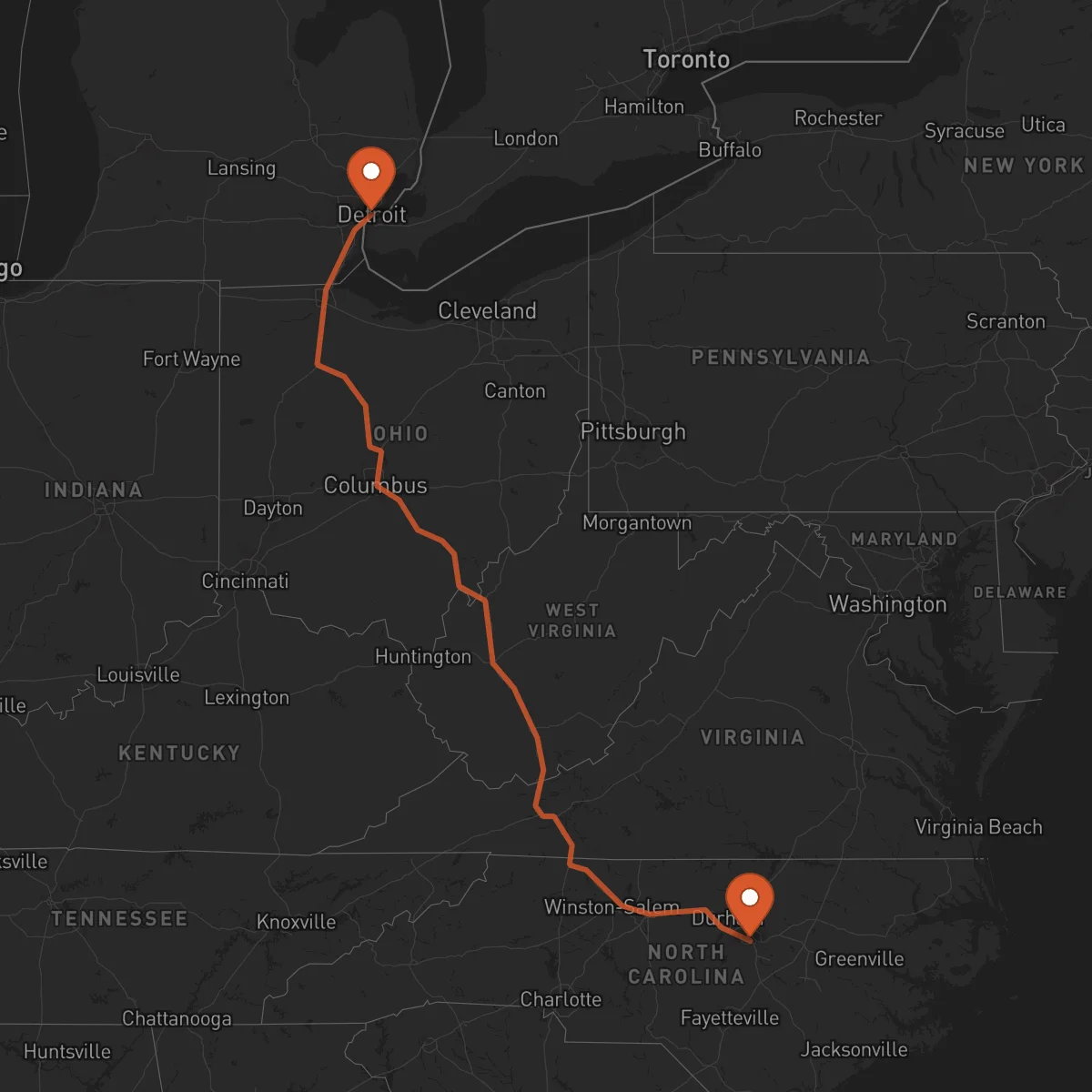
Detroit to Raleigh
Raleigh → DetroitFTL freight transportation service between Detroit and Raleigh. Reliable logistics solutions for your business.
Route Description
Everything you need to know about the corridor Detroit - Raleigh
The Detroit to Raleigh corridor represents a vital logistics connection between the industrial heartland of Michigan and the growing technology and research hub of North Carolina. This 821 km route traverses through key states including Ohio, West Virginia, and Virginia, linking two dynamic economic regions of the United States. The corridor serves as a crucial artery for the movement of goods between the Midwest's manufacturing base and the Southeast's expanding industrial and technological sectors.
The economic significance of this corridor is substantial, connecting Detroit's automotive manufacturing and technology industries with Raleigh's burgeoning research, education, and technology sectors. This route facilitates the flow of automotive parts, advanced manufacturing components, and high-tech equipment between these complementary economic zones. The corridor benefits from the robust industrial infrastructure of both regions, supporting a diverse range of freight transportation needs.
Control Terrestre leverages this strategic corridor to provide efficient and reliable full truckload (FTL) transportation services. Our experienced network of carriers ensures that your freight moves seamlessly from Detroit's manufacturing facilities to Raleigh's distribution centers and research parks. We understand the specific requirements of industries operating along this route and offer tailored solutions to meet their unique logistics needs.
Key transportation infrastructure along this corridor includes major highways such as I-75, I-70, I-77, and I-85. These well-maintained interstate routes provide multiple options for efficient freight movement, allowing for flexibility in routing and scheduling. Control Terrestre's expertise in navigating this network ensures that your cargo reaches its destination safely and on time, regardless of the specific requirements of your shipment.
Services for this Route
Available services for the corridor Detroit - Raleigh
 Origin
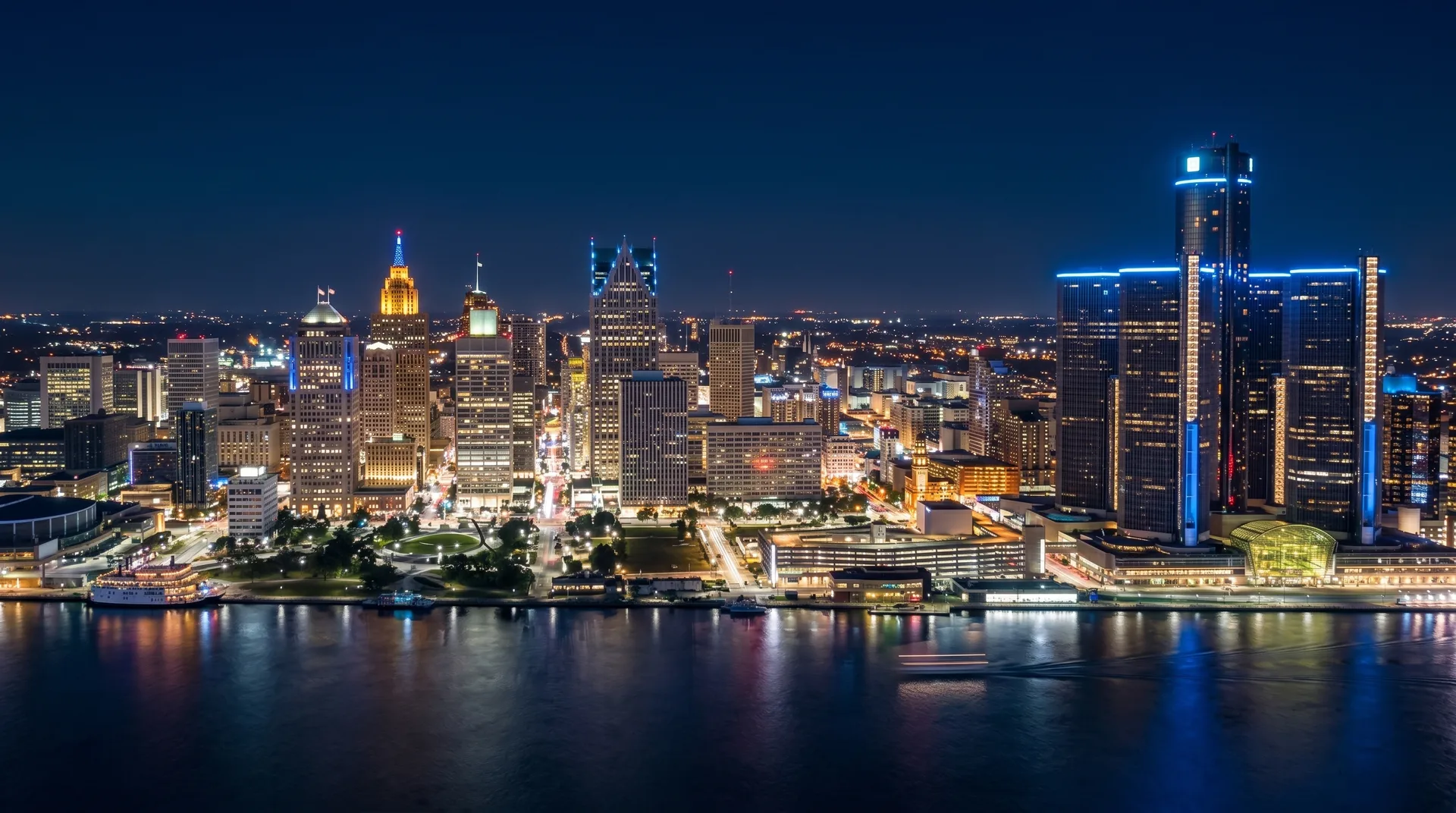
Detroit
Detroit, Michigan, stands as a pivotal logistics hub in the Midwest, strategically positioned to serve as a gateway for freight movement throughout the Great Lakes region and beyond. The city's location on the Detroit River, connecting Lake St. Clair and Lake Erie, provides unique multimodal transportation opportunities, including access to international shipping routes via the St. Lawrence Seaway. Detroit's extensive highway network, including I-75, I-94, and I-96, offers seamless connections to major markets across the United States and Canada.
The economic landscape of Detroit is diverse and robust, with the automotive industry remaining a cornerstone of the local economy. Major automakers and their suppliers maintain significant operations in the area, creating a high demand for specialized freight services. Beyond automotive, Detroit has been diversifying its economic base, with growing sectors in advanced manufacturing, healthcare, and technology. This economic diversity translates into a wide range of freight transportation needs, from just-in-time automotive parts delivery to the movement of medical equipment and high-tech components.
 Destination
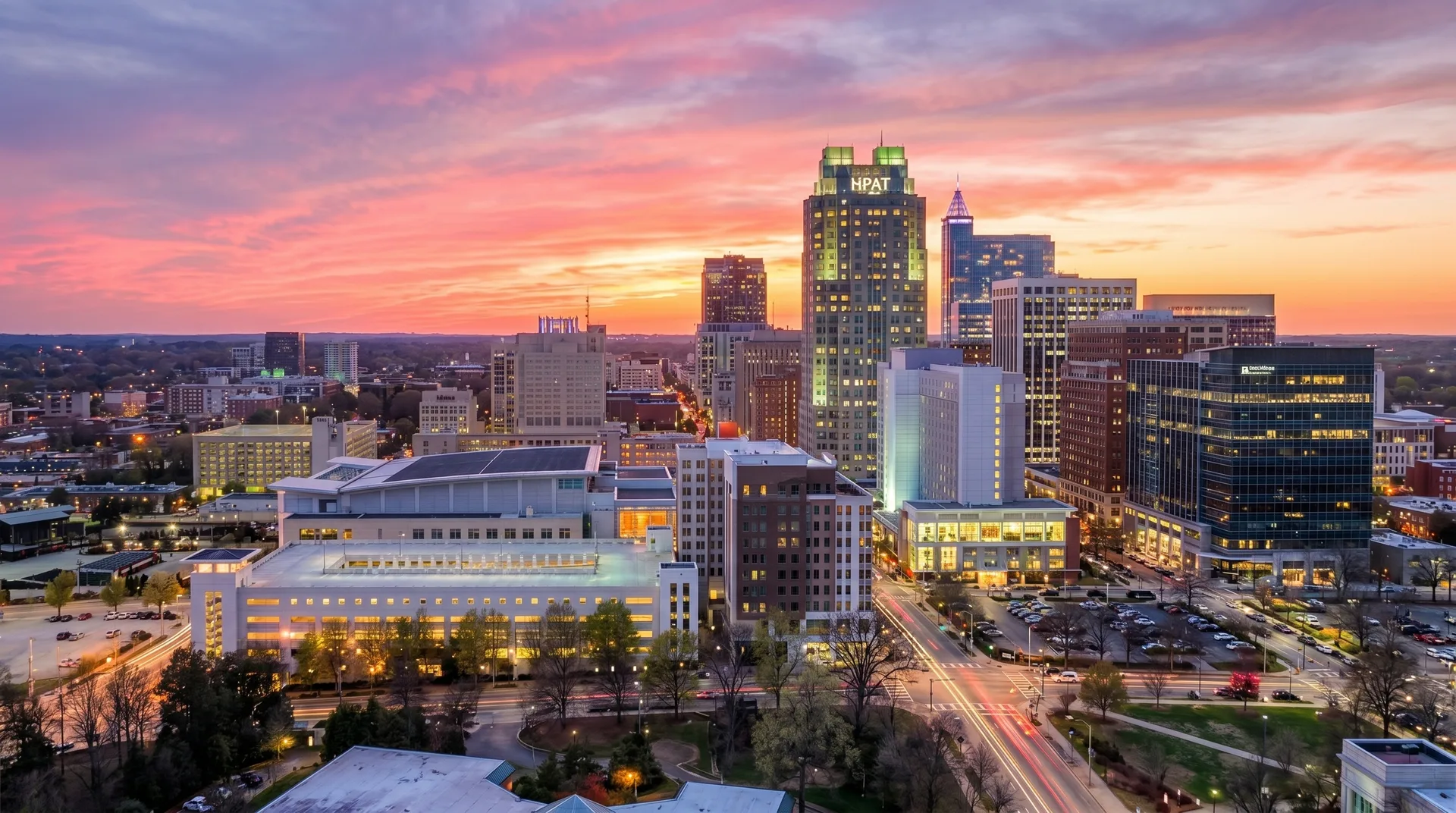
Raleigh
Raleigh, North Carolina, serves as a strategic logistics center in the Southeast, benefiting from its location within the Research Triangle region. The city's proximity to major ports like Wilmington and Norfolk, combined with its central position in the state, makes it an ideal distribution point for goods throughout the Carolinas and beyond. Raleigh's transportation infrastructure includes major highways such as I-40, I-440, and I-540, providing excellent connectivity to regional and national freight networks.
The economic profile of Raleigh is characterized by its strong presence in research, technology, and education sectors. Home to numerous universities and research institutions, the city has attracted a concentration of high-tech companies, particularly in fields such as biotechnology, information technology, and telecommunications. This unique economic composition creates specific logistics needs, often requiring specialized handling for sensitive or high-value equipment. Additionally, Raleigh's growing population and expanding urban development have increased demand for construction materials and consumer goods, further diversifying the freight transportation requirements in the region.










