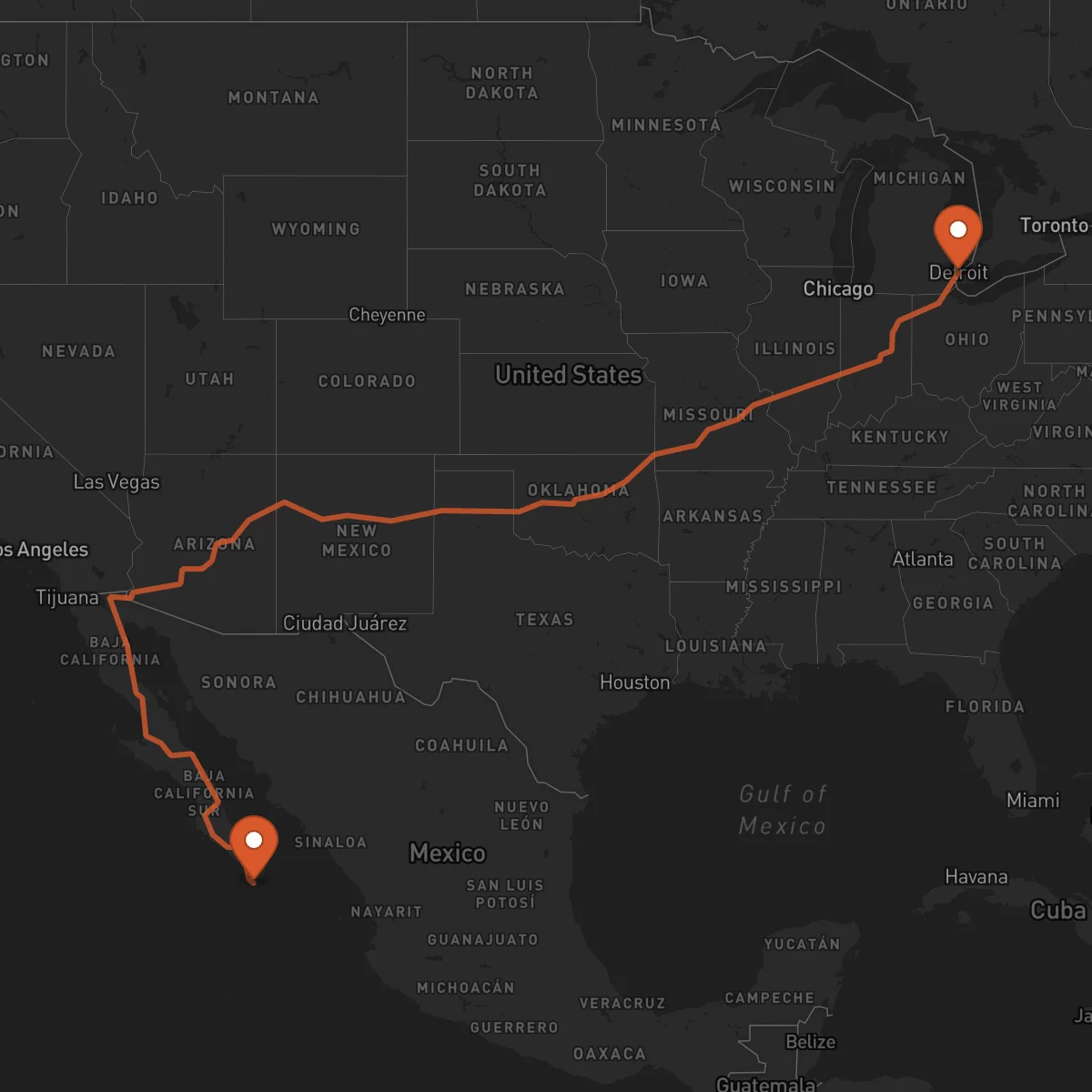
Detroit to Los Cabos
Los Cabos → DetroitFTL freight transportation service between Detroit and Los Cabos. Reliable logistics solutions for your business.
Route Description
Everything you need to know about the corridor Detroit - Los Cabos
The Detroit to Los Cabos corridor represents a vital cross-border logistics connection spanning over 3,292 kilometers across North America. This route links Michigan's industrial powerhouse with Baja California Sur's emerging economic center, facilitating the movement of diverse cargo types between the United States and Mexico. The corridor traverses multiple states and regions, requiring expert coordination to navigate varying regulations, infrastructure conditions, and customs procedures.
The economic significance of this corridor is substantial, connecting Detroit's automotive manufacturing base and advanced technology sectors with Los Cabos' growing tourism industry, agricultural exports, and developing industrial parks. Key industries utilizing this route include automotive parts, electronics, consumer goods, and specialized equipment. The corridor supports just-in-time manufacturing needs, retail supply chains, and construction projects throughout the Baja California peninsula.
Transportation infrastructure along this route includes major highways such as I-75, I-69, and Mexican Federal Highways 45 and 1. The primary border crossing at Laredo/Nuevo Laredo serves as the main gateway, though alternative crossings may be utilized based on specific cargo requirements and current conditions. Control Terrestre's expertise in cross-border operations ensures seamless customs clearance, proper documentation handling, and compliance with all regulatory requirements for both northbound and southbound shipments.
Our specialized knowledge of this corridor allows us to provide reliable, efficient transportation solutions that account for seasonal variations, potential delays, and the unique challenges of long-distance cross-border freight movement. We coordinate with trusted partners throughout the route to maintain service quality and ensure cargo arrives safely at its destination.
Services for this Route
Available services for the corridor Detroit - Los Cabos
 Origin
Detroit
Detroit serves as a strategic logistics hub in the Midwest, positioned at the crossroads of major transportation networks. The city's location provides direct access to Canada via the Ambassador Bridge and Detroit-Windsor Tunnel, making it an ideal origin point for cross-border freight operations. Detroit's extensive rail connections, international airport, and proximity to the Great Lakes waterway system create multiple transportation options for shippers.
The region's economy is dominated by automotive manufacturing, with major facilities from Ford, General Motors, and Stellantis, along with numerous Tier 1 and Tier 2 suppliers. Beyond automotive, Detroit has growing sectors in advanced manufacturing, healthcare, information technology, and professional services. The availability of specialized industrial equipment, high-tech components, and finished automotive products makes Detroit a consistent source of diverse freight for cross-border transportation.
 Destination
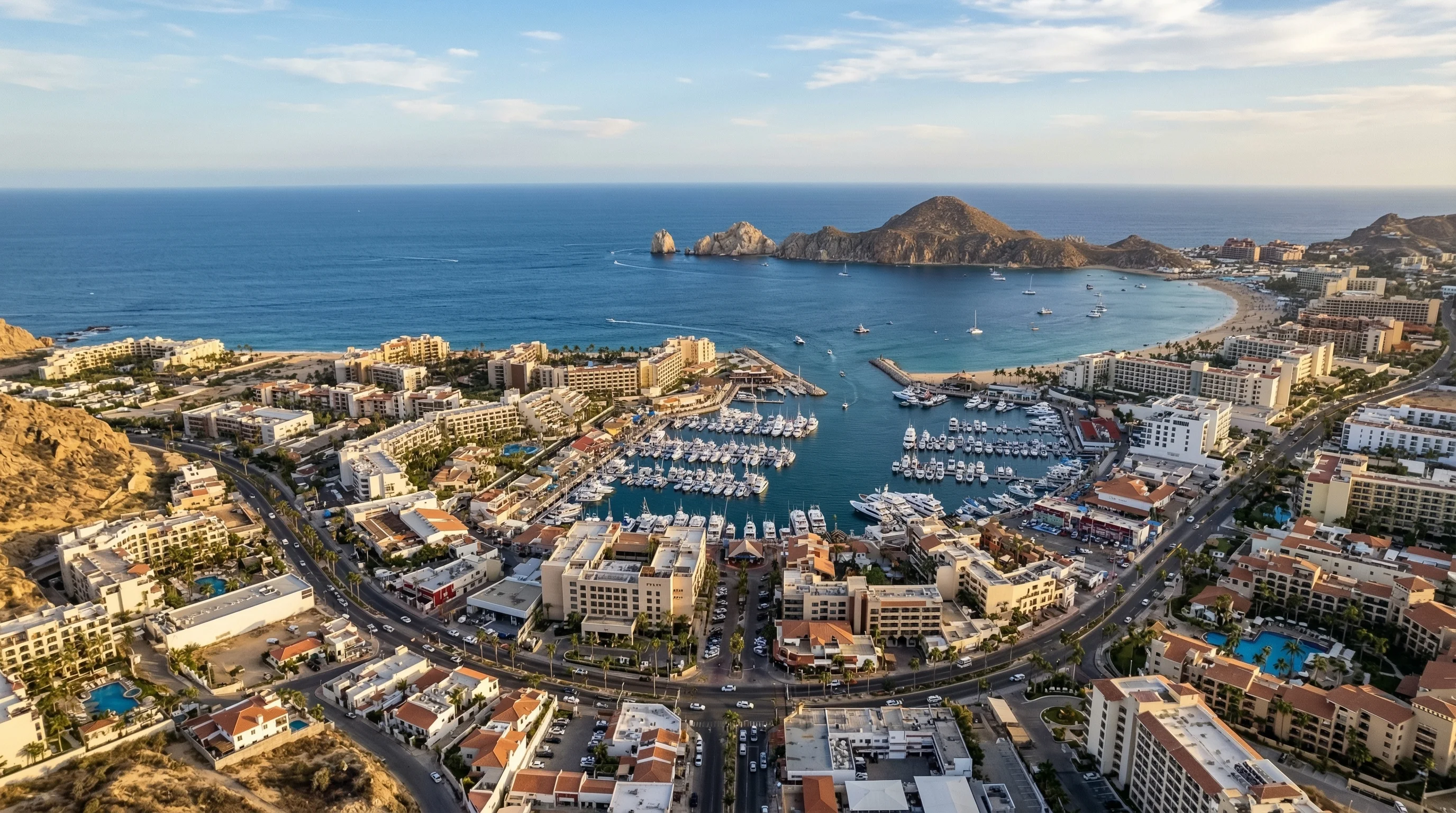
Los Cabos
Los Cabos represents a strategic gateway to Baja California Sur, Mexico's fastest-growing state in terms of economic development. Located at the southern tip of the Baja California peninsula, Los Cabos provides access to both Pacific and Sea of Cortez shipping routes. The region's growing infrastructure includes the Los Cabos International Airport, expanding port facilities, and improving highway connections to the north.
The local economy centers on tourism, with world-class resorts, golf courses, and recreational facilities driving construction and service industries. Additionally, Los Cabos and surrounding areas are developing as centers for agriculture, particularly organic produce and specialty crops, as well as light manufacturing and assembly operations. The region's growth creates consistent demand for construction materials, consumer goods, and specialized equipment transported from northern markets.










