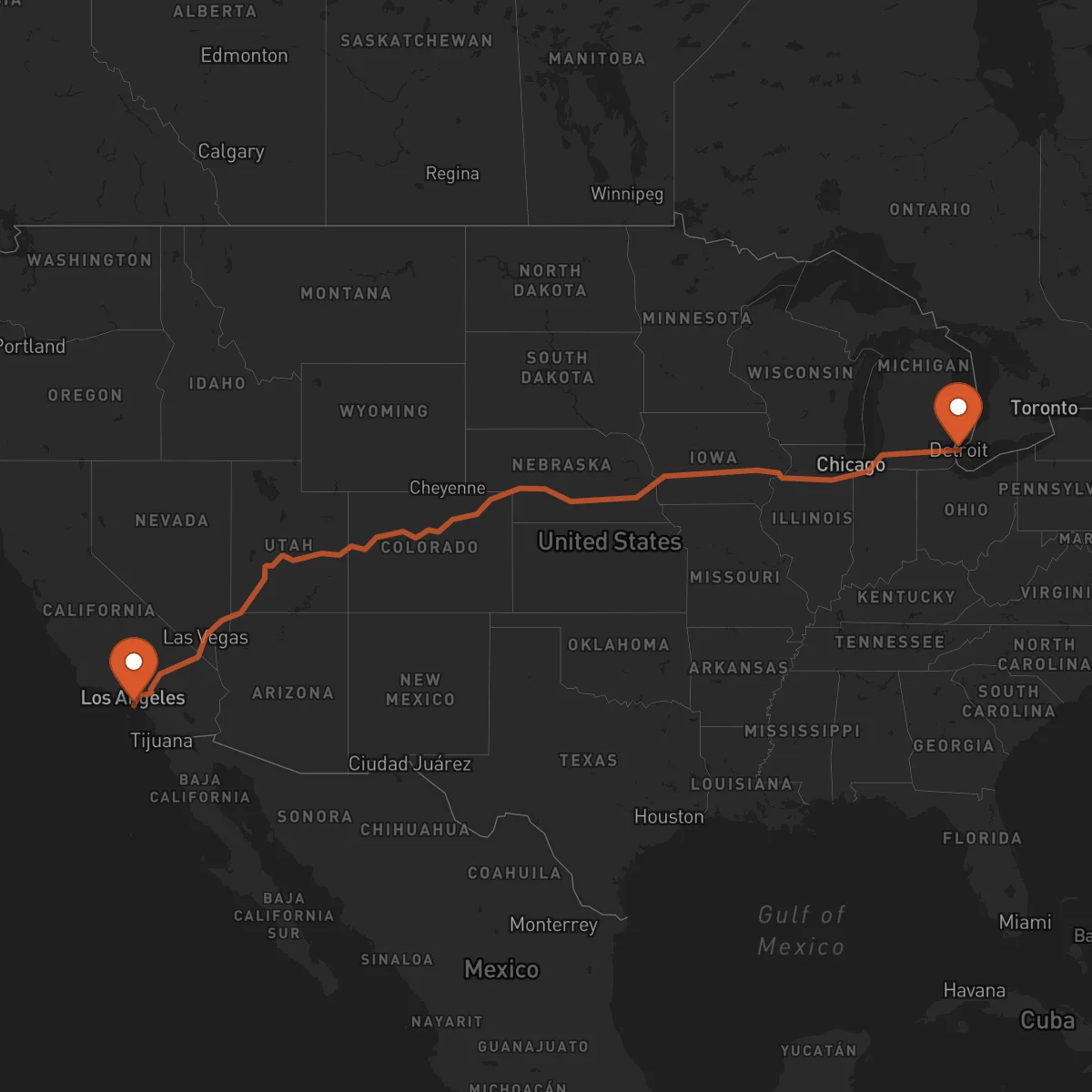
Detroit to Long Beach
Long Beach → DetroitFTL freight transportation service between Detroit and Long Beach. Reliable logistics solutions for your business.
Route Description
Everything you need to know about the corridor Detroit - Long Beach
The Detroit to Long Beach corridor represents a vital freight transportation link connecting the industrial heartland of the Midwest with one of the busiest ports on the West Coast. This 3,196 km route serves as a critical artery for moving goods between the manufacturing powerhouse of Michigan and the international trade gateway of Southern California.
The economic significance of this corridor cannot be overstated. Detroit, known as the Motor City, is home to the American automotive industry, while Long Beach hosts the second-largest container port in the United States. This connection facilitates the movement of automotive parts, finished vehicles, electronics, and countless other manufactured goods that drive the North American economy.
Major transportation infrastructure along this route includes Interstate 80, one of the primary cross-country freight corridors, which provides reliable and efficient transport across multiple states. Control Terrestre leverages this infrastructure to offer dedicated full truckload (FTL) services, ensuring that your cargo moves seamlessly from origin to destination without the delays and handling associated with consolidated freight.
Our specialized fleet and experienced carrier network are equipped to handle the diverse cargo types that move along this corridor, from automotive components requiring secure transport to time-sensitive electronics that demand expedited delivery. We understand the unique challenges of this cross-country route and provide the reliability and communication that businesses need to maintain their supply chain efficiency.
Services for this Route
Available services for the corridor Detroit - Long Beach
 Origin
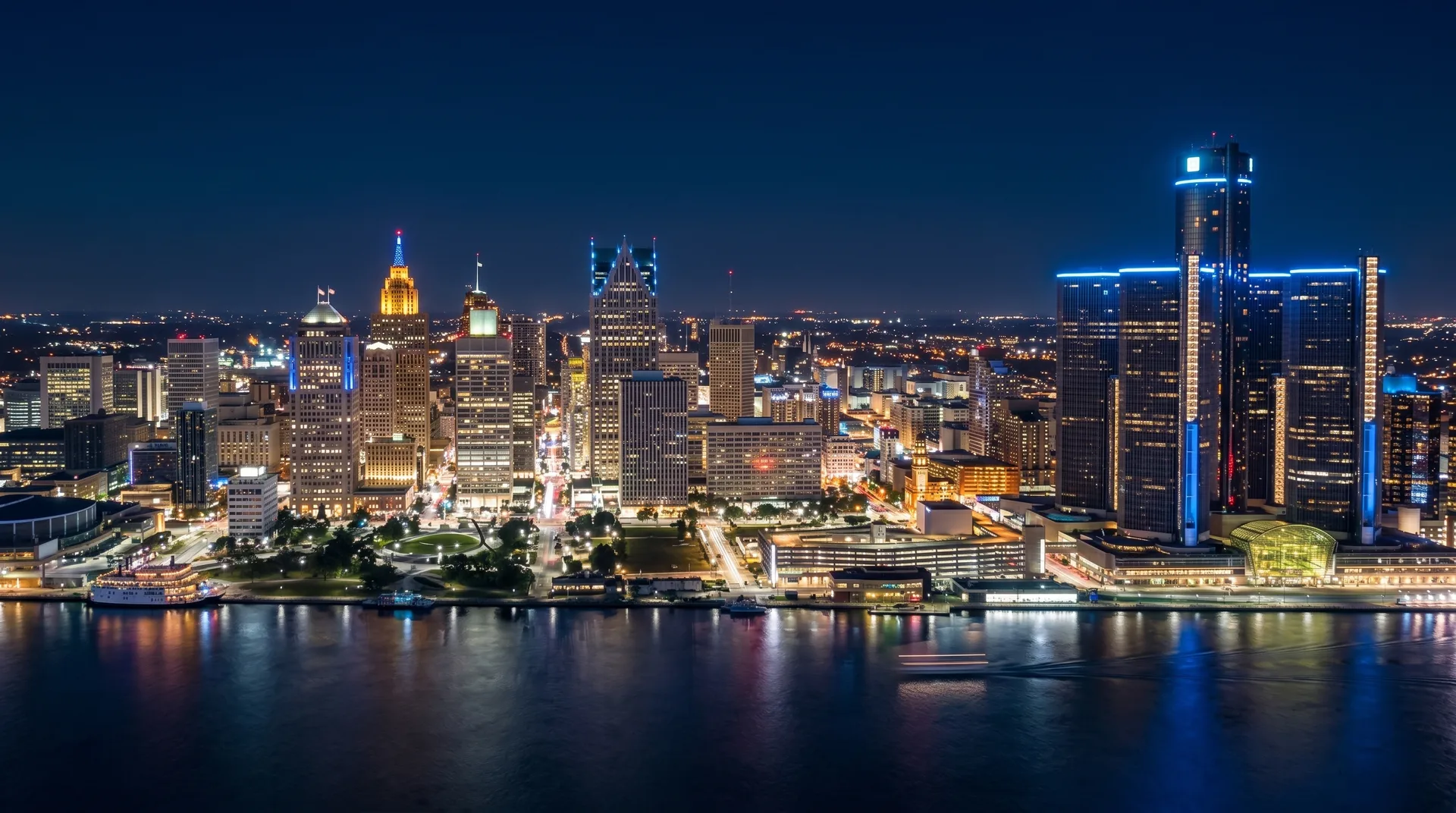
Detroit
Detroit stands as a strategic logistics hub in the Midwest, offering unparalleled access to the North American automotive supply chain. The city's location provides direct connections to major manufacturing centers throughout the Great Lakes region and beyond. Detroit's extensive transportation infrastructure includes multiple interstate highways, rail connections, and proximity to international borders, making it an ideal origin point for freight distribution.
The economic landscape of Detroit is dominated by the automotive industry, with major manufacturers and suppliers maintaining significant operations in the area. Beyond automotive, the region supports aerospace, defense, and advanced manufacturing sectors. The city's logistics infrastructure includes the Detroit Metropolitan Airport for air freight, extensive rail yards, and the Ambassador Bridge connecting to Canada, providing multimodal transportation options for businesses operating in this industrial powerhouse.
 Destination
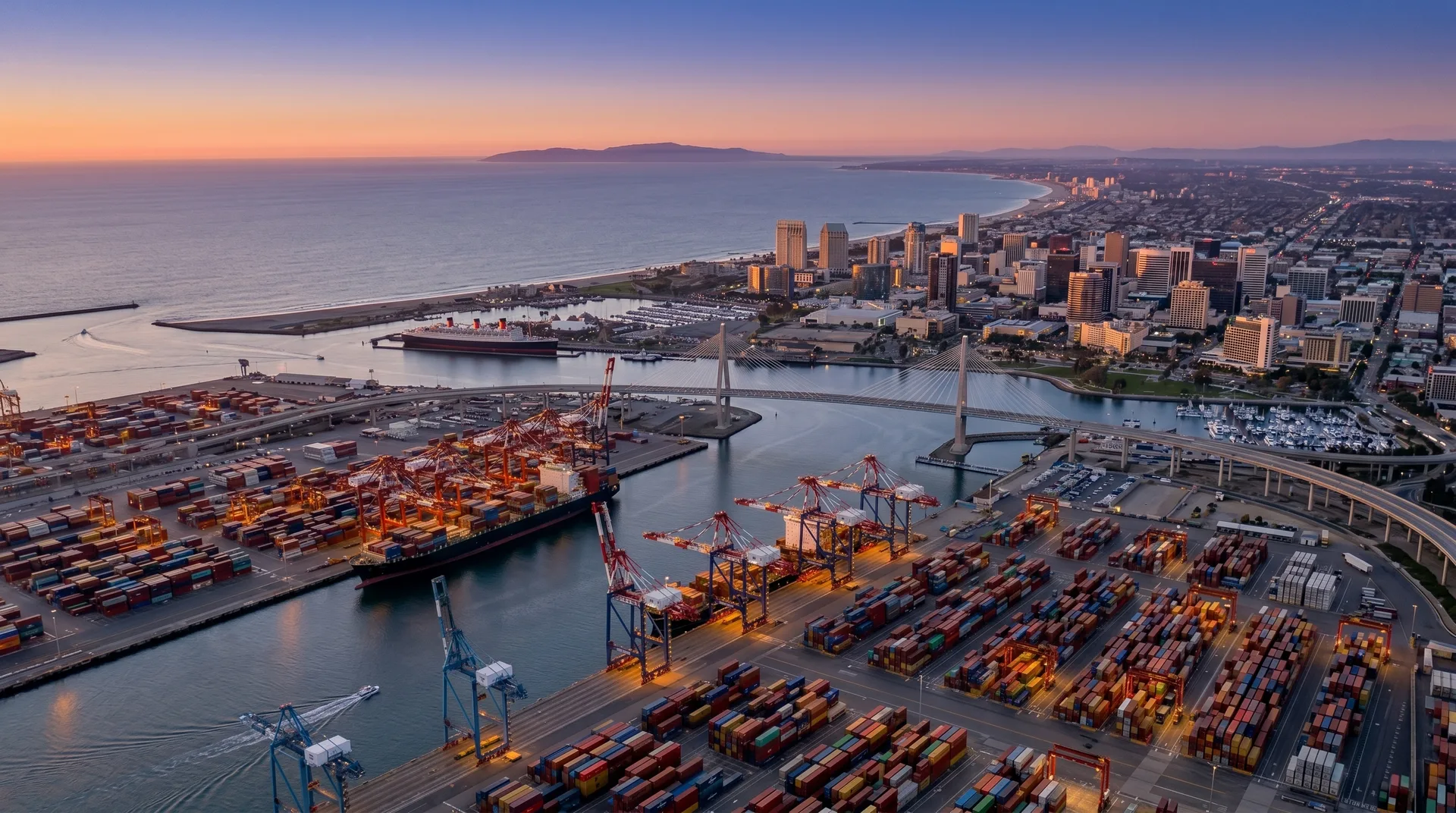
Long Beach
Long Beach serves as a critical logistics gateway on the West Coast, anchored by the Port of Long Beach, which handles millions of containers annually. The city's strategic location provides direct access to major West Coast markets and international trade routes, making it an essential destination for freight moving across the United States. The port's deep-water facilities and extensive terminal operations support a wide range of cargo types and shipping requirements.
The economic profile of Long Beach is diverse, with strong presence in international trade, logistics, aerospace, and technology sectors. The region benefits from proximity to the Los Angeles metropolitan area and excellent transportation connections, including major highways, rail terminals, and airport facilities. Long Beach's logistics infrastructure includes the Alameda Corridor rail expressway, providing efficient inland cargo movement, and extensive warehousing and distribution facilities that support the region's role as a major import/export hub.










