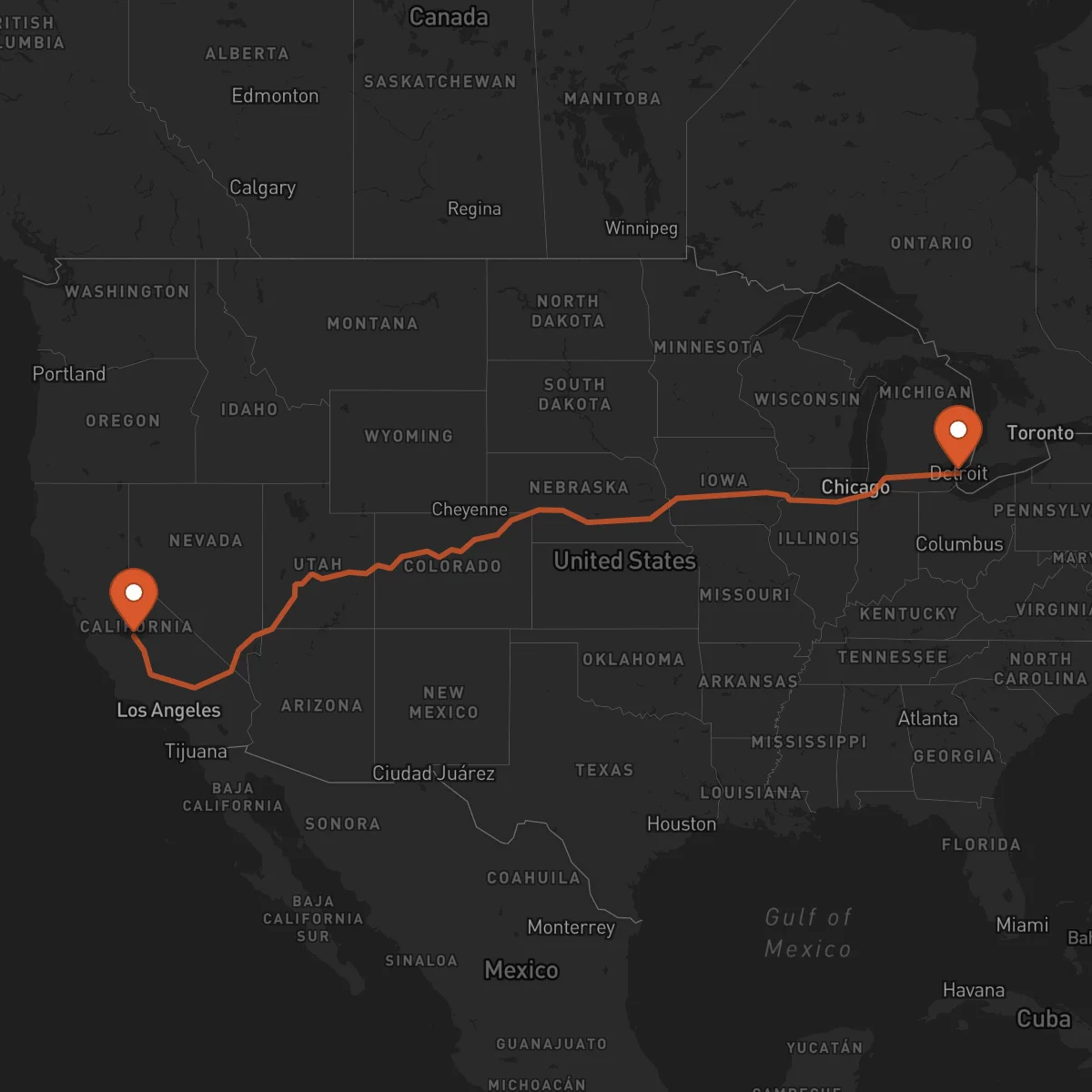
Detroit to Fresno
Fresno → DetroitFTL freight transportation service between Detroit and Fresno. Reliable logistics solutions for your business.
Route Description
Everything you need to know about the corridor Detroit - Fresno
The Detroit to Fresno corridor represents one of the most important domestic freight transportation routes in the United States, connecting the industrial heartland of Michigan with the agricultural and technological hub of California's Central Valley. This 3,186 km route traverses the entire continental United States, crossing multiple states and diverse geographic regions, making it a vital artery for the movement of goods between the Midwest and West Coast.
The strategic importance of this corridor lies in its ability to connect two major economic regions: Detroit, known as the automotive capital of the world, and Fresno, the heart of California's agricultural industry. This route facilitates the flow of automotive parts, finished vehicles, agricultural products, and manufactured goods between these regions, supporting both local economies and national supply chains. The corridor passes through major urban centers, agricultural zones, and industrial areas, making it a critical link in the North American logistics network.
Control Terrestre specializes in providing reliable full truckload (FTL) transportation services along this corridor, ensuring that your cargo moves efficiently and securely from origin to destination. Our experienced carriers are familiar with the route's challenges and opportunities, offering dedicated transportation solutions that meet the specific needs of industries relying on this connection. Whether you're shipping automotive components, agricultural equipment, or finished goods, our team coordinates every aspect of the journey to maintain the integrity and timeliness of your shipments.
Services for this Route
Available services for the corridor Detroit - Fresno
 Origin
Detroit
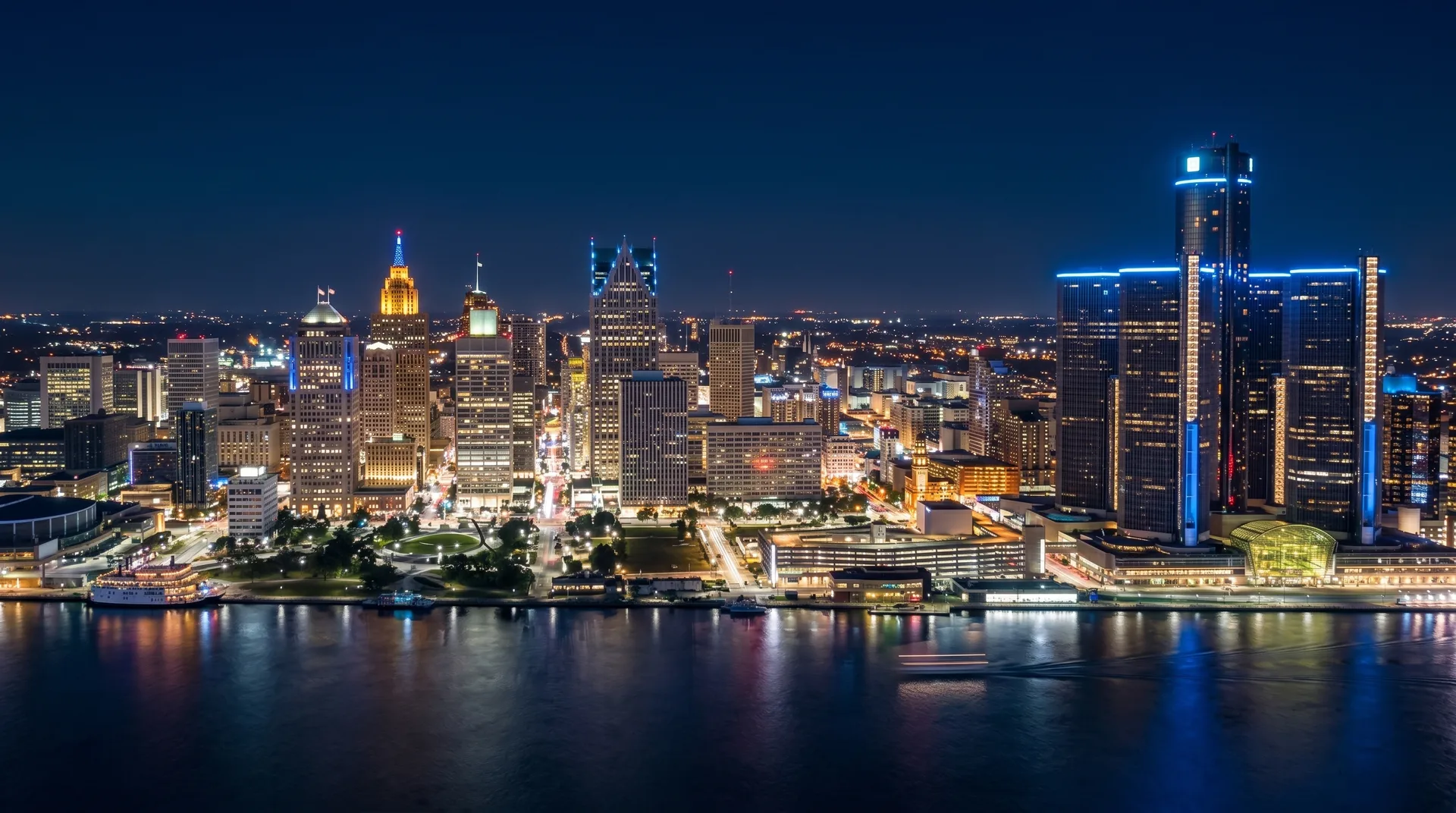
Detroit, Michigan, stands as a strategic logistics hub in the Midwest, serving as the gateway to the Great Lakes region and the industrial heartland of the United States. The city's location on the Detroit River, connecting to Lake Erie and the St. Lawrence Seaway, provides multimodal transportation capabilities that extend beyond road freight. Detroit's extensive network of highways, including I-75, I-94, and I-96, creates efficient connections to major markets across the eastern and central United States. The automotive industry remains the cornerstone of Detroit's economy, with major manufacturers and suppliers maintaining significant operations in the region. This industrial base is supported by a skilled workforce and a concentration of engineering and manufacturing expertise. The city's logistics infrastructure includes multiple intermodal facilities, warehousing centers, and distribution hubs that handle a diverse range of cargo, from automotive parts to consumer goods. Detroit's proximity to Canada via the Ambassador Bridge and Detroit-Windsor Tunnel also makes it a crucial point for cross-border trade, further enhancing its importance as a logistics center.
 Destination
Fresno
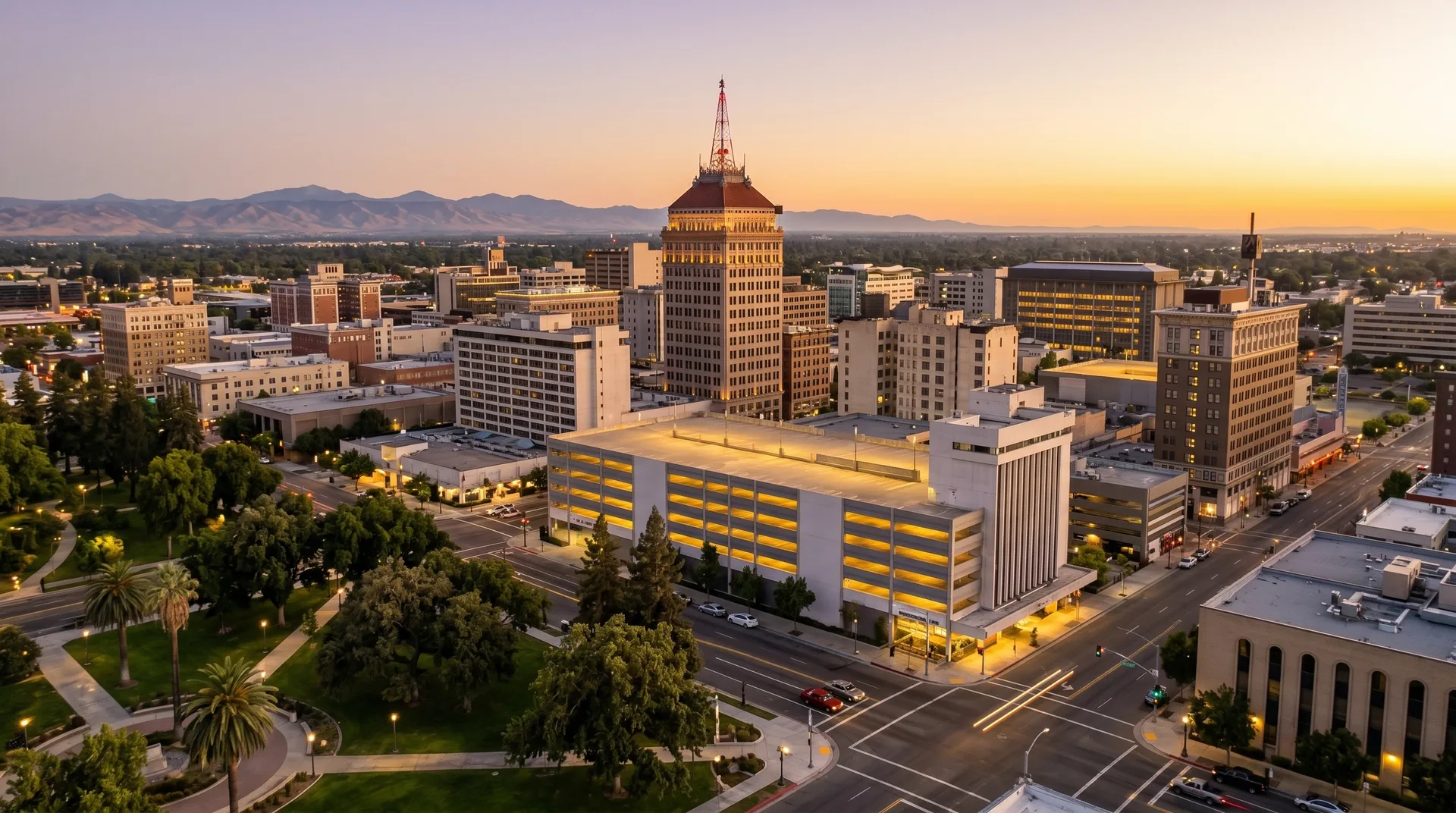
Fresno, California, serves as a strategic logistics hub in the heart of the San Joaquin Valley, one of the most productive agricultural regions in the world. Located in California's Central Valley, Fresno provides critical access to the vast agricultural output of the region while also connecting to the major ports and markets of California's coast. The city's location at the intersection of major highways, including State Route 99 and State Route 41, facilitates efficient distribution throughout California and beyond. The Fresno metropolitan area is surrounded by millions of acres of farmland producing everything from fruits and nuts to dairy products and cotton. This agricultural abundance creates significant freight transportation needs, particularly for refrigerated goods moving to markets across North America. The region's economy has also diversified to include food processing, manufacturing, and technology sectors, creating a complex logistics environment that requires specialized transportation solutions. Fresno's infrastructure includes modern warehousing facilities, cold storage capabilities, and intermodal yards that support the diverse cargo moving through the region, from fresh produce to industrial equipment.










