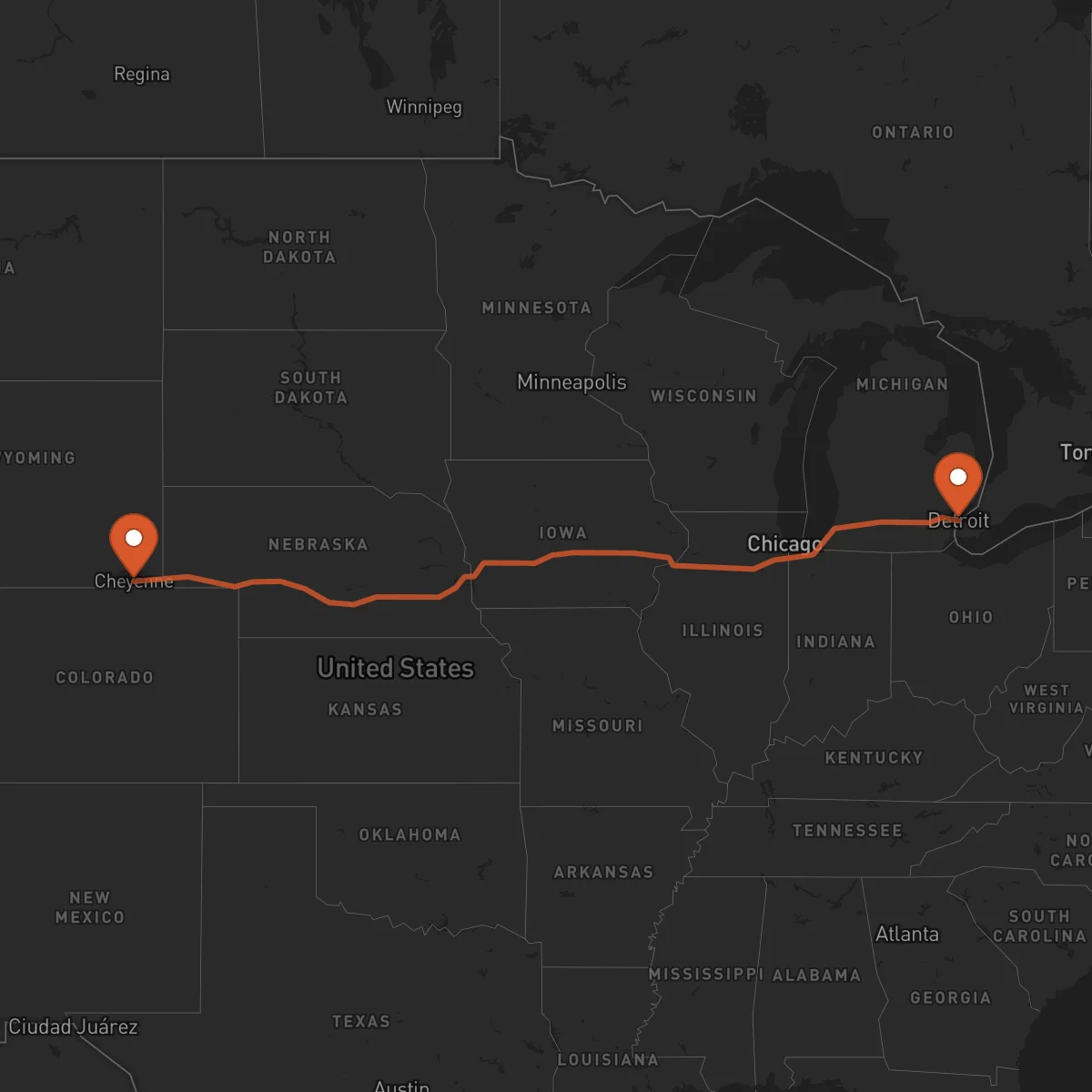
Detroit to Cheyenne
Cheyenne → DetroitFTL freight transportation service between Detroit and Cheyenne. Reliable logistics solutions for your business.
Route Description
Everything you need to know about the corridor Detroit - Cheyenne
The logistics corridor between Detroit, Michigan, and Cheyenne, Wyoming, represents a crucial connection between the industrial heartland of the Midwest and the strategic distribution hub of the Rocky Mountain region. This 1807-kilometer route traverses the American Midwest, crossing through multiple states and connecting major economic centers. The corridor serves as a vital artery for freight transportation, linking Detroit's automotive and manufacturing prowess with Cheyenne's role as a key logistics and distribution center.
The route primarily utilizes Interstate 80, one of the major east-west transportation corridors in the United States. This highway provides reliable and efficient transportation, connecting numerous cities and industrial centers along the way. The corridor's infrastructure supports the movement of diverse cargo types, from automotive parts and manufactured goods to agricultural products and industrial equipment.
Control Terrestre facilitates seamless operations on this corridor through our network of certified transportation providers. We offer specialized FTL services that ensure your cargo moves efficiently and securely from origin to destination. Our providers maintain C-TPAT certification and adhere to the highest safety standards, ensuring your freight receives priority handling throughout its journey. With our dedicated services, we can accommodate various cargo types, including specialized and oversized loads, making us the ideal partner for your Detroit to Cheyenne transportation needs.
Services for this Route
Available services for the corridor Detroit - Cheyenne
 Origin
Detroit
Detroit, Michigan, stands as a strategic logistics hub in the American Midwest, renowned for its automotive manufacturing heritage and diverse industrial base. The city's location on the Great Lakes provides unique access to both domestic and international markets through its port facilities and extensive transportation network. Detroit's metropolitan area hosts numerous manufacturing facilities, distribution centers, and warehouses, making it a crucial point for freight consolidation and distribution.
The city boasts exceptional transportation infrastructure, including major highways such as I-75, I-94, and I-96, which connect Detroit to the broader North American transportation network. The Detroit Metropolitan Airport serves as a major cargo hub, while the Port of Detroit facilitates international trade through the Great Lakes-St. Lawrence Seaway system. This comprehensive infrastructure makes Detroit an ideal origin point for freight transportation to various destinations across the United States.
 Destination
Cheyenne
Cheyenne, Wyoming, serves as a strategic logistics center in the Rocky Mountain region, offering unique advantages for freight distribution. Located at the intersection of major transportation routes, including I-80 and I-25, Cheyenne provides excellent connectivity to both the western and central United States. The city's proximity to Denver and its position as the state capital make it a natural hub for regional distribution and logistics operations.
The area's economic landscape includes significant contributions from government services, healthcare, and retail distribution. Cheyenne's transportation infrastructure includes a well-developed highway system, the Cheyenne Regional Airport, and its role as a key node in the national freight network. The city's location allows for efficient distribution to surrounding states, making it an ideal destination for freight transportation from major industrial centers in the Midwest and beyond.










