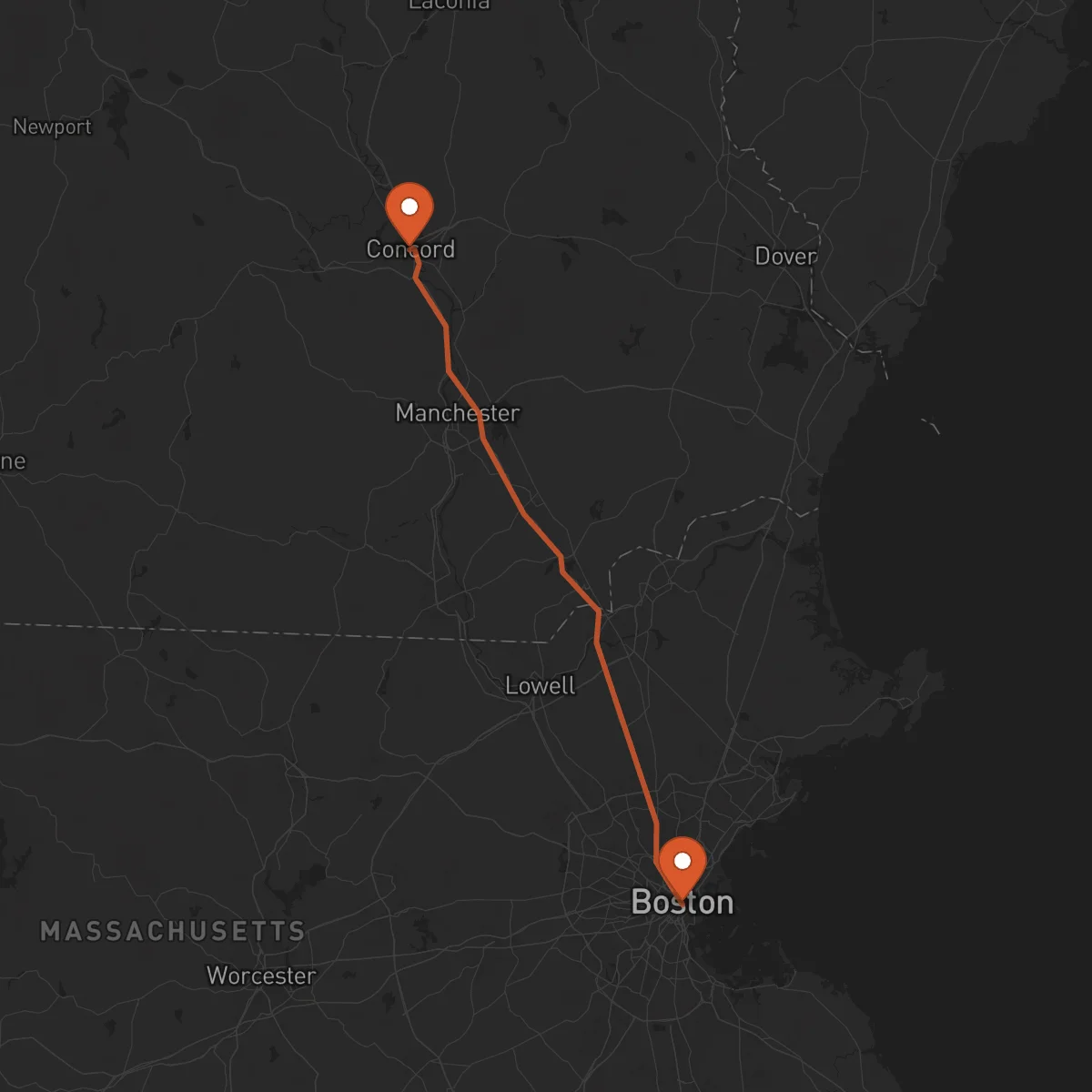
Concord to Boston
Boston → ConcordFTL freight transportation service between Concord and Boston. Reliable logistics solutions for your business.
Route Description
Everything you need to know about the corridor Concord - Boston
The logistics corridor connecting Concord, New Hampshire to Boston, Massachusetts represents a vital transportation link in the Northeast United States. This 102-kilometer route serves as a critical artery for commerce between New Hampshire's capital and Massachusetts' largest city, facilitating the movement of goods through one of America's most economically dynamic regions.
The corridor traverses a landscape of significant industrial and commercial activity, connecting the manufacturing and technology sectors of New Hampshire with Boston's renowned financial, educational, and healthcare institutions. This route benefits from the robust economic integration between these two states, where businesses frequently require efficient freight transportation to maintain their supply chains.
Key industries utilizing this corridor include advanced manufacturing, biotechnology, medical devices, and technology products moving from the Concord area, while Boston's ports and distribution centers receive a diverse range of consumer goods, industrial equipment, and specialized cargo. The route primarily follows major highways including I-93, providing reliable access through varying seasonal conditions that characterize New England's climate.
Control Terrestre optimizes operations on this corridor through our network of certified transportation providers, offering dedicated full truckload services that ensure timely delivery of your freight. Our strategic partnerships and local expertise allow us to navigate the specific requirements of both New Hampshire and Massachusetts, providing seamless door-to-door transportation solutions that keep your supply chain moving efficiently between these important economic centers.
Services for this Route
Available services for the corridor Concord - Boston
 Origin
Concord
Concord, New Hampshire serves as a strategic logistics hub in the Granite State, positioned advantageously for distribution throughout northern New England. The city's location provides excellent connectivity to major transportation networks, with direct access to Interstate 93 and proximity to the Upper Valley region. Concord's industrial base includes advanced manufacturing facilities, technology companies, and a growing healthcare sector, all requiring reliable freight transportation solutions.
The city benefits from well-developed transportation infrastructure, including the Concord Municipal Airport for air freight connections and a network of state highways that facilitate efficient ground transportation. Local warehousing and distribution centers support the movement of goods throughout New Hampshire and into neighboring states. The region's economic stability and business-friendly environment make Concord an ideal origin point for freight shipments requiring dependable transportation to major markets like Boston.
 Destination
Boston
Boston, Massachusetts stands as one of America's most important logistics and economic centers, offering unparalleled access to the Northeast market. The city's strategic location on the Atlantic coast, combined with its extensive transportation infrastructure, makes it a critical destination for freight movement. Boston's Logan International Airport and the Port of Boston provide multimodal shipping options, while an extensive highway network including I-90 and I-93 ensures efficient ground transportation connectivity.
The Boston metropolitan area hosts a diverse economic ecosystem dominated by finance, education, healthcare, biotechnology, and technology sectors. Major institutions like Harvard University, MIT, and numerous hospitals create consistent demand for specialized freight services. The city's role as a regional distribution hub means warehouses and fulfillment centers are strategically positioned throughout the area, requiring regular full truckload deliveries to maintain inventory levels and support the region's dynamic business environment.










