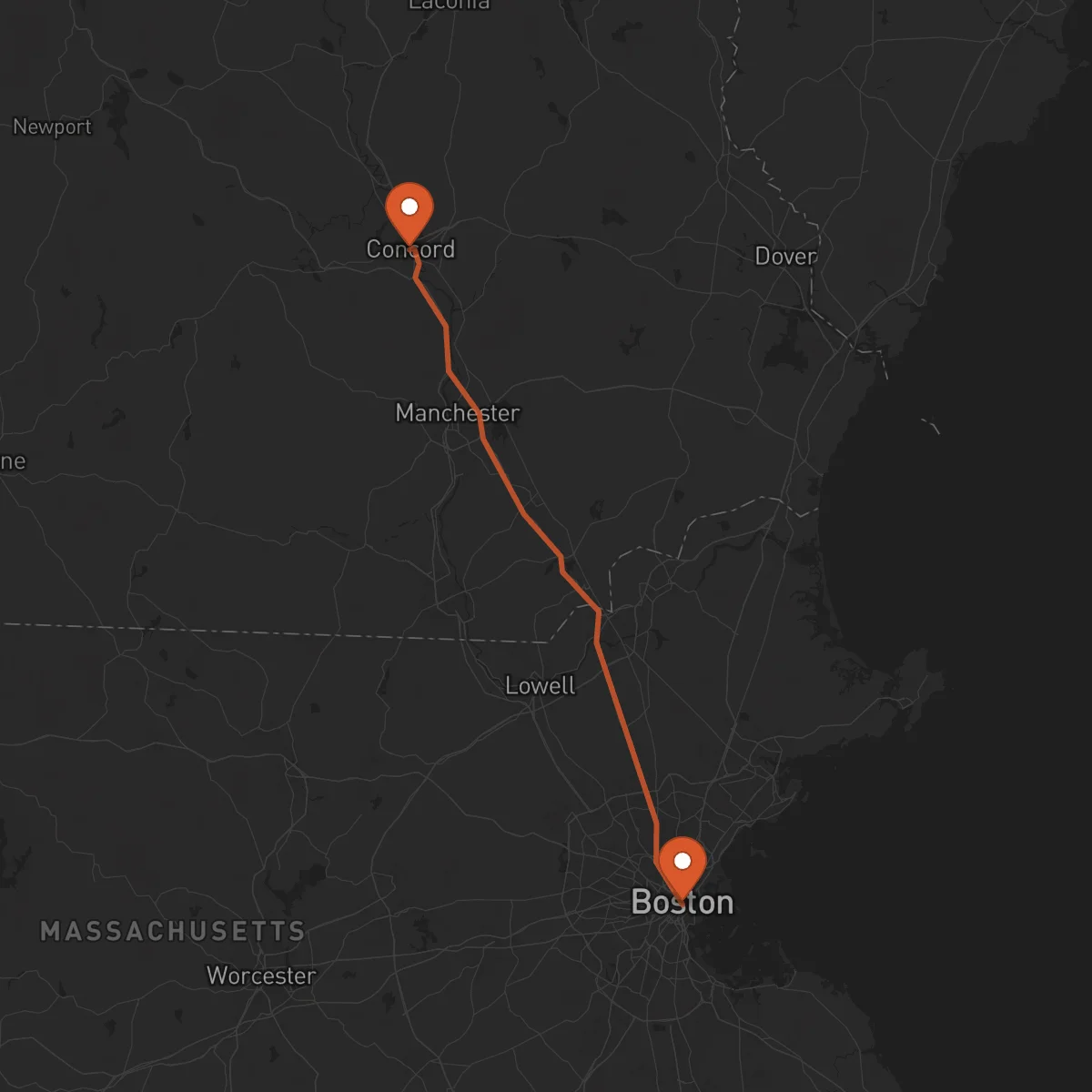
Boston to Concord
Concord → BostonFTL freight transportation service between Boston and Concord. Reliable logistics solutions for your business.
Route Description
Everything you need to know about the corridor Boston - Concord
The Boston to Concord corridor represents a vital domestic logistics connection in the northeastern United States, spanning approximately 102 kilometers through the heart of New England. This route links Massachusetts' largest city with New Hampshire's capital, facilitating the movement of goods between two economically significant regions. The corridor serves as a crucial link in the regional supply chain, connecting major industrial centers with state capitals and supporting the flow of commercial goods throughout the Northeast corridor.
The economic importance of this route extends beyond its immediate endpoints. Boston, as a major economic hub, generates substantial freight traffic that needs to flow efficiently to surrounding states, while Concord serves as a distribution center for New Hampshire's diverse economy. The corridor benefits from proximity to other major logistics routes, creating a network effect that enhances its strategic value for freight transportation.
This route primarily serves industries including manufacturing, technology, healthcare, and retail. Boston's status as a healthcare and education center creates demand for specialized freight services, while Concord's role as a state capital and regional business center generates consistent shipping volumes. The corridor also supports the movement of agricultural products, construction materials, and consumer goods between urban and rural areas of New England.
Control Terrestre provides comprehensive FTL (Full Truckload) services along this corridor, ensuring reliable and efficient freight movement between Boston and Concord. Our strategic partnerships with certified carriers allow us to offer dedicated transportation solutions that meet the specific needs of businesses operating in this region. We understand the importance of timely deliveries and maintain the highest standards of safety and compliance throughout the transportation process.
Services for this Route
Available services for the corridor Boston - Concord
 Origin
Boston
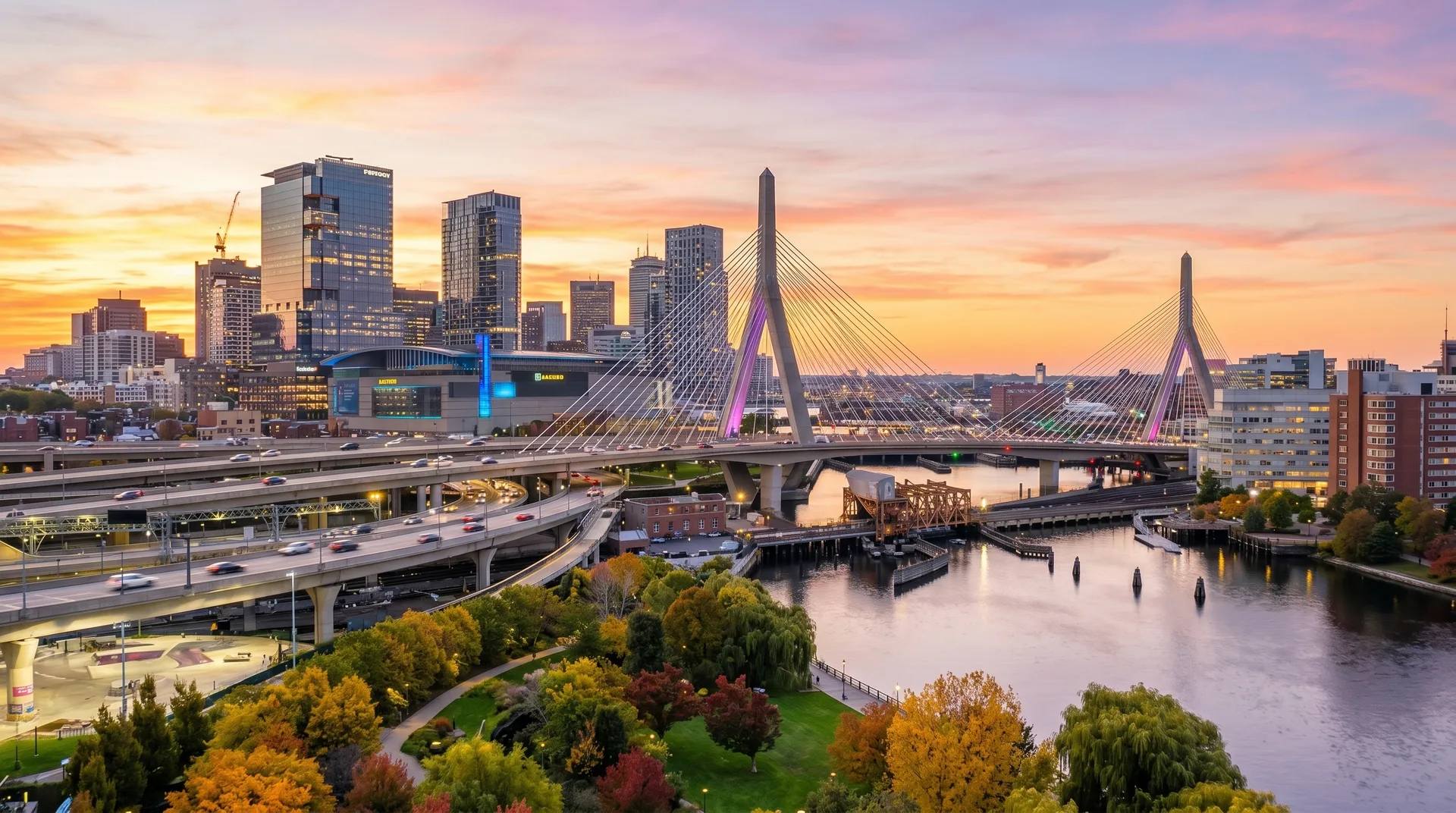
Boston stands as a premier logistics hub on the East Coast, offering exceptional strategic advantages for freight transportation. The city's location provides direct access to major interstate highways including I-90 (Massachusetts Turnpike) and I-93, creating efficient connections to northern New England and beyond. Boston's Logan International Airport and Port of Boston complement the ground transportation network, making it a comprehensive logistics center that handles diverse freight needs.
The economic landscape of Boston encompasses world-class healthcare institutions, prestigious universities, advanced manufacturing facilities, and a thriving technology sector. This diverse industrial base generates consistent demand for freight services across multiple sectors. The city's commitment to infrastructure development and its status as a major population center ensure sustained freight activity, making it an ideal origin point for regional and national distribution networks.
 Destination
Concord
Concord serves as a strategic logistics center in New Hampshire, offering unique advantages for freight distribution in northern New England. The city's location at the intersection of major routes, including I-93 and I-89, provides excellent connectivity to both Boston and northern markets. Concord's transportation infrastructure includes a regional airport and rail connections, supporting multimodal freight operations and enhancing its role as a distribution hub.
The economic environment in Concord reflects New Hampshire's diverse industrial base, with strong presence in government services, healthcare, education, and manufacturing. The city's status as the state capital creates consistent demand for reliable freight services, while its growing commercial sector generates additional shipping volumes. Concord's central location within New Hampshire makes it an ideal consolidation point for regional distribution, serving both urban and rural communities throughout the state.










