Columbus to El Paso
El Paso → ColumbusFTL freight transportation service between Columbus and El Paso. Reliable logistics solutions for your business.
Route Description
Everything you need to know about the corridor Columbus - El Paso
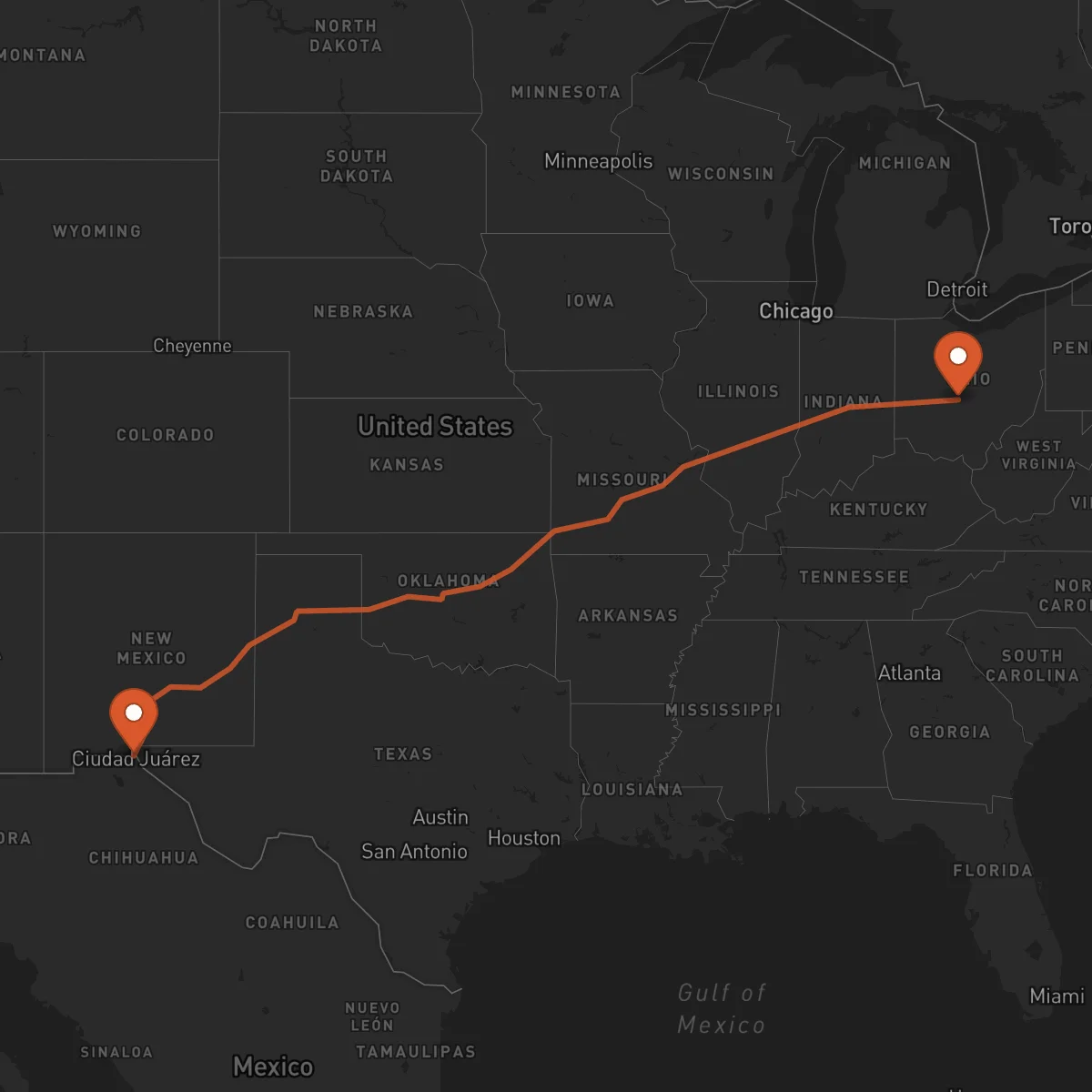
The Columbus to El Paso corridor represents one of the most strategic freight transportation routes in the United States, connecting the industrial heartland of Ohio with the dynamic border region of Texas. This 2,295 km route traverses the country's central corridor, linking major economic centers and facilitating the movement of goods between the Midwest and the Southwest. The corridor serves as a critical supply chain artery for numerous industries, particularly those requiring efficient cross-country distribution.
The economic significance of this route is substantial, connecting Columbus's manufacturing and technology sectors with El Paso's international trade hub status. Major industries utilizing this corridor include automotive, electronics, consumer goods, and industrial equipment. The route primarily follows Interstate 70 West and Interstate 44 West, connecting through key transportation hubs in St. Louis and Oklahoma City before reaching El Paso's strategic location on the U.S.-Mexico border.
Control Terrestre provides comprehensive FTL transportation solutions along this corridor, leveraging our extensive network of certified carriers and specialized equipment. Our services ensure reliable, efficient freight movement between these two important economic centers, with dedicated tracking and support throughout the journey. We understand the unique requirements of cross-country shipping and offer tailored solutions to meet specific cargo needs, whether for time-sensitive deliveries or specialized freight requiring particular handling.
Our expertise in this corridor allows us to optimize routes, manage transit times effectively, and provide the level of service that modern supply chains demand. With Control Terrestre, businesses can count on professional handling of their freight from origin to destination, supported by our commitment to safety, reliability, and customer satisfaction.
Services for this Route
Available services for the corridor Columbus - El Paso
 Origin
Columbus
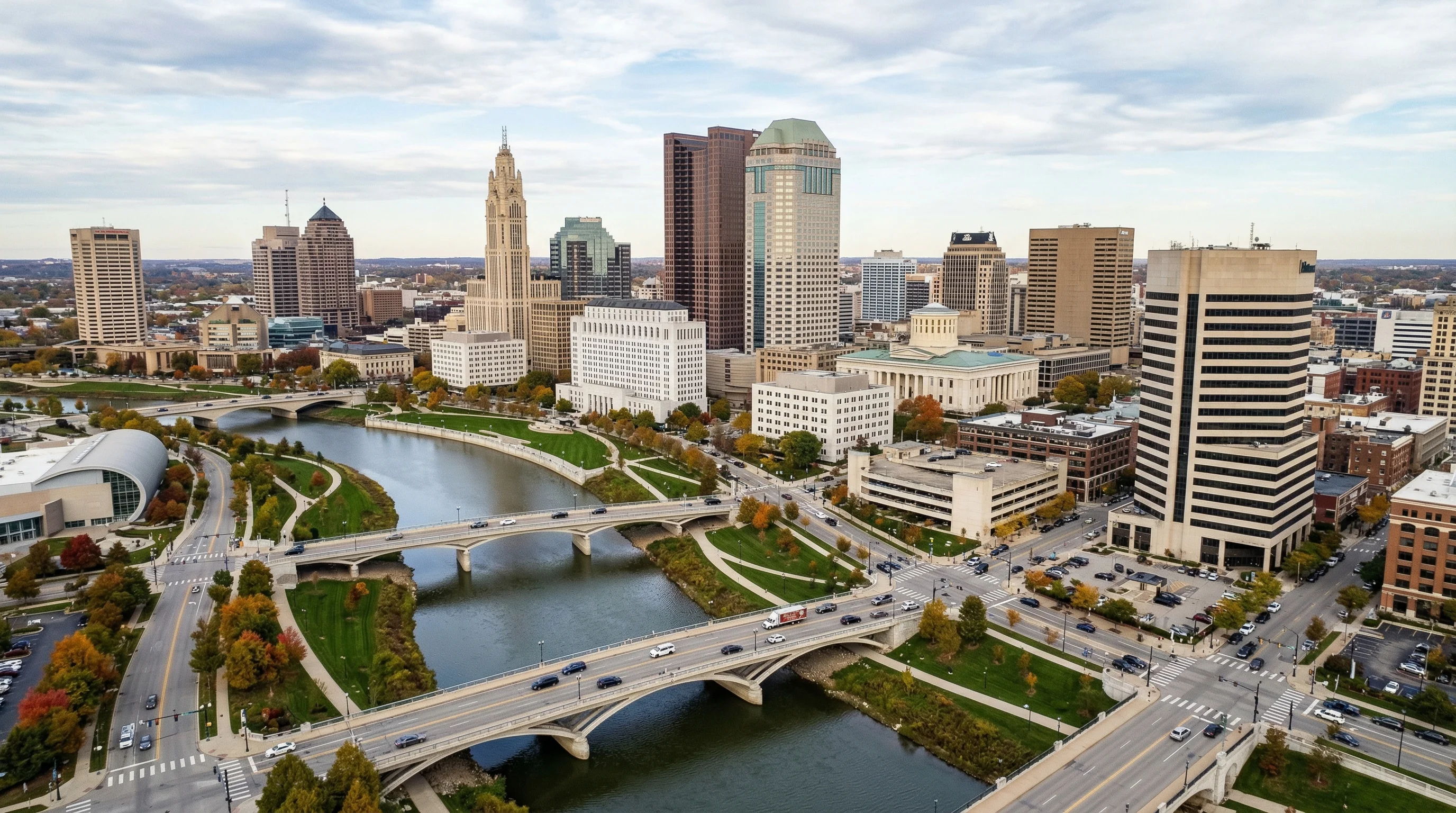
Columbus, Ohio serves as a major logistics hub in the Midwest, strategically positioned to connect with national transportation networks. The city's central location in Ohio provides excellent access to major highways including I-70, I-71, and I-270, facilitating efficient distribution throughout the region and beyond. Columbus boasts a robust economy with strong manufacturing, technology, and healthcare sectors, making it a key origin point for diverse freight shipments.
The city's transportation infrastructure includes Port Columbus International Airport, extensive rail connections through CSX and Norfolk Southern, and the nearby Rickenbacker International Airport's cargo facilities. The Rickenbacker Intermodal Terminal provides seamless connections between different transportation modes, while the city's central location allows for efficient one-day delivery to nearly half the U.S. population. Columbus's logistics ecosystem is further enhanced by numerous warehousing and distribution centers, making it an ideal origin for both regional and cross-country freight movements.
 Destination
El Paso
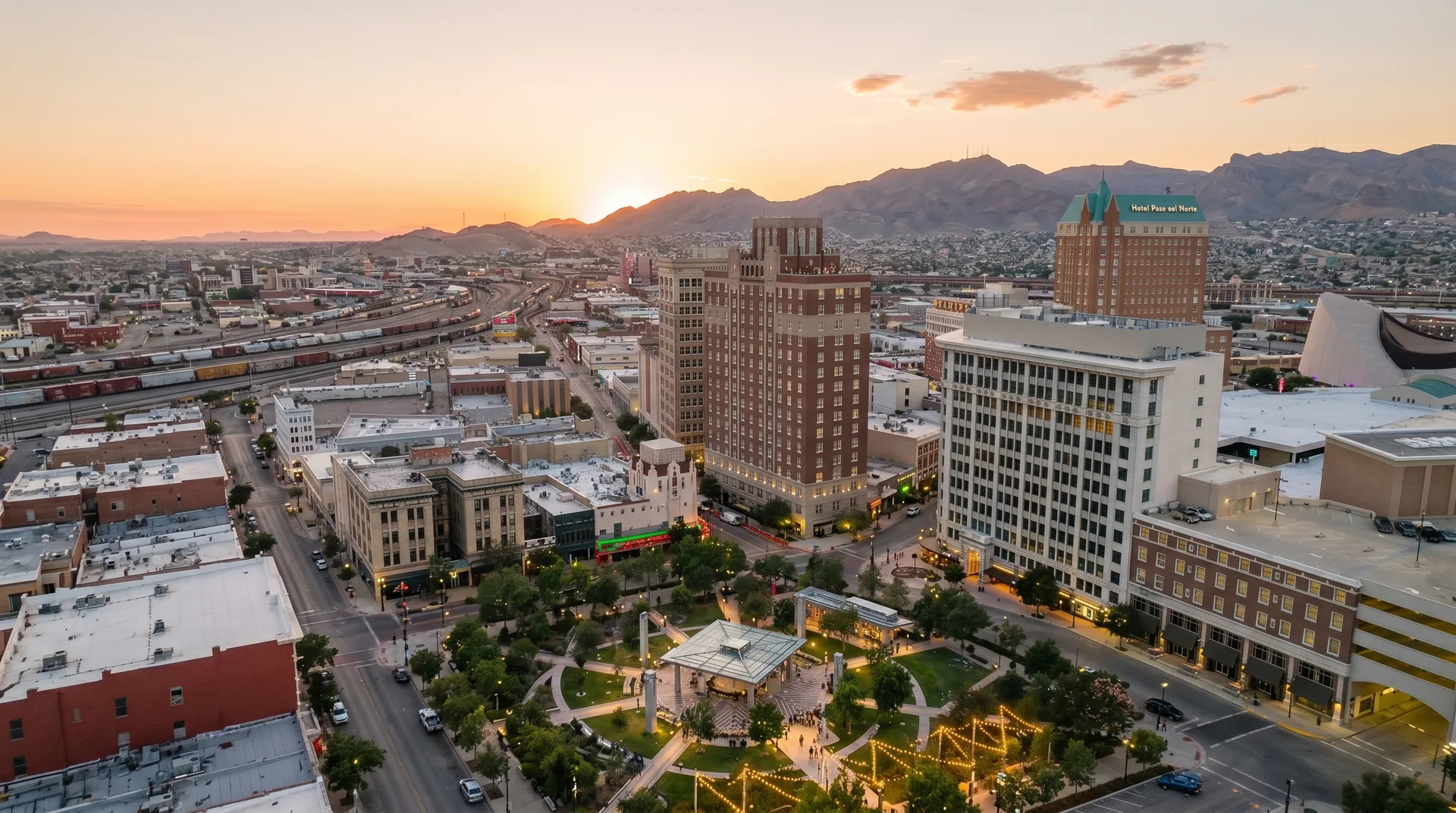
El Paso, Texas occupies a strategic position as a major logistics hub on the U.S.-Mexico border, serving as a gateway for international trade and commerce. The city's location at the intersection of I-10, U.S. Route 54, and U.S. Route 180 provides excellent connectivity to both national and international markets. El Paso's proximity to Ciudad Juárez, Mexico, creates a unique binational metropolitan area that facilitates cross-border trade and manufacturing.
The region's economy is driven by international trade, military installations, healthcare, and manufacturing, particularly in the maquiladora industry. El Paso's transportation infrastructure includes the El Paso International Airport, extensive rail connections through Union Pacific, and the Bridge of the Americas and Ysleta-Zaragoza International Bridges for cross-border freight. The city's designation as a Foreign Trade Zone further enhances its appeal for logistics operations, while its location provides efficient access to major markets in the southwestern United States and Mexico.










