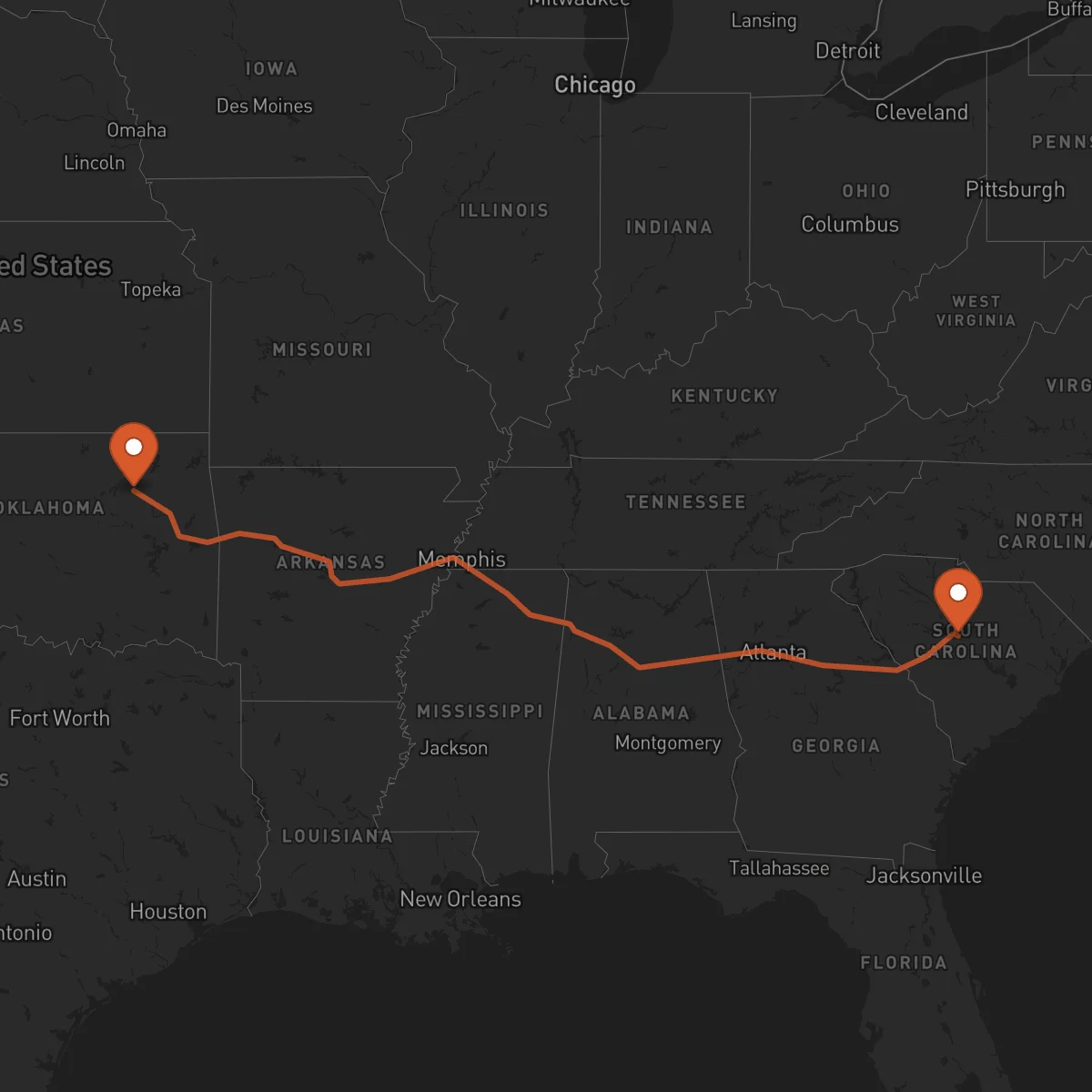
Columbia to Tulsa
Tulsa → ColumbiaFTL freight transportation service between Columbia and Tulsa. Reliable logistics solutions for your business.
Route Description
Everything you need to know about the corridor Columbia - Tulsa
The logistics corridor connecting Columbia, South Carolina to Tulsa, Oklahoma represents a vital transportation link across the southeastern United States. This 1,380 km route traverses multiple states and connects two important economic centers, facilitating the movement of goods between the Atlantic coast and the central plains. The corridor serves as a critical artery for domestic freight transportation, supporting supply chains that span from manufacturing hubs to distribution centers.
The region's economic landscape is characterized by diverse industrial activities. Columbia's proximity to major ports and manufacturing facilities creates a steady flow of goods requiring inland transportation. Tulsa, positioned in the heart of the Midwest, serves as a crucial distribution point for agricultural products, energy-related equipment, and manufactured goods. The corridor benefits from the robust industrial presence in both cities, with Columbia's growing technology and automotive sectors complementing Tulsa's established energy and aerospace industries.
Key transportation infrastructure along this route includes major interstate highways such as I-20, I-40, and I-44, which provide reliable connectivity for freight movement. These highways are designed to handle heavy commercial traffic and offer multiple route options to optimize transit times and costs. The well-maintained road network ensures consistent service quality throughout the year, regardless of seasonal weather variations.
Control Terrestre facilitates seamless operations along this corridor through our extensive network of transportation providers. Our specialized full truckload services ensure that cargo moves efficiently from origin to destination, with dedicated equipment and experienced drivers who understand the nuances of this specific route. We coordinate all aspects of the transportation process, from initial pickup in Columbia to final delivery in Tulsa, providing our clients with reliable, end-to-end logistics solutions.
Services for this Route
Available services for the corridor Columbia - Tulsa
 Origin
Columbia
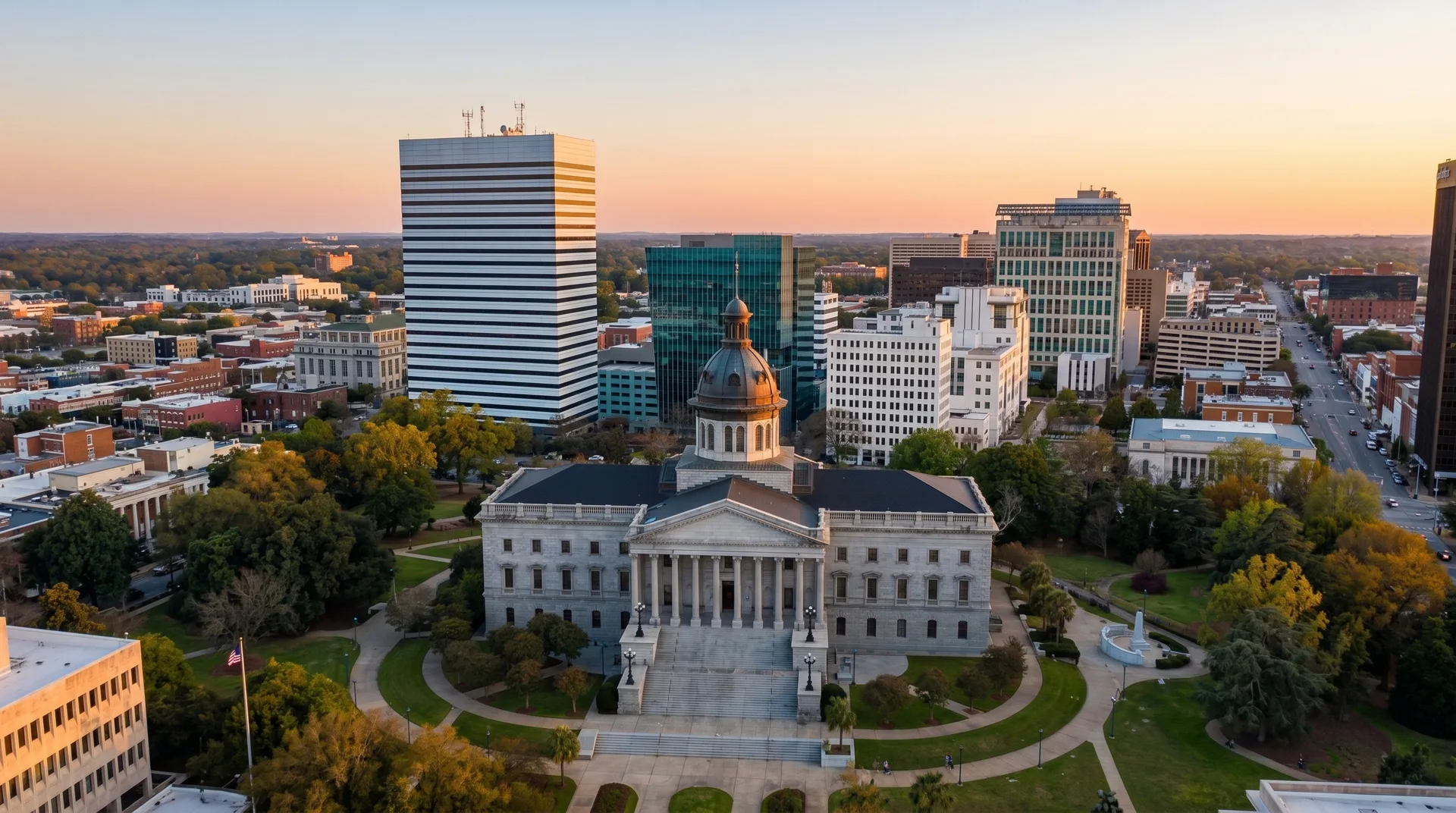
Columbia, South Carolina serves as a strategic logistics hub in the southeastern United States, benefiting from its central location within the state and proximity to major transportation networks. The city's position along Interstate 20 provides direct access to both coastal ports and inland markets, making it an ideal origin point for freight distribution. Columbia's well-developed infrastructure includes the Columbia Metropolitan Airport and connections to major rail lines, complementing its road transportation capabilities.
The local economy is diverse, with significant contributions from government services, healthcare, education, and manufacturing sectors. The presence of Fort Jackson, the largest US Army training facility, creates consistent demand for logistics services. Additionally, Columbia's growing automotive industry, including manufacturing facilities for major automotive companies, generates substantial freight volumes requiring reliable transportation solutions.
 Destination
Tulsa
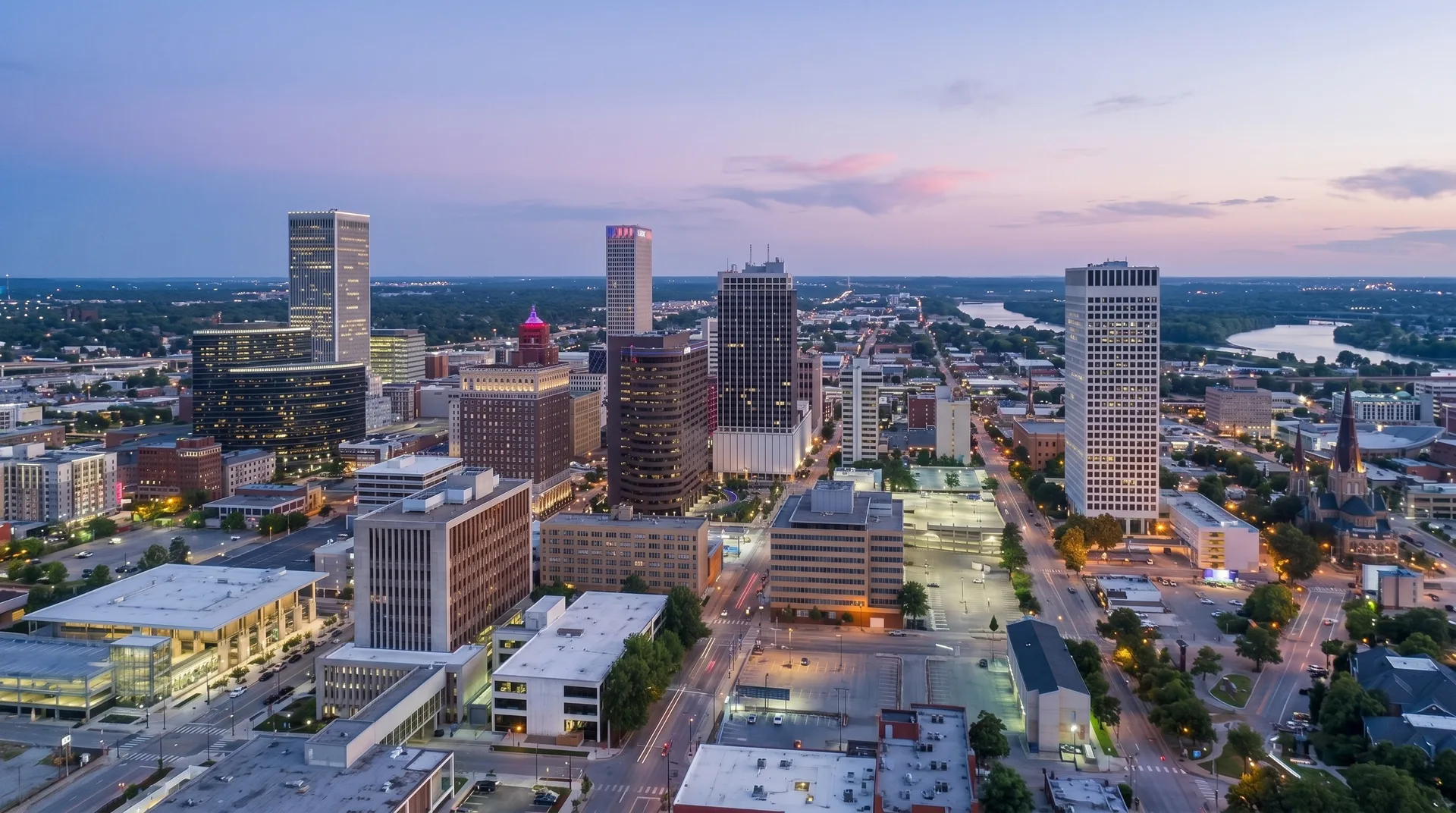
Tulsa, Oklahoma occupies a strategic position in the central United States, serving as a crucial logistics and distribution center for the Midwest region. Located at the intersection of major transportation routes, Tulsa provides excellent connectivity to surrounding states and beyond. The city's infrastructure includes Tulsa International Airport and extensive highway networks, including Interstate 44, which facilitates efficient freight movement in all directions.
The Tulsa metropolitan area has a strong economic foundation built on energy, aerospace, and manufacturing industries. As a historic center for the oil and gas sector, Tulsa continues to be a hub for energy-related equipment and services. The city's aerospace industry, anchored by major manufacturers and maintenance facilities, creates significant demand for specialized freight transportation. Additionally, Tulsa's growing technology sector and distribution centers contribute to the diverse freight needs in the region.










