Columbia to Seattle
Seattle → ColumbiaFTL freight transportation service between Columbia and Seattle. Reliable logistics solutions for your business.
Route Description
Everything you need to know about the corridor Columbia - Seattle
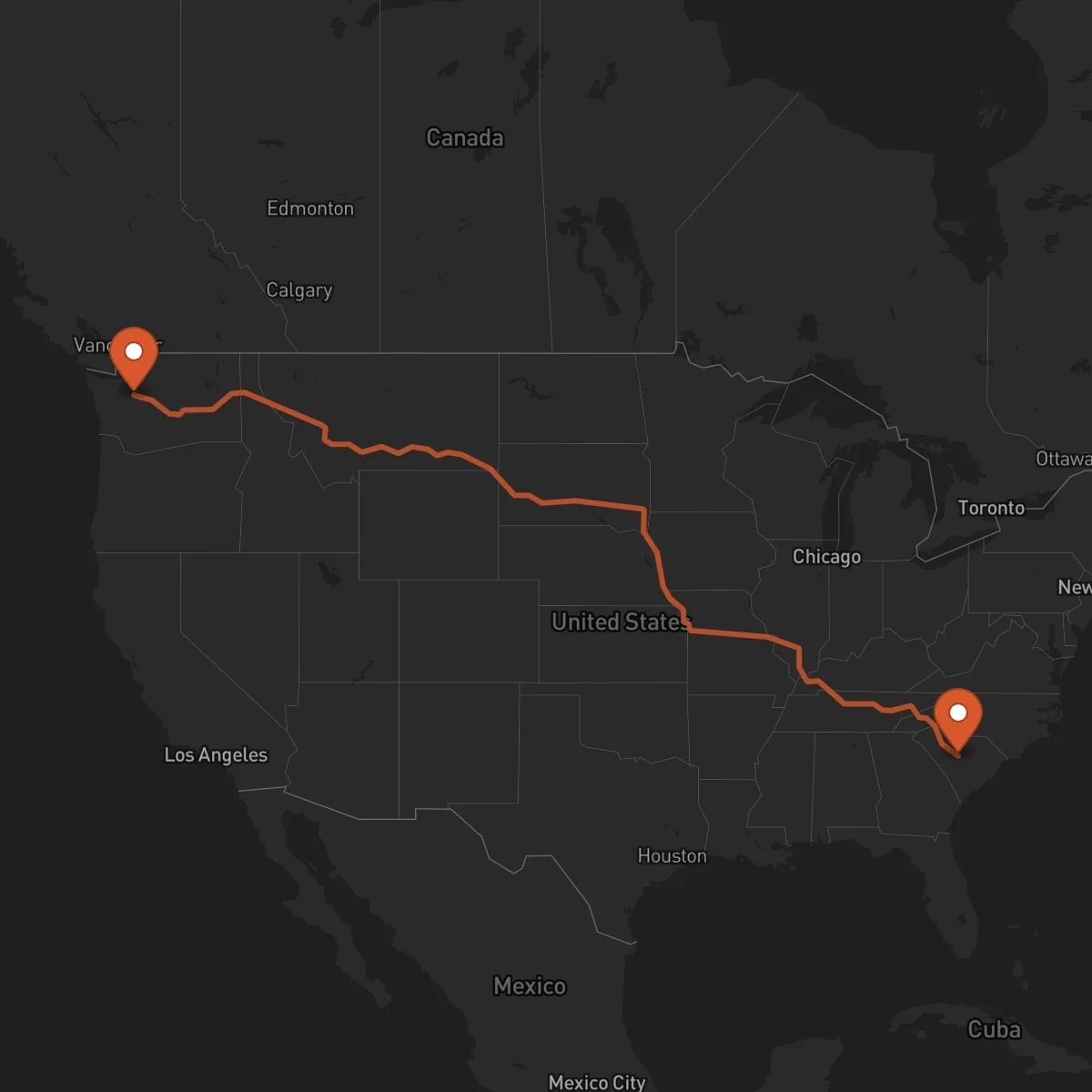
The logistics corridor connecting Columbia, South Carolina to Seattle, Washington represents a critical transportation route spanning approximately 3,736 kilometers across the United States. This east-west corridor traverses diverse geographic regions and connects major economic centers, making it essential for domestic freight movement. The route facilitates the flow of goods between the Southeast's manufacturing and distribution hubs to the Pacific Northwest's major port and technology centers.
The economic significance of this corridor cannot be overstated. Columbia serves as a strategic distribution point for goods moving throughout the Southeast, while Seattle functions as a major gateway for international trade through the Port of Seattle and as a hub for technology and aerospace industries. The corridor supports numerous industries including automotive, aerospace, technology, agricultural products, and manufactured goods. Key transportation infrastructure includes major interstate highways such as I-26, I-40, I-70, and I-90, providing efficient and reliable freight movement across the country.
Control Terrestre specializes in optimizing freight transportation along this corridor through our network of certified carriers and strategic partnerships. Our dedicated full truckload services ensure that your cargo moves efficiently from origin to destination, with real-time tracking and professional handling throughout the journey. We understand the unique requirements of cross-country transportation and provide tailored solutions that meet the specific needs of your supply chain, whether you're shipping time-sensitive electronics, temperature-controlled pharmaceuticals, or oversized industrial equipment.
Services for this Route
Available services for the corridor Columbia - Seattle
 Origin
Columbia
Columbia, South Carolina serves as a strategic logistics hub in the southeastern United States, offering excellent connectivity to major markets along the East Coast and beyond. Located at the confluence of major transportation routes, Columbia provides access to Interstates 26, 20, and 77, facilitating efficient distribution throughout the region. The city's central location within South Carolina makes it an ideal starting point for freight movements to both coastal and inland destinations.
The region's economy is diverse, with strong manufacturing, healthcare, and education sectors. Columbia is home to numerous distribution centers and warehouses, taking advantage of South Carolina's business-friendly environment and strategic location. The presence of the University of South Carolina and Fort Jackson also contributes to the local economy, creating consistent freight demands for various goods and supplies. The area's transportation infrastructure includes multiple rail connections and proximity to major ports, making it well-equipped to handle various freight requirements.
 Destination
Seattle
Seattle, Washington stands as a premier logistics gateway on the West Coast, offering unparalleled access to international trade routes through the Port of Seattle and proximity to the Port of Tacoma. The city's strategic location provides direct access to Asian markets and serves as a critical distribution point for goods throughout the Pacific Northwest and beyond. Seattle's transportation network includes major interstates I-5, I-90, and I-405, connecting the city to both coastal and inland destinations efficiently.
The Seattle metropolitan area is a powerhouse of economic activity, with dominant sectors including aerospace (Boeing), technology (Microsoft, Amazon), maritime trade, and advanced manufacturing. The Port of Seattle handles millions of containers annually and serves as a major hub for both imports and exports. The region's robust infrastructure includes extensive rail networks, international airports, and modern warehousing facilities, making it capable of handling diverse freight requirements from temperature-sensitive electronics to oversized industrial equipment.










