Columbia to Olympia
Olympia → ColumbiaFTL freight transportation service between Columbia and Olympia. Reliable logistics solutions for your business.
Route Description
Everything you need to know about the corridor Columbia - Olympia
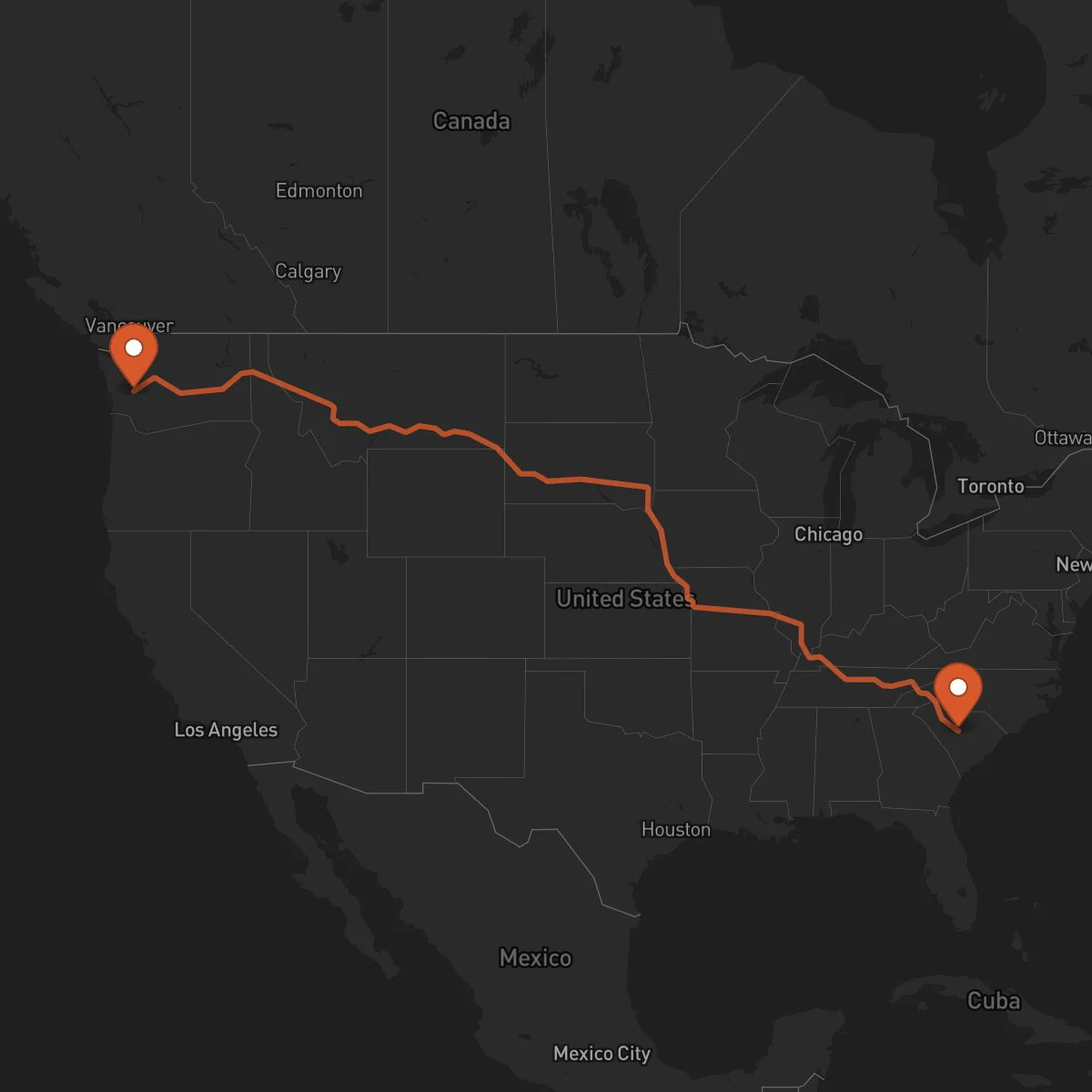
The Columbia to Olympia corridor represents a vital transportation link across the United States, spanning approximately 3,769 kilometers from South Carolina's capital to Washington State's capital. This east-west route traverses diverse geographic regions, connecting the Southeast's manufacturing base with the Pacific Northwest's growing tech and agricultural sectors. The corridor's strategic importance lies in its ability to facilitate the movement of goods between two economically distinct regions of the country, supporting both regional and national supply chains.
The economic significance of this corridor is substantial, serving as a conduit for automotive parts from South Carolina's manufacturing hubs, agricultural products from the Midwest, and high-tech equipment destined for the Seattle metropolitan area. Major industries utilizing this route include automotive manufacturing, aerospace, technology, and agriculture. The corridor benefits from multiple interstate highways, primarily I-26, I-40, I-70, and I-90, which provide reliable transportation infrastructure across the country's heartland and mountain regions.
Control Terrestre specializes in full truckload (FTL) transportation along this corridor, offering dedicated services that ensure your cargo moves efficiently from origin to destination. Our network of certified carriers provides consistent capacity and reliable service across the entire route, with real-time tracking and dedicated support throughout the journey. We understand the unique challenges of cross-country transportation and have developed specialized solutions to optimize transit times and ensure cargo security for shipments between Columbia and Olympia.
Services for this Route
Available services for the corridor Columbia - Olympia
 Origin
Columbia
Columbia, South Carolina serves as a strategic logistics hub in the Southeast, offering excellent connectivity to major markets along the East Coast. The city's location at the confluence of major highways, including I-20, I-26, and I-77, provides efficient access to ports in Charleston and Savannah, as well as inland distribution centers throughout the Southeast. Columbia's central location within South Carolina makes it an ideal origin point for statewide distribution and a gateway for shipments heading west and north.
The region's economy is anchored by automotive manufacturing, with major facilities operated by companies like BMW and Volvo, along with a robust network of automotive suppliers. Other significant industries include healthcare, education, and advanced manufacturing. The Columbia Metropolitan Airport and the nearby Port of Charleston enhance the region's multimodal transportation capabilities, while the city's extensive network of warehousing and distribution centers supports both regional and national logistics operations.
 Destination
Olympia
Olympia, Washington, while smaller than nearby Seattle, plays a crucial role in the Pacific Northwest's logistics network as the state capital and a gateway to the Puget Sound region. The city's location provides access to major transportation corridors including I-5, which connects directly to Seattle, Portland, and Vancouver, BC. Olympia's proximity to the Port of Olympia and its position relative to the Olympic Peninsula make it a strategic point for both regional distribution and access to Western Washington's diverse markets.
The Olympia area's economy is characterized by government services, technology, and a growing presence in the aerospace and maritime industries. The region benefits from proximity to major economic centers like Seattle and Tacoma while maintaining lower operational costs. The Port of Olympia provides maritime shipping capabilities, while the expanding warehousing and logistics infrastructure around the Puget Sound supports the region's growing e-commerce and technology sectors. The area's commitment to sustainable development and green logistics aligns with modern supply chain requirements.










