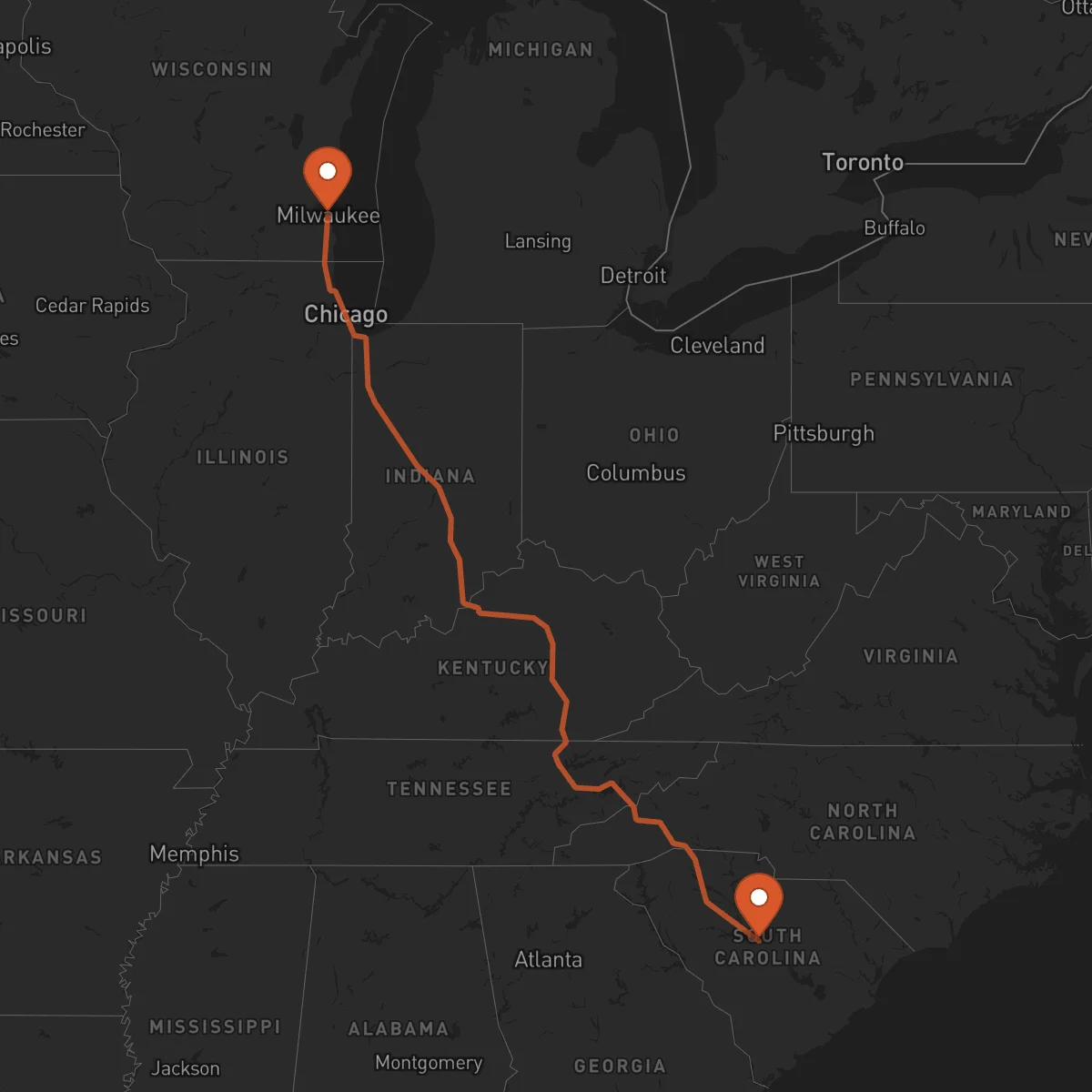
Columbia to Milwaukee
Milwaukee → ColumbiaFTL freight transportation service between Columbia and Milwaukee. Reliable logistics solutions for your business.
Route Description
Everything you need to know about the corridor Columbia - Milwaukee
The logistics corridor connecting Columbia, South Carolina to Milwaukee, Wisconsin represents a vital transportation route spanning approximately 1,169 kilometers across the eastern United States. This north-south corridor traverses key industrial and economic regions, facilitating the movement of goods between the Southeast and the Midwest. The route serves as a critical link for businesses operating across multiple states, connecting the manufacturing and distribution centers of South Carolina with the industrial powerhouse of Wisconsin.
The economic significance of this corridor is substantial, linking two regions with complementary industrial strengths. Columbia serves as a logistics hub for the Southeast, while Milwaukee anchors Wisconsin's manufacturing sector, particularly in machinery, food processing, and transportation equipment. The corridor supports diverse industries including automotive parts, agricultural products, industrial machinery, and consumer goods, making it essential for supply chain operations across multiple sectors.
Transportation infrastructure along this route includes major interstate highways such as I-77, I-65, and I-94, providing reliable and efficient freight movement. These well-maintained highways ensure consistent transit times and support various equipment types, from standard dry vans to specialized carriers for oversized or temperature-sensitive cargo.
Control Terrestre optimizes logistics operations along this corridor through our extensive network of certified carriers and strategic partnerships. Our expertise in full truckload (FTL) transportation ensures that your freight moves efficiently and securely between Columbia and Milwaukee, leveraging our knowledge of regional routes, traffic patterns, and industry-specific requirements.
Services for this Route
Available services for the corridor Columbia - Milwaukee
 Origin
Columbia
Columbia, South Carolina serves as a strategic logistics hub in the Southeast United States, benefiting from its central location and robust transportation infrastructure. The city's proximity to major ports, rail terminals, and interstate highways makes it an ideal origin point for freight distribution across the eastern seaboard and beyond. Columbia's logistics advantages are enhanced by its access to the Port of Charleston and Port of Savannah, providing seamless integration between inland transportation and international shipping.
The region's economy is diverse, with strong presence in manufacturing, healthcare, education, and government services. Key industries include automotive manufacturing, with major facilities producing vehicles and components, as well as textile and apparel production. The area also supports significant agricultural activity, including poultry processing and timber products, creating substantial freight movement opportunities for specialized transportation services.
 Destination
Milwaukee
Milwaukee, Wisconsin stands as a major industrial and logistics center in the Midwest, strategically positioned to serve both regional and national markets. The city's location on the western shore of Lake Michigan provides unique multimodal transportation advantages, combining road, rail, and water transportation options. Milwaukee's proximity to Chicago enhances its logistics capabilities while offering more cost-effective operations for freight movement throughout the Great Lakes region and beyond.
The Milwaukee metropolitan area is characterized by a strong manufacturing base, particularly in machinery, metalworking, and food processing industries. The region is home to numerous Fortune 500 companies and supports a skilled workforce in advanced manufacturing and technology sectors. Milwaukee's industrial heritage continues to drive freight transportation needs, particularly for heavy machinery, industrial equipment, and raw materials essential to manufacturing operations.










