Columbia to La Paz
La Paz → ColumbiaFTL freight transportation service between Columbia and La Paz. Reliable logistics solutions for your business.
Route Description
Everything you need to know about the corridor Columbia - La Paz
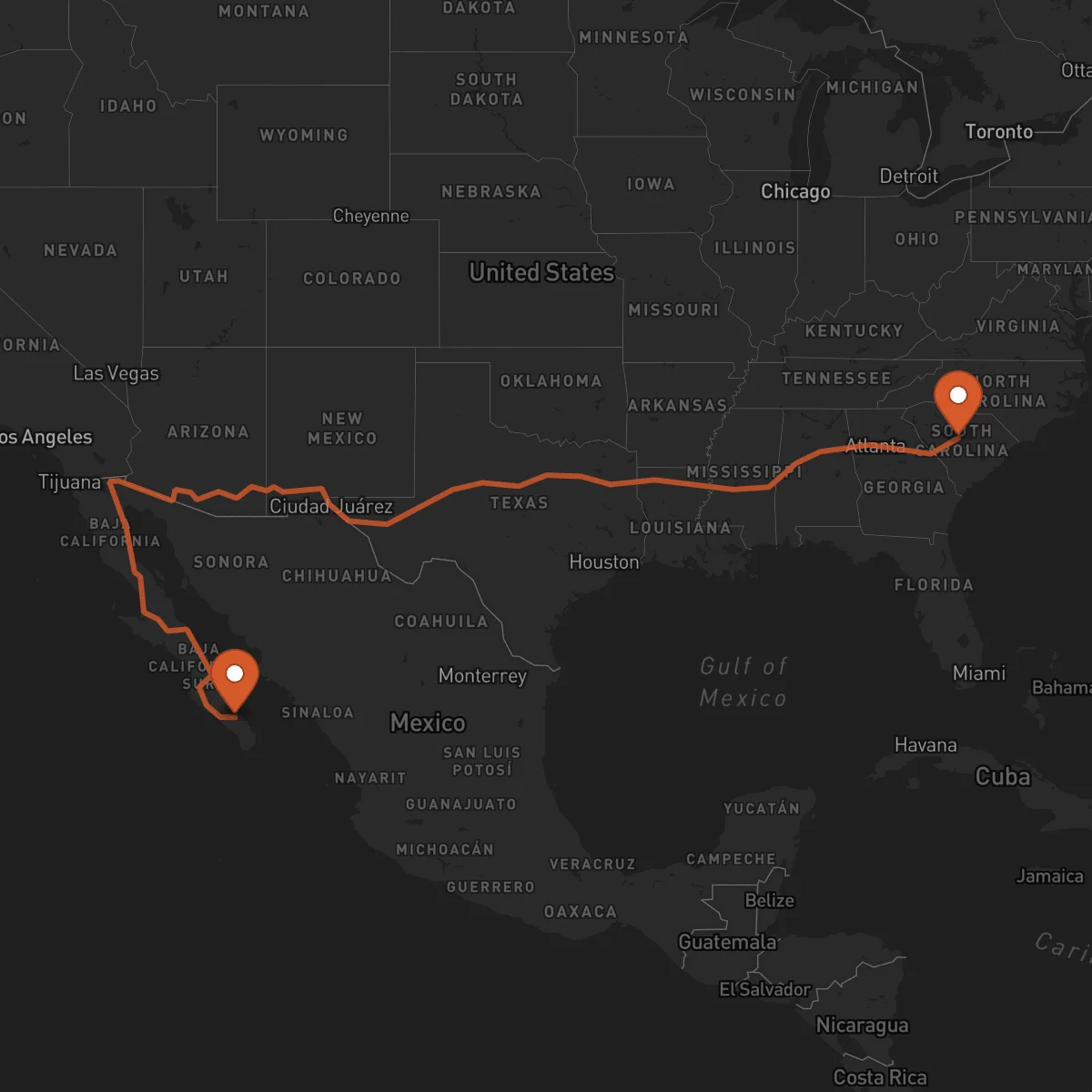
The logistics corridor connecting Columbia, South Carolina, to La Paz, Baja California Sur, represents a vital cross-border transportation route spanning approximately 3,036 kilometers. This corridor links the southeastern United States with Mexico's Baja California peninsula, facilitating crucial trade flows between these regions. The route traverses diverse geographic and economic zones, connecting major industrial centers with growing markets in northern Mexico.
The economic significance of this corridor stems from its ability to connect manufacturing hubs in South Carolina with the developing industrial sectors in Baja California Sur. Columbia serves as a strategic logistics node with access to major interstate highways and proximity to key ports, while La Paz represents an emerging market with growing industrial activity, particularly in fishing, mining, and tourism-related manufacturing. The corridor supports the movement of various cargo types including automotive parts, agricultural products, electronics, and general merchandise.
Transportation infrastructure along this route includes major highways such as I-20 and I-10 across the United States, transitioning to Mexican Federal Highways 2 and 1 upon crossing the border. The primary border crossing points include Laredo/Nuevo Laredo and Tijuana/San Diego, with subsequent routes connecting to La Paz via Mexico's highway network. Control Terrestre provides comprehensive cross-border logistics solutions for this corridor, managing customs clearance, documentation requirements, and ensuring seamless cargo movement across international boundaries.
Services for this Route
Available services for the corridor Columbia - La Paz
 Origin
Columbia
Columbia, South Carolina serves as a strategic logistics hub in the southeastern United States, offering excellent connectivity through multiple transportation modes. The city benefits from its location near major interstate highways including I-20, I-26, and I-77, providing efficient access to regional and national markets. Columbia's central location within South Carolina also provides proximity to the Port of Charleston, one of the busiest container ports on the East Coast, and the inland port in Greer, enhancing its multimodal transportation capabilities.
The region's economy is diverse, with strong presence in manufacturing, healthcare, education, and government sectors. Key industries include automotive manufacturing, with major facilities operated by companies like BMW, aerospace and defense, and advanced materials production. The area also has significant agricultural activity and food processing industries. Columbia's logistics infrastructure includes multiple warehousing and distribution centers, making it an ideal origin point for freight shipments requiring reliable transportation to international destinations.
 Destination
La Paz
La Paz, Baja California Sur represents a strategic location in northwestern Mexico, serving as the capital and commercial center of the state. The city's location on the eastern coast of the Baja California peninsula provides unique logistical advantages, including access to maritime shipping routes and proximity to major tourism destinations. La Paz serves as a gateway to the broader Baja California Sur region, which is experiencing industrial growth and development.
The local economy is centered around fishing, mining, tourism, and emerging manufacturing sectors. La Paz is particularly known for its seafood processing industry and has growing capabilities in renewable energy and technology sectors. The city's transportation infrastructure includes Federal Highway 1, which connects to the broader Mexican highway network, and Manuel Márquez de León International Airport for air cargo operations. The port of La Paz facilitates maritime cargo movement, complementing the road transportation options for freight arriving from the United States.










