Columbia to Cheyenne
Cheyenne → ColumbiaFTL freight transportation service between Columbia and Cheyenne. Reliable logistics solutions for your business.
Route Description
Everything you need to know about the corridor Columbia - Cheyenne
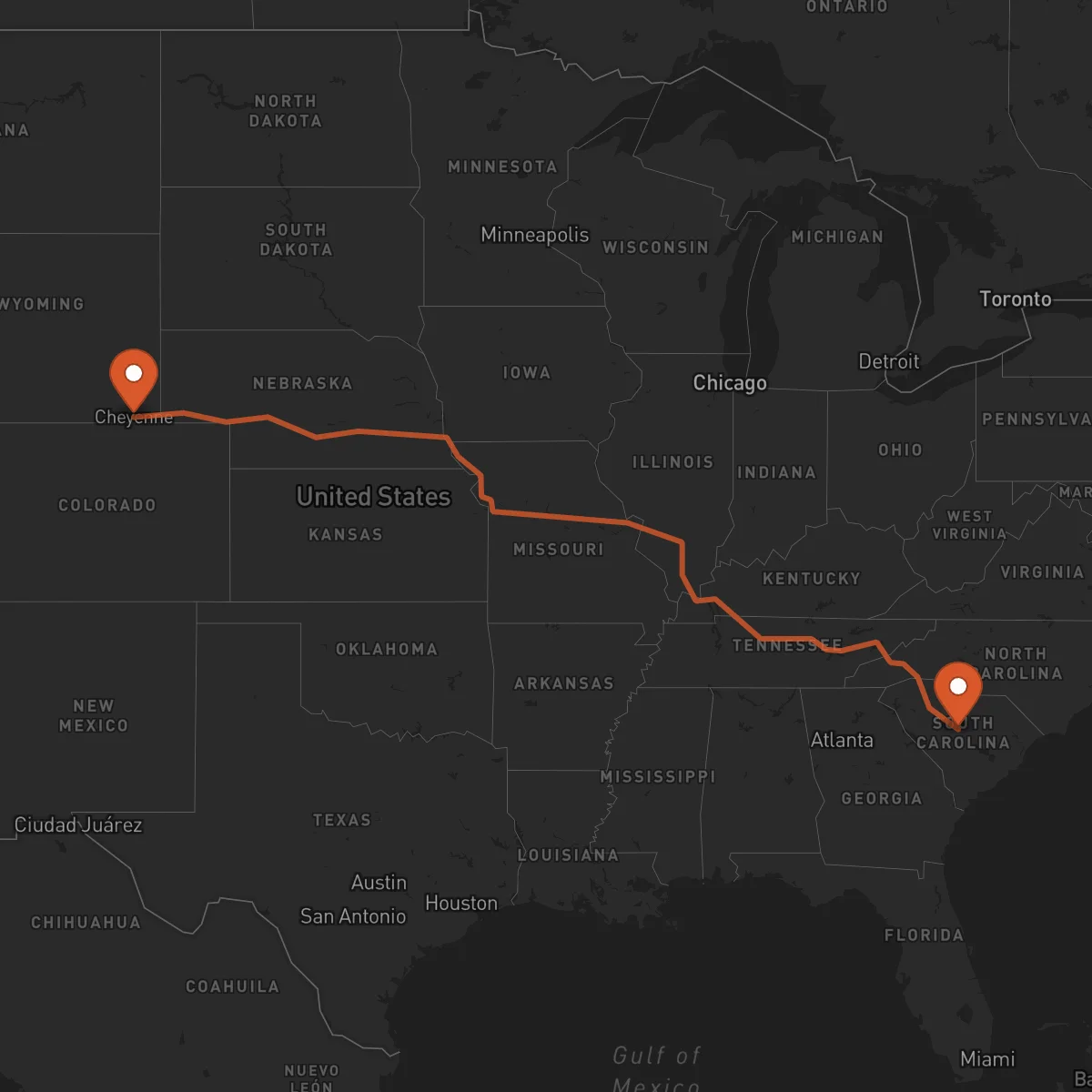
The freight corridor connecting Columbia, South Carolina to Cheyenne, Wyoming represents a vital domestic transportation route spanning approximately 2,233 kilometers across the heart of the United States. This east-west connection traverses diverse geographic regions and serves as a critical link between the Southeast's manufacturing and distribution centers and the Mountain West's energy, mining, and agricultural sectors. The route strategically connects major economic regions, facilitating the movement of goods from the Atlantic coastal plains through the Appalachian Mountains and across the Great Plains to Wyoming's capital.
The economic significance of this corridor cannot be overstated, as it supports the flow of industrial equipment, raw materials, and finished goods between regions with complementary economic strengths. Columbia serves as a logistics hub for the Southeast, with its proximity to major ports and manufacturing centers, while Cheyenne functions as a gateway to Wyoming's vast natural resources and serves as a distribution center for the Rocky Mountain region. The corridor supports industries including automotive manufacturing, aerospace components, agricultural products, mining equipment, and energy sector supplies.
Control Terrestre provides comprehensive FTL (Full Truckload) transportation services along this strategic corridor, leveraging our network of certified carriers and specialized equipment. Our dedicated transportation solutions ensure reliable, efficient movement of freight between these key locations, with options including dry vans for general cargo, refrigerated units for temperature-sensitive goods, and specialized equipment for oversized or hazardous materials. We understand the unique requirements of cross-regional freight movement and provide the expertise needed to navigate this extensive domestic route effectively.
Services for this Route
Available services for the corridor Columbia - Cheyenne
 Origin
Columbia
Columbia, South Carolina serves as a strategic logistics hub in the southeastern United States, offering exceptional connectivity and infrastructure for freight transportation. Located in the geographic center of South Carolina, Columbia provides central access to major metropolitan areas including Atlanta, Charlotte, and Charleston. The city's economic foundation includes advanced manufacturing, automotive production, healthcare, and education sectors, with major employers in aerospace, defense, and technology industries. Columbia benefits from excellent transportation infrastructure, including direct access to Interstate 26, Interstate 20, and Interstate 77, as well as the Columbia Metropolitan Airport and nearby Port of Charleston for international shipping connections. The region's logistics capabilities are enhanced by multiple intermodal facilities and a skilled workforce supporting distribution and warehousing operations.
 Destination
Cheyenne
Cheyenne, Wyoming occupies a strategic position as the capital city and largest metropolitan area in the state, serving as a crucial logistics gateway to the Rocky Mountain region. Located at the intersection of Interstates 25 and 80, Cheyenne provides direct access to major transportation corridors connecting the Midwest with the West Coast. The city's economy centers around government services, transportation, manufacturing, and energy sectors, with significant contributions from the nearby Warren Air Force Base and the Union Pacific Railroad's presence. Cheyenne's logistics infrastructure includes the Cheyenne Regional Airport, extensive rail connections, and proximity to major freight corridors. The city serves as a distribution hub for Wyoming's mining, oil and gas, and agricultural industries, with specialized facilities supporting the movement of oversized equipment and hazardous materials common to the energy sector.










