Charlotte to Columbia
Columbia → CharlotteFTL freight transportation service between Charlotte and Columbia. Reliable logistics solutions for your business.
Route Description
Everything you need to know about the corridor Charlotte - Columbia
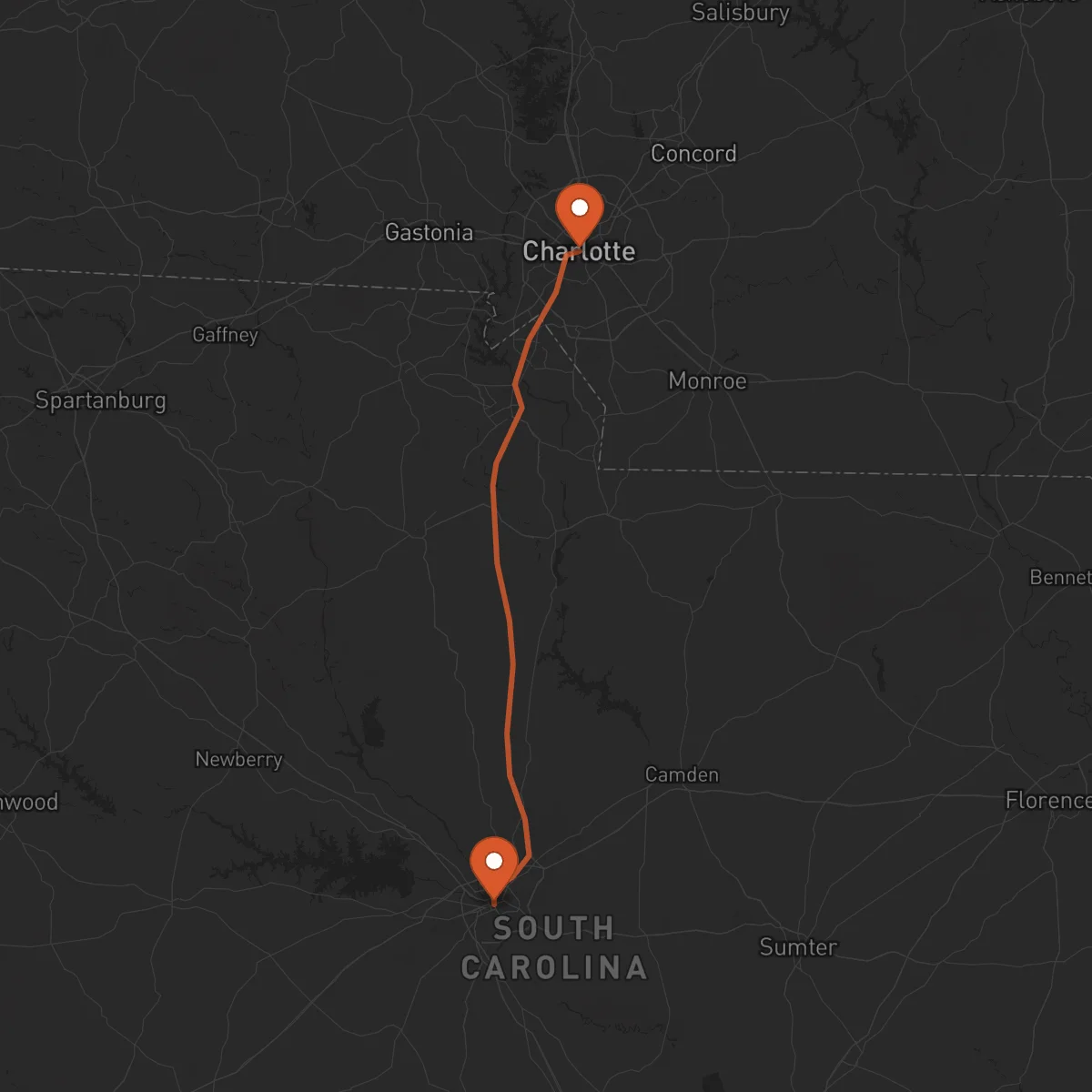
The Charlotte-Columbia corridor represents a vital freight transportation link in the southeastern United States, connecting two of the region's most dynamic economic centers. This 138-kilometer route traverses the heart of the Carolinas, facilitating the movement of goods between North Carolina's largest city and South Carolina's capital. The corridor's strategic importance lies in its role as a conduit for commerce between the rapidly growing Charlotte metropolitan area and the governmental and educational hub of Columbia.
The economic synergy between Charlotte and Columbia creates substantial freight demand along this corridor. Charlotte serves as a major financial center and logistics hub, while Columbia benefits from its status as a state capital and home to the University of South Carolina. This complementary economic relationship drives consistent freight movement, with industries ranging from automotive and manufacturing to retail and technology relying on efficient transportation between these cities.
The corridor primarily utilizes Interstate 77 and Interstate 26, providing excellent highway infrastructure for freight transportation. These modern highways offer multiple lanes, rest areas, and weigh stations that ensure smooth and efficient cargo movement. The route passes through diverse landscapes, from the Piedmont region's rolling hills to the flatter coastal plain, presenting minimal geographical challenges for freight carriers.
Control Terrestre optimizes freight operations on the Charlotte-Columbia corridor by leveraging our network of certified carriers and advanced logistics technology. Our dedicated full truckload services ensure that your cargo moves efficiently between these two strategic points, with real-time tracking and professional handling throughout the journey. Whether you're shipping manufacturing components, retail inventory, or specialized cargo, we provide the reliable transportation solutions that businesses need to maintain their supply chain momentum.
Services for this Route
Available services for the corridor Charlotte - Columbia
 Origin
Charlotte
Charlotte, North Carolina, stands as a major logistics hub in the southeastern United States, strategically positioned to serve both regional and national freight needs. The city's location at the intersection of major interstate highways (I-77, I-85, and I-485) provides exceptional connectivity for freight movement in all directions. Charlotte's infrastructure includes the Charlotte Douglas International Airport, one of the busiest airports in the country, and the CSX Transportation rail network, creating multimodal transportation options for businesses.
The economic landscape of Charlotte is diverse and robust, with the city serving as the second-largest banking center in the United States after New York City. Major industries include finance, healthcare, energy, and advanced manufacturing. The presence of numerous corporate headquarters and the city's rapid growth have created substantial demand for freight transportation services. Charlotte's pro-business environment and skilled workforce continue to attract companies, further enhancing its role as a critical logistics node in the region.
 Destination
Columbia
Columbia, South Carolina, serves as the state capital and a significant logistics center in the Palmetto State, offering strategic advantages for freight transportation. Located at the confluence of the Broad and Saluda rivers, Columbia benefits from its position at the intersection of major transportation routes, including Interstate 20, Interstate 26, and Interstate 77. The city's infrastructure includes the Columbia Metropolitan Airport and access to the Port of Charleston via I-26, providing multimodal freight options for businesses.
The economic base of Columbia is anchored by state government operations, education, and healthcare, with the University of South Carolina being a major employer and economic driver. The city has also developed strengths in manufacturing, particularly in automotive and aerospace sectors, with companies like Honeywell and Fort Jackson military base contributing to the local economy. Columbia's central location within South Carolina makes it an ideal distribution point for goods throughout the state and beyond, with growing logistics and distribution centers taking advantage of the city's transportation accessibility.










