Chicago to Detroit
Detroit → ChicagoFTL freight transportation service between Chicago and Detroit. Reliable logistics solutions for your business.
Route Description
Everything you need to know about the corridor Chicago - Detroit
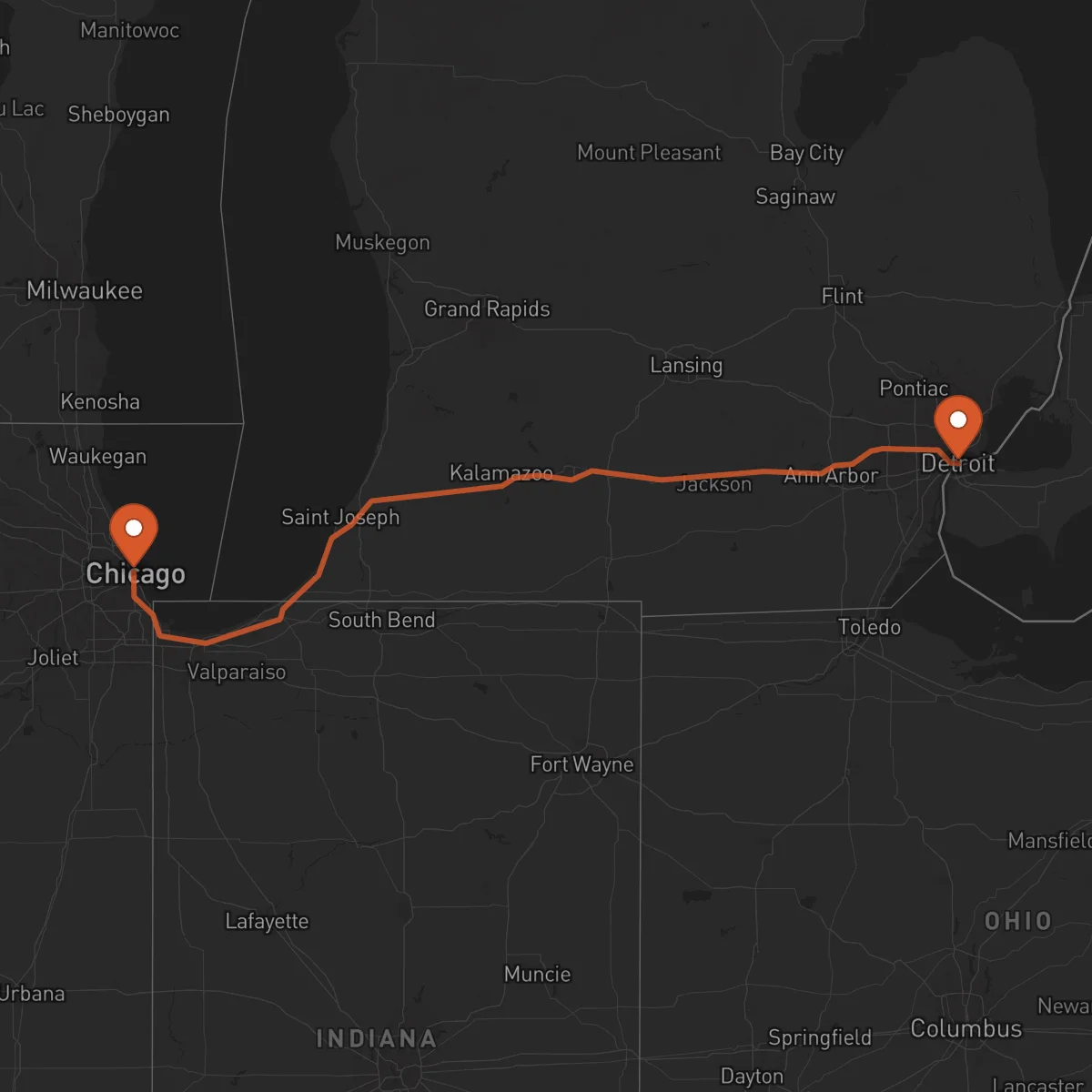
The Chicago-Detroit corridor represents one of the most vital logistics connections in the Midwest, spanning approximately 382 kilometers through the heart of America's industrial belt. This strategic route links two major economic powerhouses, facilitating the continuous flow of goods between Illinois and Michigan. The corridor serves as a critical artery for manufacturing supply chains, connecting Chicago's vast distribution networks with Detroit's automotive and industrial complexes.
The region's economic significance cannot be overstated, with both cities serving as major hubs for manufacturing, automotive production, and advanced technology sectors. This corridor witnesses constant movement of raw materials, components, and finished goods, supporting industries ranging from automotive to aerospace, and from consumer goods to industrial equipment. The route's importance is further amplified by its connection to major ports and international trade gateways.
Transportation infrastructure along this corridor is exceptionally well-developed, primarily utilizing major highways including I-94 and I-96. These interstate highways provide reliable, high-capacity freight movement, ensuring consistent transit times and efficient logistics operations. The route also connects to extensive rail networks and intermodal facilities, offering multimodal transportation options for shippers.
Control Terrestre leverages this strategic corridor to provide comprehensive FTL transportation solutions, ensuring your cargo moves seamlessly between Chicago and Detroit. Our experienced carriers and advanced logistics capabilities guarantee reliable, timely delivery of your freight, supporting your supply chain needs across this crucial industrial route.
Services for this Route
Available services for the corridor Chicago - Detroit
 Origin
Chicago
Chicago stands as a premier logistics hub in North America, strategically positioned to serve as a gateway for freight movement throughout the Midwest. The city's unique geographic location at the intersection of major transportation networks makes it an ideal origin point for logistics operations. Chicago's extensive intermodal facilities, including one of the largest rail yards in the country, combined with multiple international airports and proximity to major ports, create unparalleled connectivity for freight transportation.
The city's economic landscape is dominated by manufacturing, technology, and distribution sectors. Home to numerous Fortune 500 companies and a thriving industrial base, Chicago generates substantial freight volume across various industries. The region's robust infrastructure includes extensive highway networks, rail connections, and warehousing facilities, making it perfectly equipped to handle diverse logistics requirements. Chicago's O'Hare International Airport and the Port of Chicago further enhance its capabilities as a comprehensive logistics center.
 Destination
Detroit
Detroit represents a cornerstone of American manufacturing and automotive excellence, making it a critical destination for freight transportation in the Midwest. The city's strategic location in southeastern Michigan provides excellent access to major transportation routes and serves as a gateway to Canada through nearby border crossings. Detroit's extensive network of highways and rail connections ensures efficient movement of goods throughout the region and beyond.
The Motor City's economy remains heavily focused on automotive manufacturing, with numerous assembly plants and parts suppliers operating in the area. Beyond automotive, Detroit has diversified into advanced manufacturing, technology, and healthcare sectors. The region's industrial parks and manufacturing facilities require consistent, reliable freight services to maintain their production schedules. Detroit's infrastructure includes modern intermodal facilities, extensive highway systems, and proximity to major distribution centers, supporting comprehensive logistics operations for businesses of all sizes.










