Cheyenne to Phoenix
Phoenix → CheyenneFTL freight transportation service between Cheyenne and Phoenix. Reliable logistics solutions for your business.
Route Description
Everything you need to know about the corridor Cheyenne - Phoenix
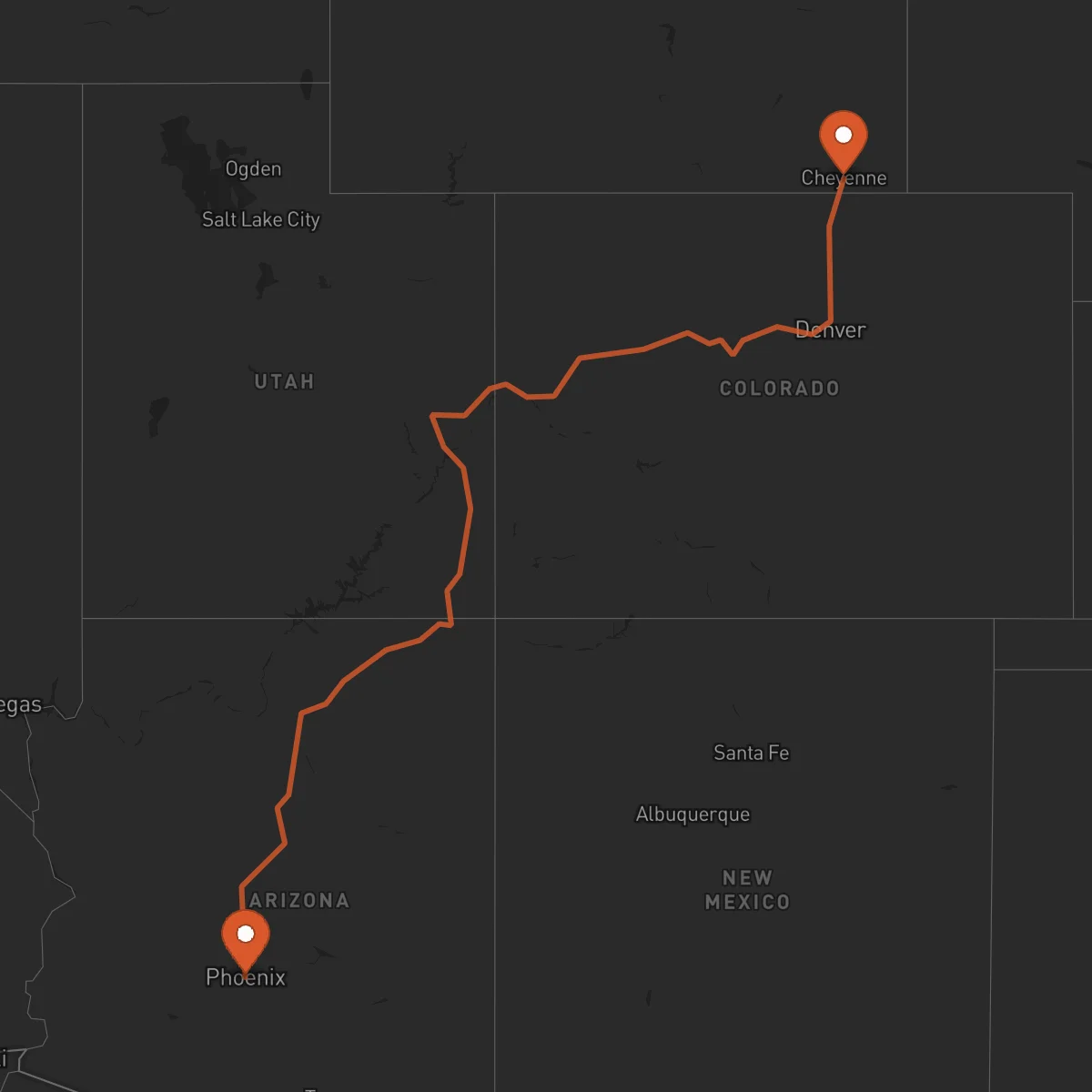
The Cheyenne to Phoenix corridor represents a vital transportation link connecting the energy-rich region of Wyoming with the rapidly growing metropolitan area of Arizona. This 1,068 km domestic route traverses diverse terrain and serves as a critical supply chain artery for multiple industries. The corridor passes through key states including Colorado and New Mexico, utilizing major interstate highways that provide reliable connectivity between the Rocky Mountain region and the Southwest.
The economic significance of this corridor is substantial, facilitating the movement of goods between Wyoming's mining and energy sectors and Arizona's manufacturing, technology, and agricultural industries. Companies operating along this route benefit from the strategic positioning that allows for efficient distribution throughout the western United States. The corridor's infrastructure supports high-volume freight movements, making it essential for businesses requiring consistent and dependable transportation services.
Control Terrestre specializes in optimizing operations along this corridor through our network of certified transportation providers. Our expertise in full truckload services ensures that shipments move efficiently from origin to destination, with real-time tracking and dedicated support throughout the journey. We understand the unique challenges of this route, including elevation changes and varying climate conditions, and deploy appropriate equipment and routing strategies to maintain service reliability.
Services for this Route
Available services for the corridor Cheyenne - Phoenix
 Origin
Cheyenne
Cheyenne, Wyoming serves as a strategic logistics hub positioned at the intersection of major transportation routes in the Rocky Mountain region. The city's location provides excellent access to both east-west and north-south freight corridors, making it an ideal origin point for regional and national distribution. Cheyenne benefits from its proximity to major rail terminals and interstate highways, including I-25 and I-80, which facilitate efficient freight movements to all directions.
The economic base of Cheyenne includes significant energy and mining operations, government services, and growing technology sectors. The region's industrial landscape features manufacturing facilities, distribution centers, and agricultural operations that generate substantial freight volumes. The city's transportation infrastructure includes multiple warehousing facilities, cross-docking operations, and specialized handling capabilities for various cargo types, supporting diverse logistics requirements.
 Destination
Phoenix
Phoenix, Arizona stands as a major logistics and distribution center in the southwestern United States, offering strategic advantages for freight operations. The city's location provides excellent access to major markets throughout the Southwest, with proximity to California ports and connections to Mexico via efficient highway networks. Phoenix's transportation infrastructure includes extensive freeway systems, multiple intermodal facilities, and a robust network of warehousing and distribution centers.
The Phoenix metropolitan area hosts a diverse economic ecosystem, including advanced manufacturing, aerospace and defense industries, technology companies, and agricultural operations. The region's climate and infrastructure support year-round logistics operations, while the availability of specialized facilities accommodates various cargo requirements. Phoenix's position as a logistics hub is further enhanced by its international airport and proximity to major border crossings, making it an ideal destination for both domestic and international freight movements.










