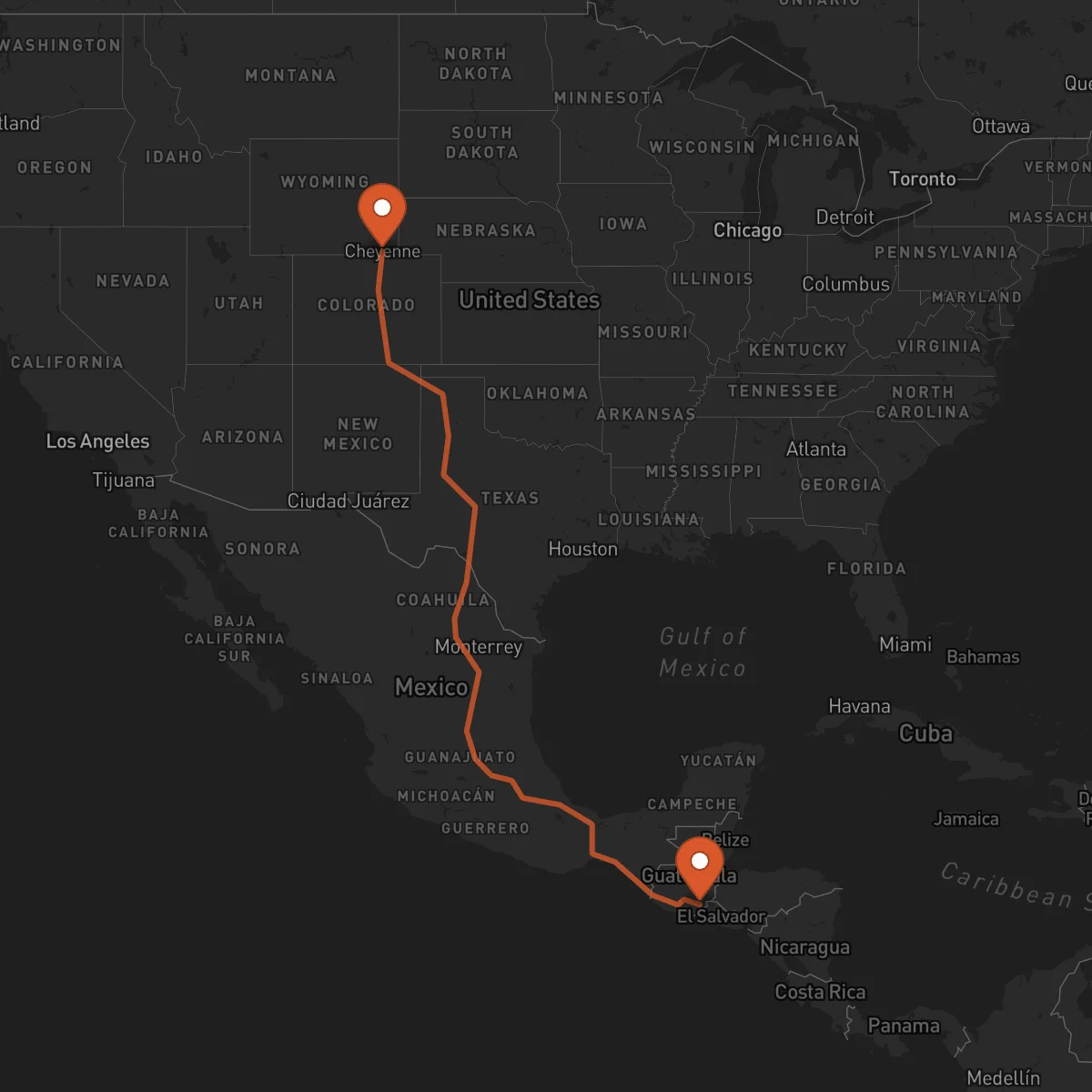
Cheyenne to Jutiapa
Jutiapa → CheyenneFTL freight transportation service between Cheyenne and Jutiapa. Reliable logistics solutions for your business.
Route Description
Everything you need to know about the corridor Cheyenne - Jutiapa
The logistics corridor between Cheyenne, Wyoming, and Jutiapa, Guatemala, represents a vital cross-border connection spanning approximately 3,318 kilometers. This route links the industrial heartland of the United States with the growing economic centers of Central America, facilitating the movement of goods between North and Central American markets. The corridor traverses diverse landscapes and crosses multiple international borders, making it a complex but strategically essential trade route for companies engaged in international commerce.
The economic significance of this corridor is underscored by the complementary industrial strengths of its endpoints. Cheyenne serves as a gateway to the Rocky Mountain region's manufacturing and agricultural sectors, while Jutiapa represents Guatemala's expanding agricultural export capabilities and light manufacturing industry. The route supports a wide range of industries including automotive parts, electronics, agricultural products, and consumer goods, making it a crucial artery for North-South trade in the Americas.
Key transportation infrastructure along this corridor includes major interstate highways such as I-25 and I-10 in the United States, connecting to Mexican federal highways and Central American road networks. The route requires careful coordination of cross-border operations, with key customs facilities at the U.S.-Mexico border and throughout Mexico. Control Terrestre's expertise in managing these complex international logistics chains ensures seamless freight movement, handling all necessary documentation, customs clearance, and compliance requirements to keep your cargo moving efficiently from origin to destination.
Services for this Route
Available services for the corridor Cheyenne - Jutiapa
 Origin
Cheyenne
Cheyenne, Wyoming serves as a strategic logistics hub positioned at the crossroads of major transportation networks in the Rocky Mountain region. The city's location provides direct access to Interstate 25, a crucial north-south corridor connecting to Denver and beyond, as well as proximity to Interstate 80 for east-west freight movement. Cheyenne's economy is anchored by government operations, military installations, and a growing technology sector, complemented by traditional industries such as agriculture, energy, and manufacturing. The city's transportation infrastructure includes the Cheyenne Regional Airport, extensive rail connections through Union Pacific, and modern warehousing facilities that support both domestic and international freight operations.
 Destination
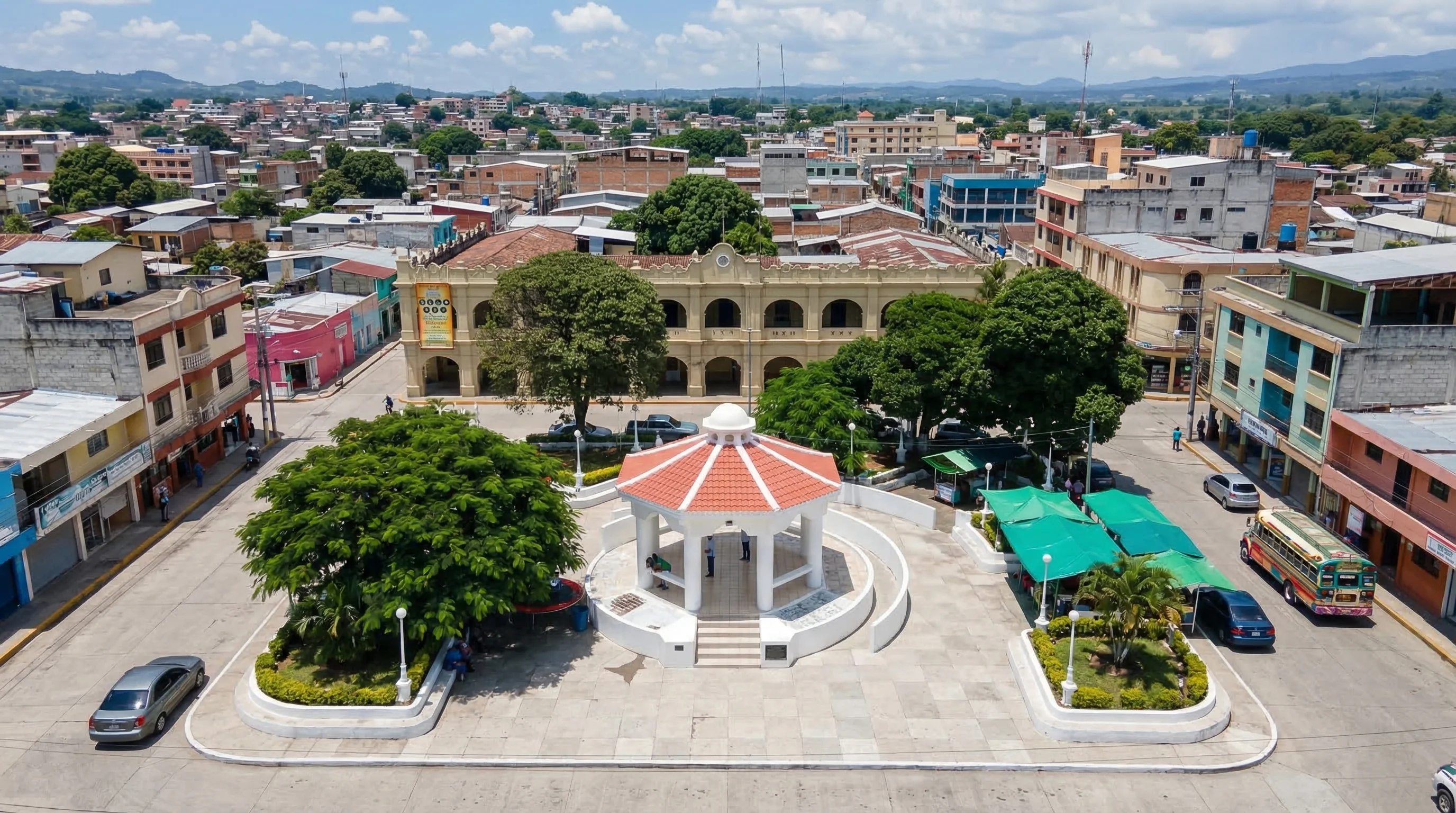
Jutiapa, located in southeastern Guatemala, occupies a strategic position as a gateway to Central America's growing markets. The city serves as an important commercial center for the surrounding agricultural region, known for coffee, tobacco, and various tropical products. Jutiapa's economic landscape includes light manufacturing, agricultural processing, and distribution activities that benefit from its location near the El Salvador border. The region's transportation infrastructure consists of well-maintained highways connecting to Guatemala City and other major Central American destinations, along with access to the Port of Quetzal for maritime shipping. This positioning makes Jutiapa an ideal distribution point for reaching both Guatemalan domestic markets and neighboring countries in the region.










